What Is Black Mold?
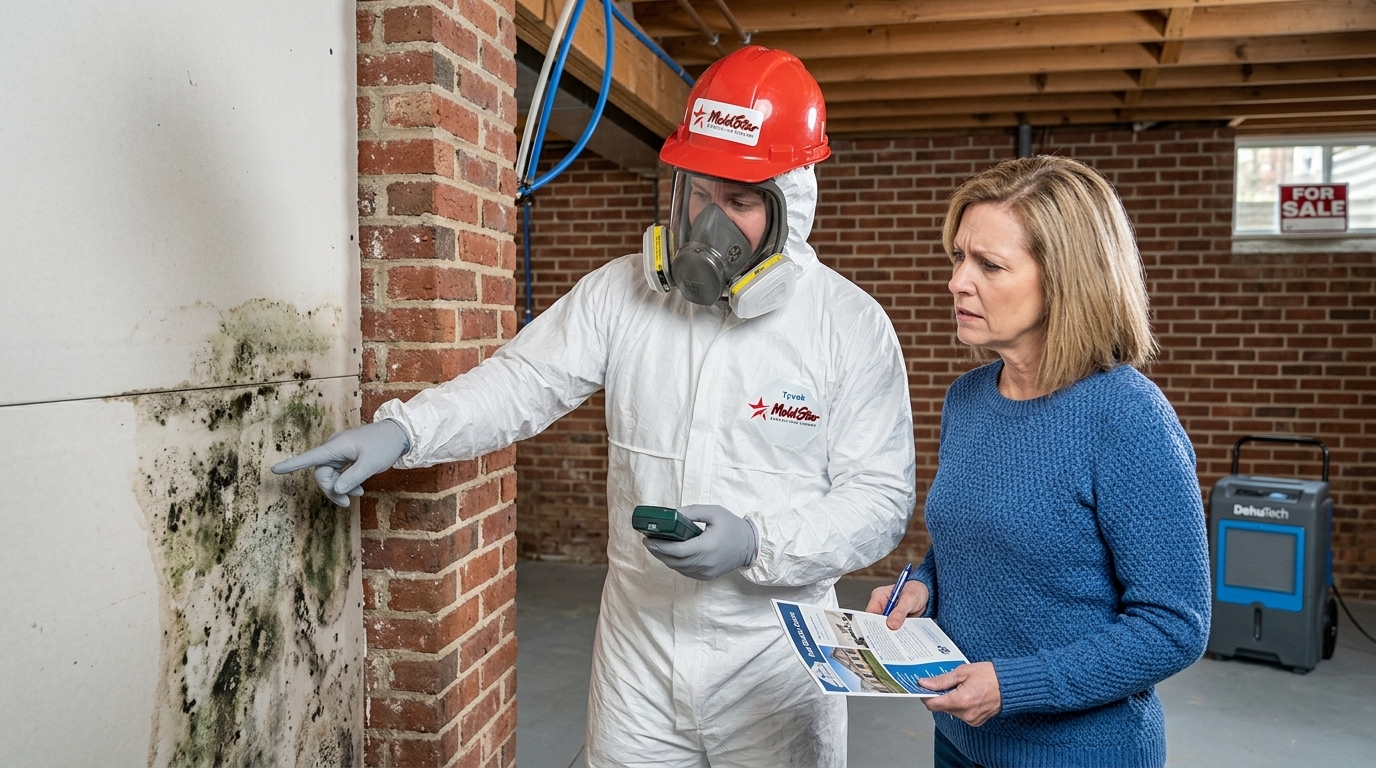
When most people say “black mold,” they are referring to Stachybotrys chartarum (sometimes called Stachybotrys atra). It is a species of mold that produces dark greenish-black colonies and thrives on materials with high cellulose content, such as drywall paper backing, ceiling tiles, cardboard, and wood products.
Where Black Mold Grows
Stachybotrys requires consistently high moisture levels to colonize. Unlike some molds that grow with just elevated humidity, Stachybotrys typically needs materials that have been saturated or exposed to standing water for 48 to 72 hours or longer.
Common locations in Atlanta-area homes include:
- Behind drywall near plumbing leaks or exterior wall condensation
- Under kitchen and bathroom sinks with slow, undetected drips
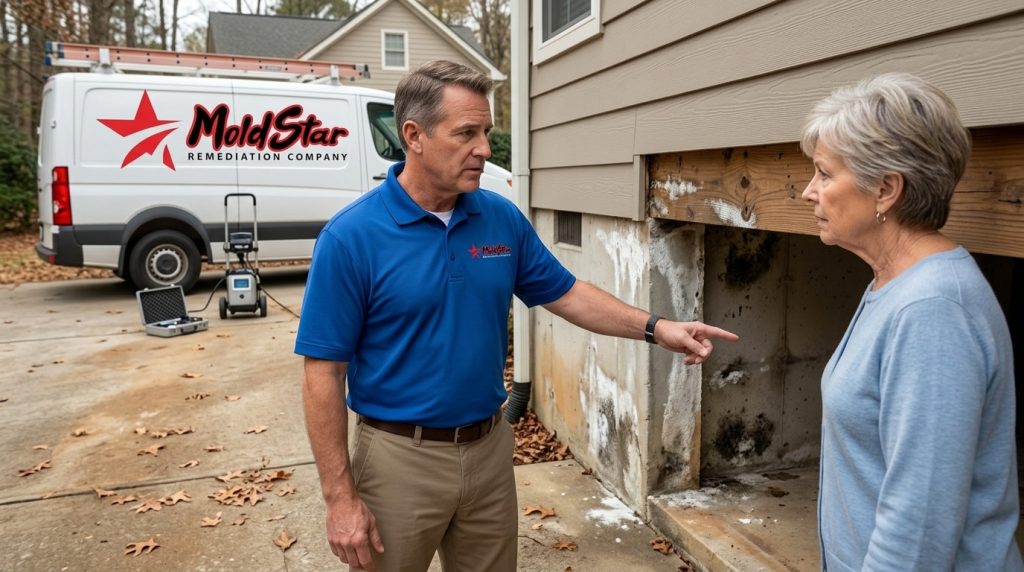
- Crawl spaces with poor vapor barriers or standing water
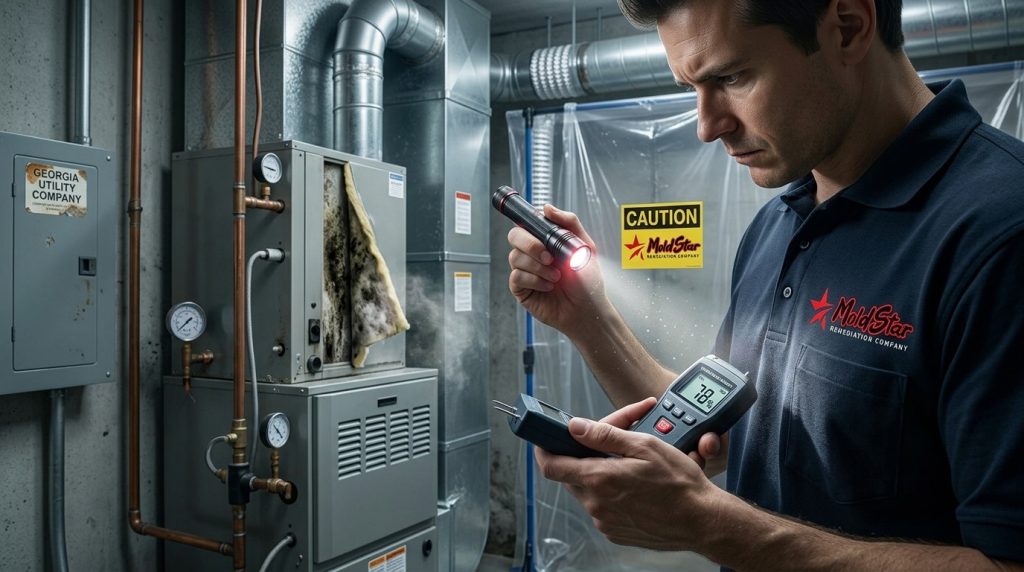
- Around HVAC systems with condensation issues (extremely common in Georgia’s humid climate)
- Basements and laundry rooms with inadequate ventilation
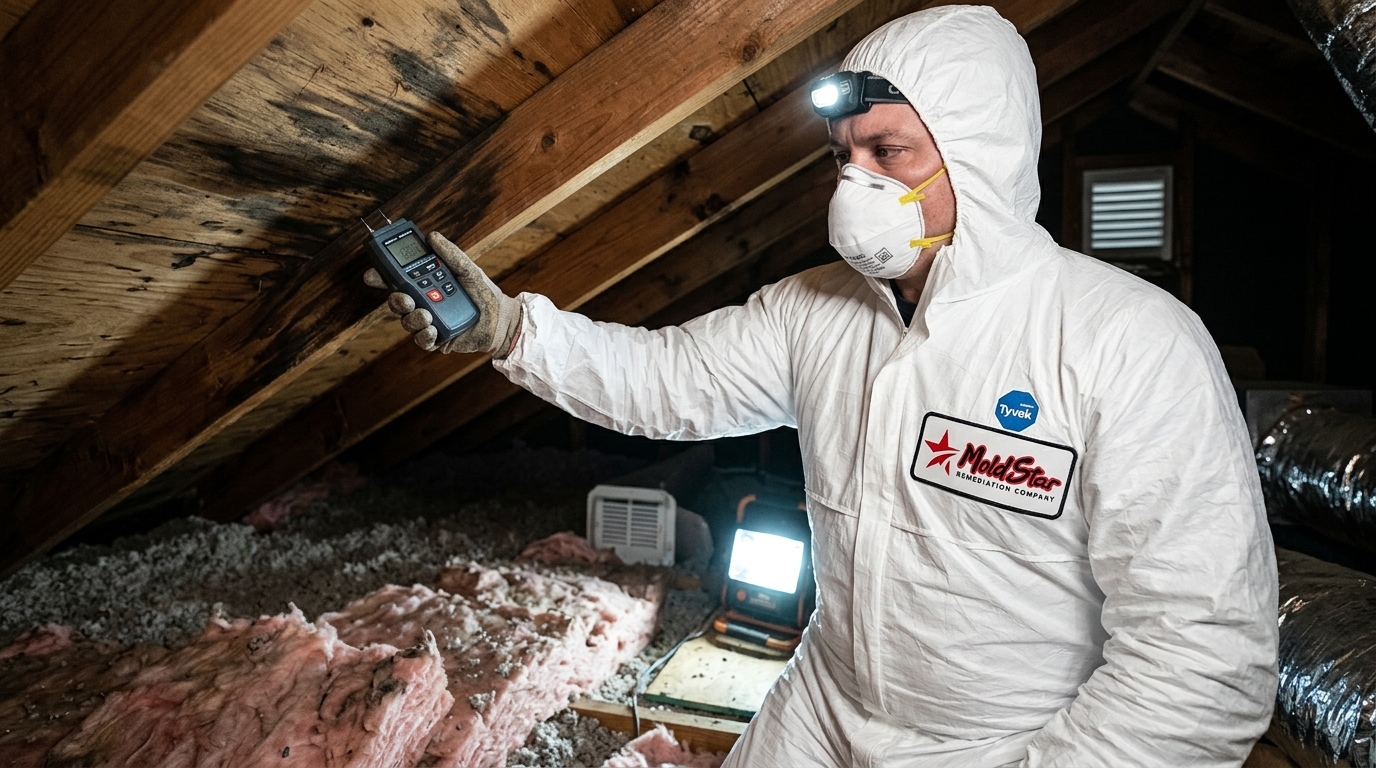
- Attics where roof leaks have gone unnoticed
- Behind wallpaper on exterior walls
Living in Metro Atlanta, we deal with high humidity from roughly April through October. That extended warm, humid season gives Stachybotrys and other mold species exactly the conditions they need to establish and spread.
What Black Mold Looks Like
Stachybotrys chartarum typically appears as dark greenish-black patches with a slightly slimy or wet texture when actively growing. When it dries out, it can look powdery or sooty.
However, color alone does not identify mold species. Several common molds can appear dark or black, including Cladosporium, Aspergillus niger, Alternaria, and Chaetomium. Some of these are just as common in Georgia homes as Stachybotrys, and some can also cause health concerns.
Health Risks Associated With Black Mold
There is a great deal of misinformation online about “toxic black mold.” Let me share what the science actually says.
According to the Centers for Disease Control and Prevention (CDC), all molds (not just Stachybotrys) can cause health effects in sensitive individuals. The CDC states that mold exposure can cause nasal stuffiness, throat irritation, coughing, wheezing, eye irritation, and skin irritation. People with mold allergies may experience more severe reactions, and immunocompromised individuals may develop serious lung infections (CDC, “Basic Facts about Mold and Dampness”).
The U.S. Environmental Protection Agency (EPA) notes that mycotoxins (toxic substances produced by some molds, including certain strains of Stachybotrys) are a legitimate concern. However, the presence of mold does not automatically mean mycotoxins are present or that exposure will cause illness (EPA, “A Brief Guide to Mold, Moisture, and Your Home”).
What this means for you: Any mold growth in your home deserves attention, regardless of color. You do not need to panic if you find dark mold in your bathroom, but you do need to address it promptly.
I am not a doctor, and I cannot diagnose health conditions. If you are experiencing symptoms you believe may be related to mold exposure, consult your physician.
How to Identify Black Mold vs. Other Dark Molds
Homeowners frequently ask me, “Is this black mold?” Here is how professionals approach identification.
Visual Assessment
Visual identification alone cannot confirm Stachybotrys, but there are characteristics to note:
- Stachybotrys tends to be dark greenish-black, slimy when wet, and grows on paper-backed drywall, ceiling tiles, and similar cellulose materials
- Cladosporium often appears olive-green to brown-black and commonly grows on fabrics, wood surfaces, and HVAC components
- Aspergillus niger is typically jet black and powdery, frequently found on damp walls and in HVAC systems
- Chaetomium starts white and turns dark over time, has a distinctive musty odor, and commonly appears on water-damaged drywall
Smell
Stachybotrys often produces a strong, musty, earthy odor. Many homeowners describe affected areas as having a distinctly heavy, damp smell that is more pungent than typical mildew.
Professional Testing
The only way to definitively identify mold species is through laboratory analysis. This involves collecting samples (tape lift, swab, or air samples) and sending them to an accredited lab.
My honest recommendation: In most cases, species identification does not change the remediation protocol. Mold is mold, and it all needs to be properly removed. Testing is most valuable for insurance claims, real estate transactions, or medical investigations.
When You Can Handle Black Mold Removal Yourself
The EPA provides clear guidance on when DIY mold removal is reasonable. According to their recommendations, homeowners can generally handle mold cleanup when:
- The affected area is less than approximately 10 square feet (roughly a 3-foot by 3-foot patch)
- The mold is on hard, non-porous surfaces (tile, glass, metal, hard plastic)
- There is no HVAC system involvement
- The water source has been identified and fixed
- You do not have respiratory conditions, allergies, or a compromised immune system
DIY Removal Steps for Small Areas
If your situation meets all the criteria above:
- Wear an N-95 respirator mask, gloves, and eye protection
- Seal the area from the rest of the home with plastic sheeting if possible
- Clean hard surfaces with detergent and water (the EPA does not recommend bleach for mold removal on porous materials)
- Dry the area completely within 24 to 48 hours
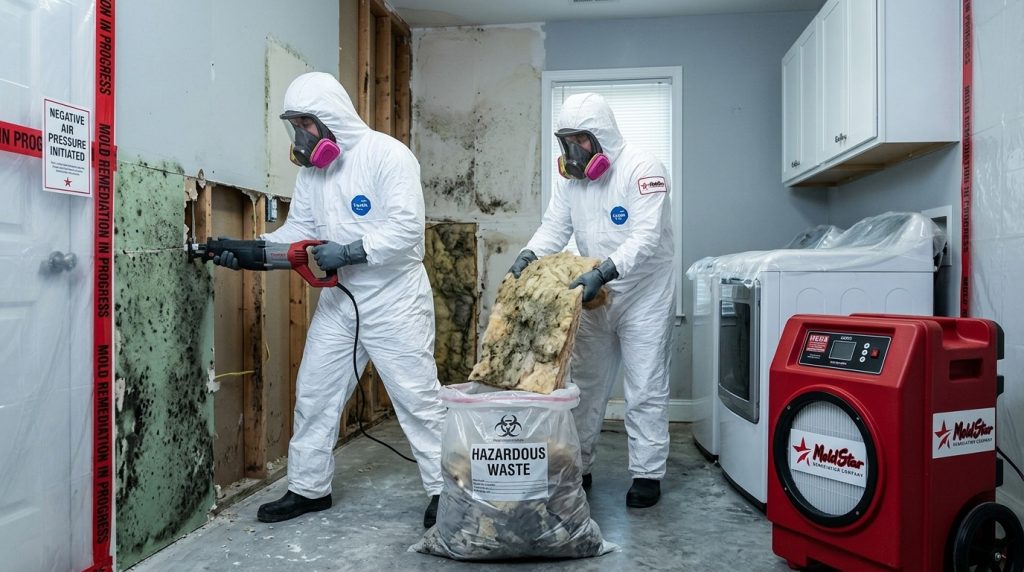
- Discard any porous materials that have mold growth (drywall, insulation, carpet padding)
- Fix the moisture source that caused the growth
Professional Black Mold Removal: Our Step-by-Step Process
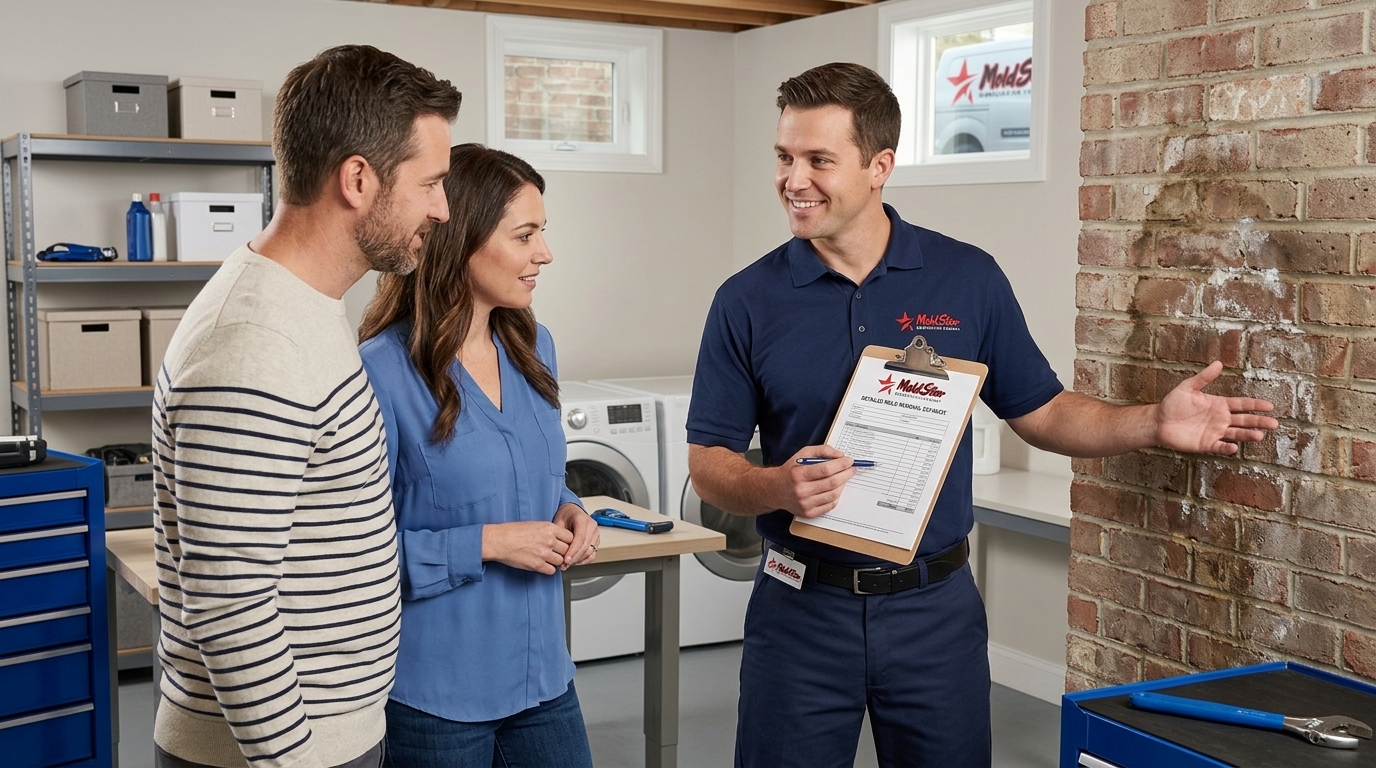
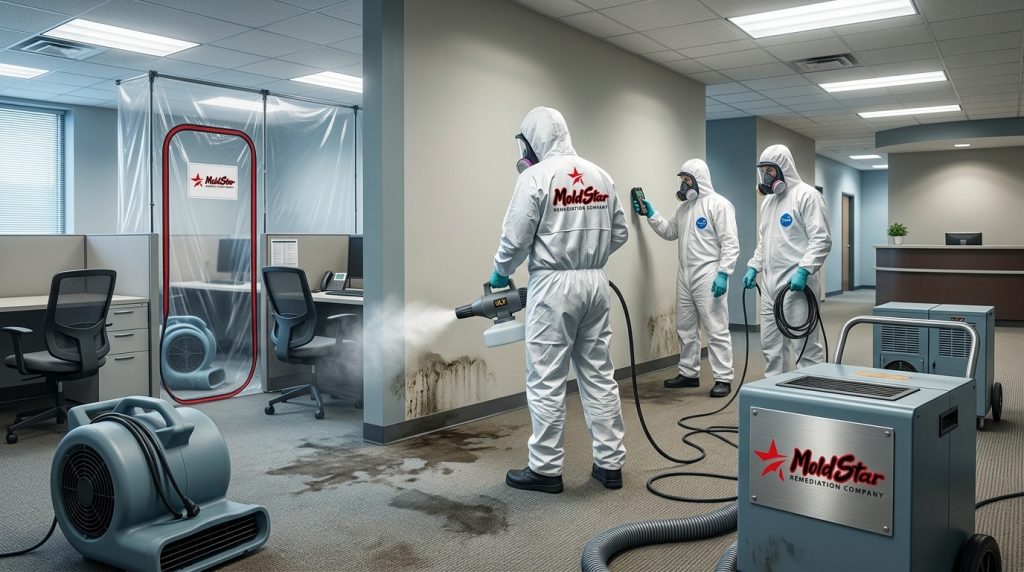
When you call MoldStar Remediation, here is exactly what happens. I believe in full transparency, so I want you to know the process before we set foot in your home.
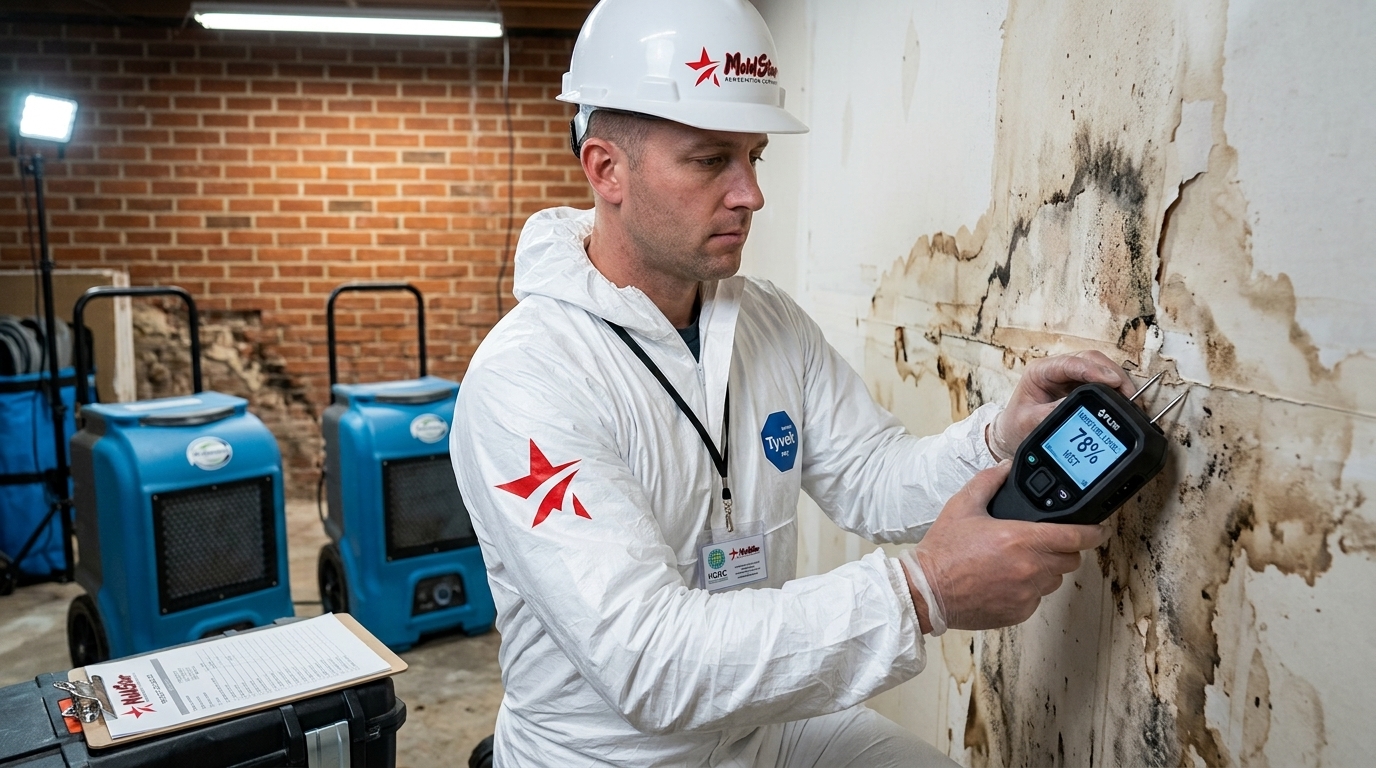
Step 1: Inspection and Assessment
We perform a thorough visual inspection and use moisture meters to map the extent of water intrusion. We document everything with photos and moisture readings, and collect samples for lab analysis if needed.
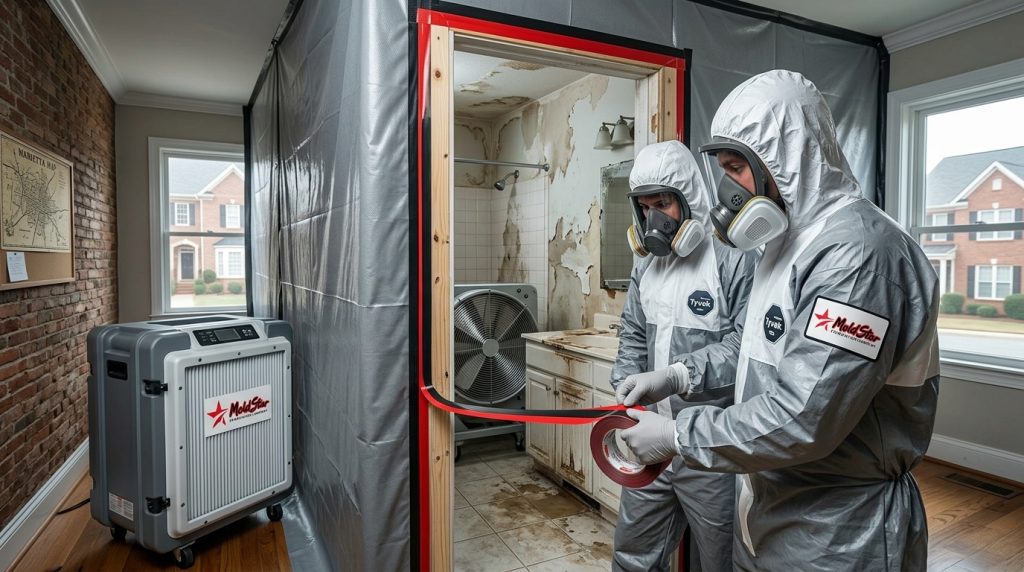
Step 2: Containment
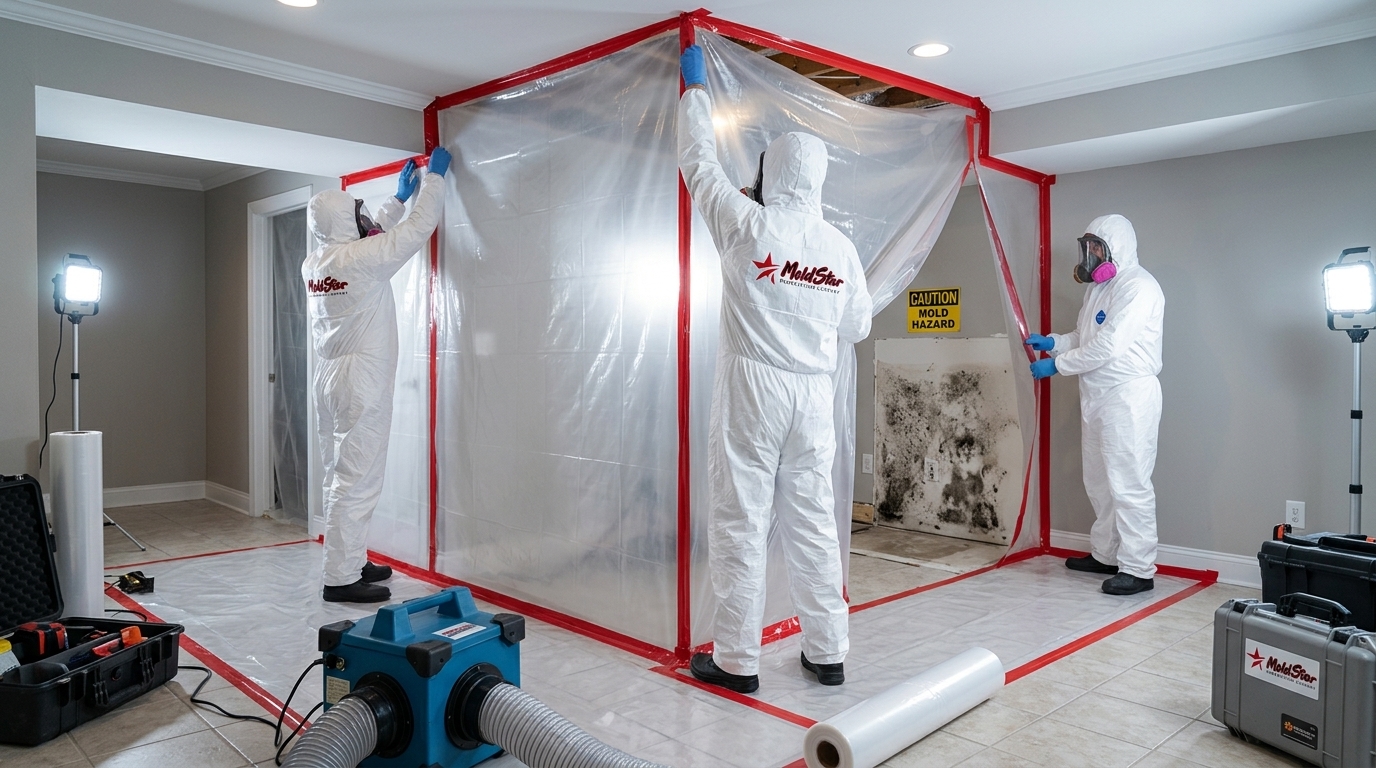
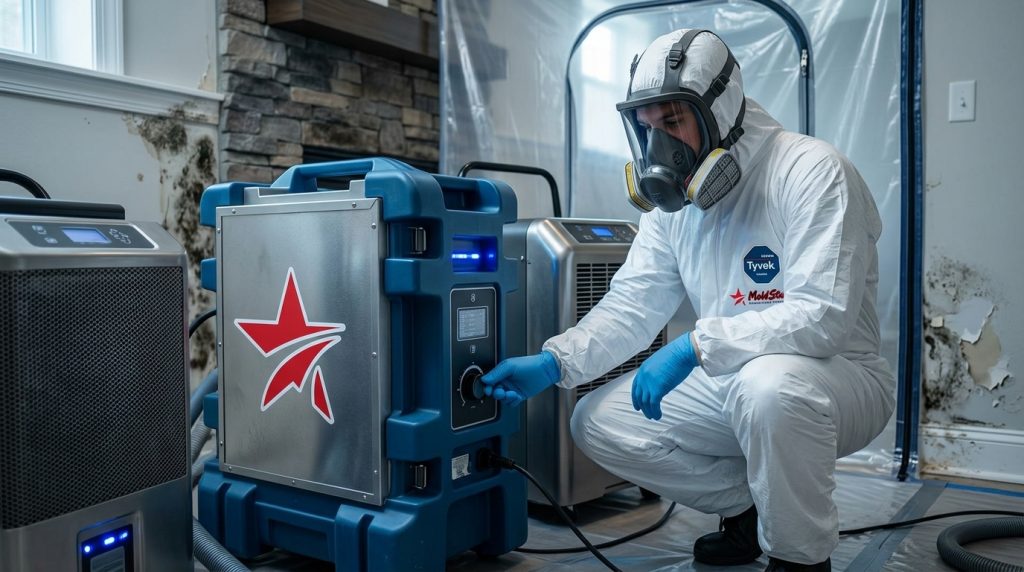
Before any removal begins, we establish containment to prevent mold spores from spreading to unaffected areas. This involves sealing off the work area with heavy-duty polyethylene sheeting, creating negative air pressure using commercial air scrubbers, and sealing HVAC vents in the contained area. Without proper containment, removal efforts can actually spread spores throughout the home.
Step 3: HEPA Air Filtration
We run commercial HEPA (High Efficiency Particulate Air) filtration units throughout the remediation process. These units capture 99.97% of particles down to 0.3 microns, which includes mold spores. This protects both our crew and your home’s air quality during the work.
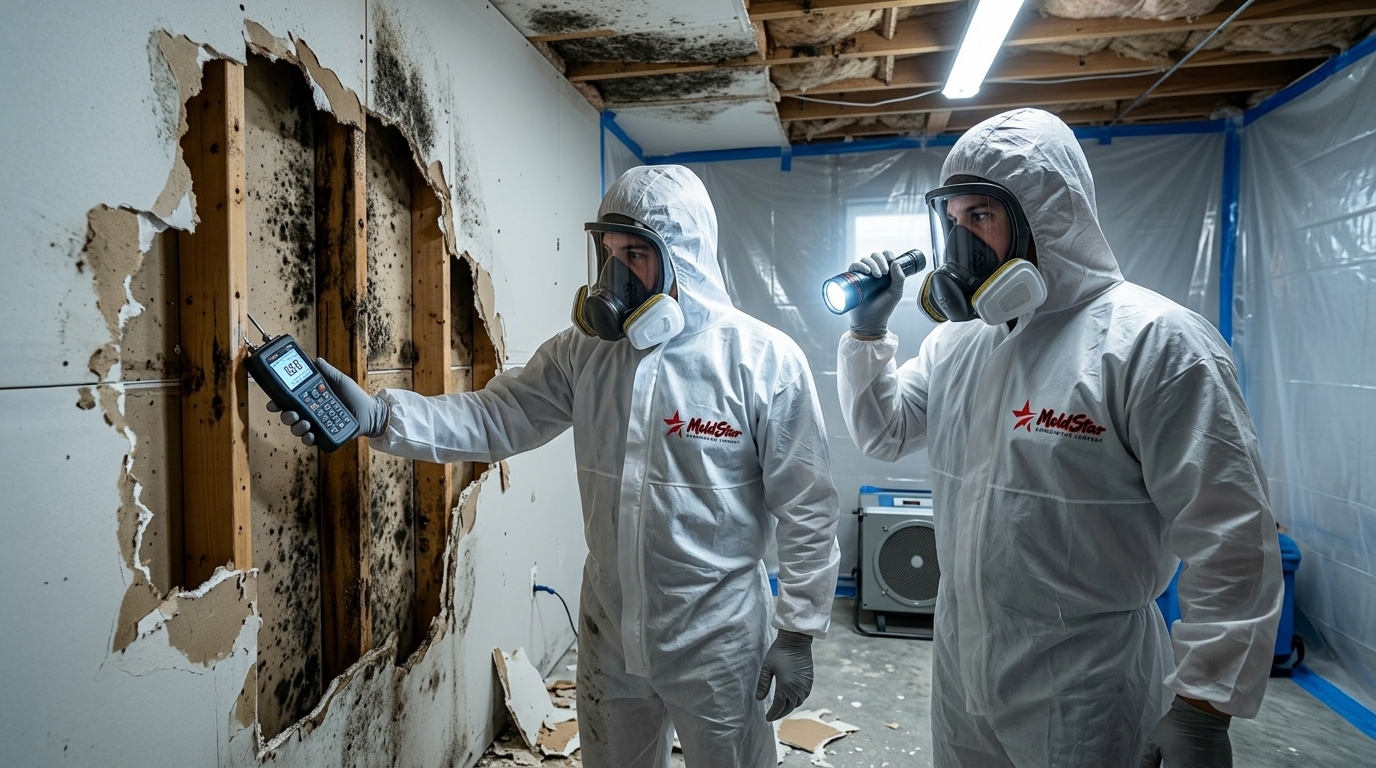
Step 4: Mold Removal and Material Disposal
This is where the physical remediation happens:
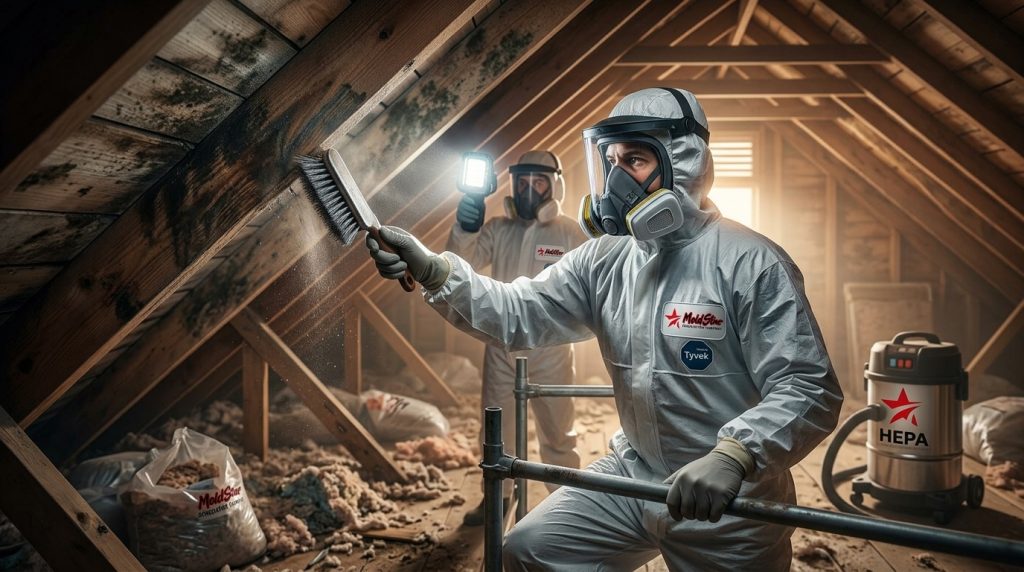
- Contaminated porous materials (drywall, insulation, carpet, wood trim) are carefully removed and double-bagged in heavy-duty disposal bags
- Non-porous surfaces are cleaned using HEPA-vacuuming followed by wet wiping with antimicrobial solutions
- Structural wood (framing, studs, joists) is treated with wire brushing, HEPA vacuuming, and antimicrobial application
We do not simply spray over mold or paint over it. The mold and contaminated materials are physically removed.
Step 5: Antimicrobial Treatment
After all visible mold and contaminated materials have been removed, we apply EPA-registered antimicrobial treatments to all surfaces in the remediation area. This helps prevent regrowth and addresses any residual spore contamination on structural materials.
Step 6: Clearance Testing
Once remediation is complete, we recommend post-remediation verification (clearance testing). Air and surface samples are collected and analyzed by an independent, accredited laboratory to confirm that mold levels are at or below normal background levels. We do not consider a job finished until the science confirms it.
Black Mold Removal Cost: What to Expect
One of the most common searches I see is “black mold removal cost,” and I want to give you honest numbers based on what we see across Metro Atlanta.
Typical cost ranges for professional black mold remediation:
Scope of Work | Typical Cost Range |
|---|---|
Small area (single bathroom, under sink) | $1,500 to $3,000 |
Medium area (one room, partial wall cavity) | $3,000 to $5,000 |
Large area (multiple rooms, crawl space) | $5,000 to $8,000 |
Extensive (whole-house, HVAC system, structural) | $8,000 to $10,000+ |
Factors that affect cost:
- Size of the affected area is the biggest cost driver
- Location and accessibility (crawl spaces and attics require more labor and equipment)
- Materials involved (drywall removal and replacement adds to the total)
- HVAC contamination often requires duct cleaning or replacement
- Clearance testing (an additional cost, but one I strongly recommend)
These ranges are estimates. Every home is different, and we provide detailed, written estimates after our inspection.
A note about insurance: Homeowner’s insurance policies in Georgia vary widely on mold coverage. Some include limited coverage ($5,000 to $10,000), while others exclude it entirely. If you suspect mold from a covered peril (such as a burst pipe), contact your insurance company early. We work with adjusters regularly and can provide the documentation they require.
Preventing Black Mold: Moisture Control Is Everything
In my experience remediating mold across Metro Atlanta since 2009, the cause is always moisture. Always. Here is how to protect your home.
Control Indoor Humidity
The EPA recommends keeping indoor relative humidity between 30% and 50%. In Georgia, that means actively managing moisture from spring through fall.
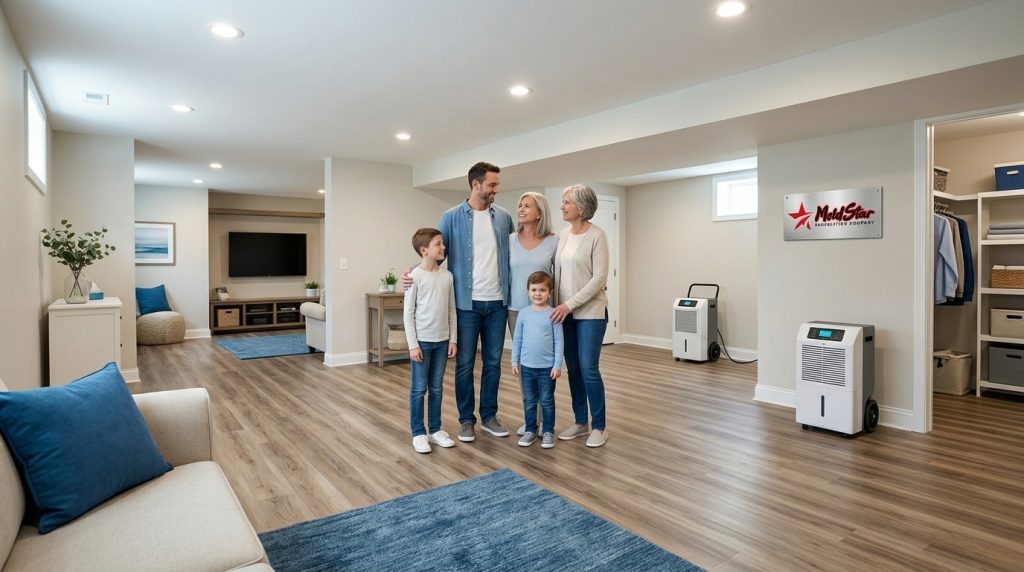
- Run dehumidifiers in basements, crawl spaces, and any rooms that feel damp. In Atlanta’s climate, a whole-house dehumidifier connected to your HVAC system is one of the best investments you can make.
- Use exhaust fans in bathrooms and kitchens. Run them during use and for at least 30 minutes afterward.
- Ensure your dryer vents outdoors, not into an attic or crawl space.
Address Water Intrusion Immediately
- Fix plumbing leaks the day you discover them
- Repair roof leaks promptly
- Ensure gutters and downspouts direct water away from your foundation
- Grade the soil around your home so water flows away from the structure