Why Crawl Spaces in Georgia Are a Breeding Ground for Mold
To understand mold in crawl space environments, you have to understand what mold needs to grow: moisture, organic material, warmth, and still air. A typical Georgia crawl space delivers all four in abundance.
Ground Moisture and Georgia’s Red Clay
Most crawl spaces in the Atlanta metro area sit directly over Georgia’s notorious red clay soil. This clay retains water far longer than sandy or loamy soils. After a heavy rain (and we get plenty of those from spring through fall), the ground beneath your home stays damp for days or even weeks. That moisture evaporates upward into the crawl space, raising humidity levels to 80%, 90%, sometimes higher. Mold starts growing at around 60% relative humidity.
The Ventilation Problem
For decades, building codes in Georgia required vented crawl spaces. The idea was simple: open vents on the foundation walls would allow air to circulate and carry moisture out. In practice, the opposite happens. During our long, humid summers, those vents pull hot, moisture-laden outdoor air into a cooler crawl space. When that warm air hits the cooler surfaces of your floor joists and subfloor, condensation forms. You end up with water droplets on wood surfaces, which is exactly what mold spores are waiting for.
Standing Water and Plumbing Leaks
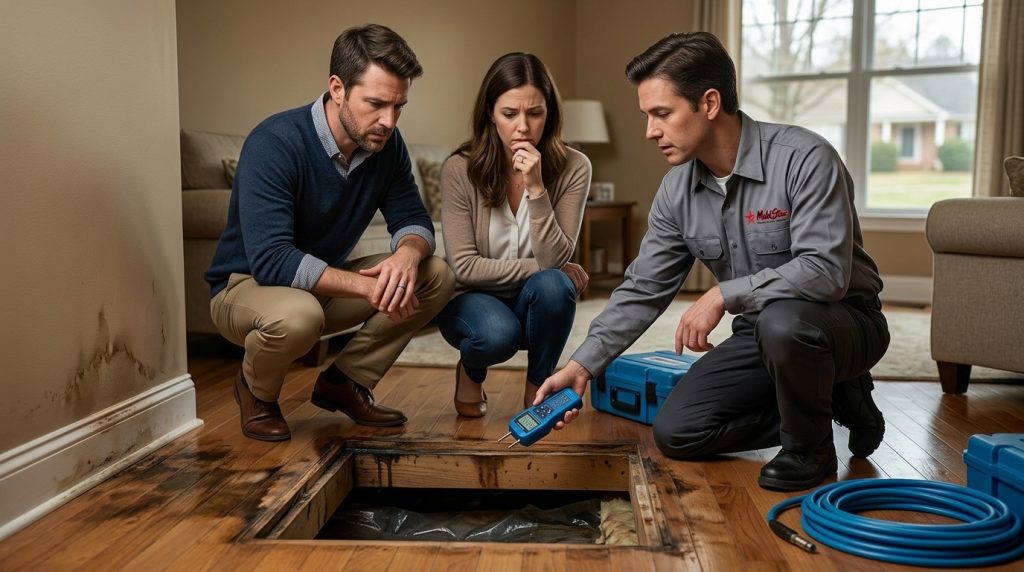
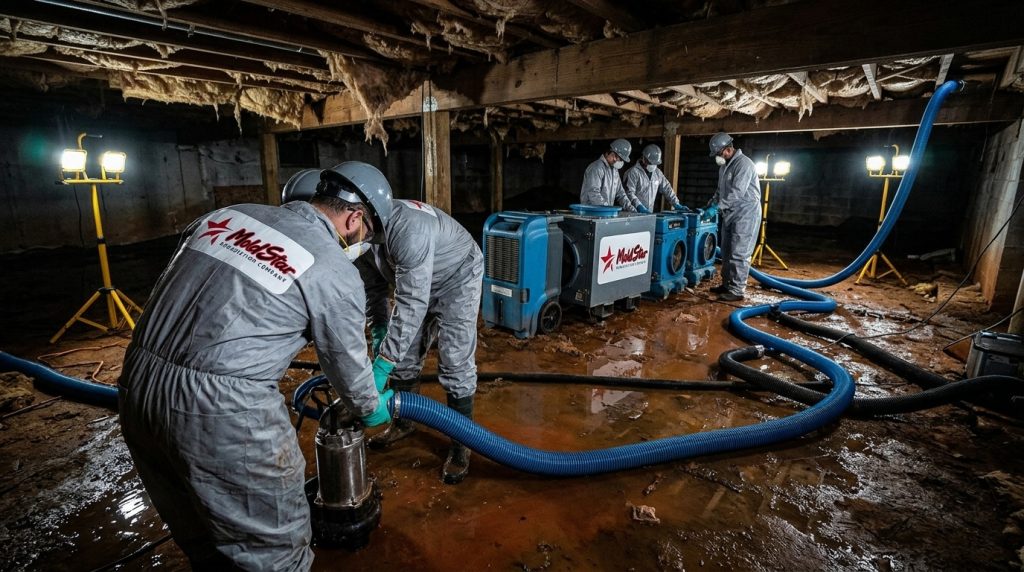
Many crawl spaces in older Atlanta-area homes have drainage issues. Water intrusion through foundation walls, improper grading that directs runoff toward the house, and slow plumbing leaks from supply lines or drain pipes all contribute. I have seen crawl spaces with inches of standing water that homeowners had no idea about. Standing water does not just raise humidity. It can saturate the soil, wick into wooden structural members, and create conditions where mold colonies explode in growth within weeks.
Condensation on HVAC Systems
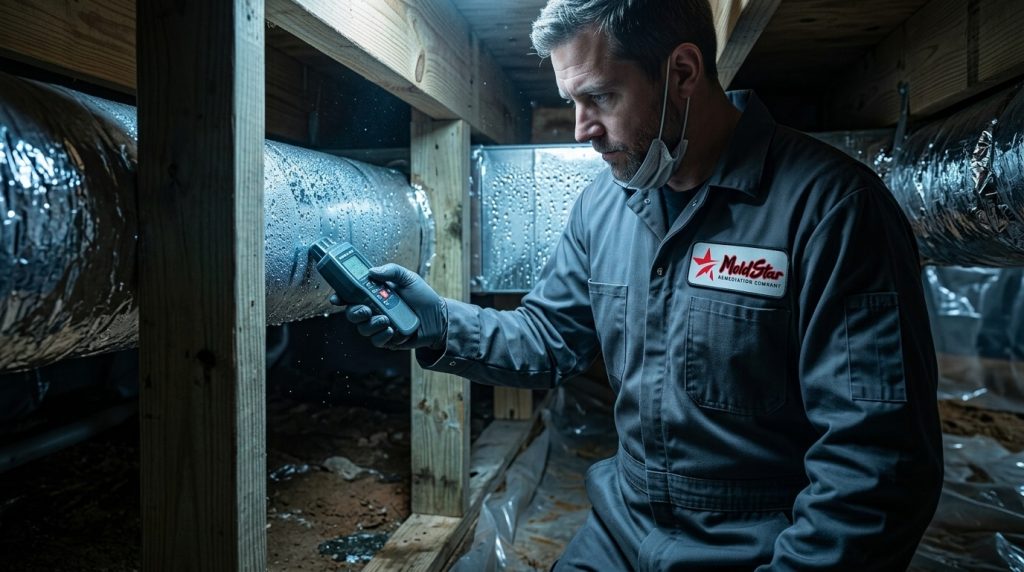
Your HVAC ductwork often runs through the crawl space. Cold supply ducts in a humid crawl space sweat just like a glass of iced tea on a summer afternoon. That condensation drips onto insulation, framing, and the ground, adding yet another moisture source to an already damp environment.
Signs You Have Crawl Space Mold
Most homeowners discover they have a crawl space mold problem without ever looking under their home. The signs show up in the living space above.
Musty or Earthy Odors
This is the number one complaint I hear. A persistent musty smell that you cannot trace to any visible source in the house almost always originates from the crawl space. Mold produces volatile organic compounds (MVOCs) as it feeds on organic materials, and those gases rise through gaps in the floor system into your home.
Unexplained Humidity Indoors
If your home feels damp or clammy even with the air conditioning running, the crawl space may be pumping moisture into your living space. I often see indoor humidity readings of 60% or higher in homes with significant crawl space mold and moisture problems.
Sagging or Soft Floors
When mold attacks the wooden floor joists and subfloor, it breaks down the wood fibers over time. You may notice certain areas of your floor feel bouncy, soft, or uneven. This is a sign that wood rot has set in alongside the mold, and it means structural damage is already occurring.
Visible Mold on Structural Members
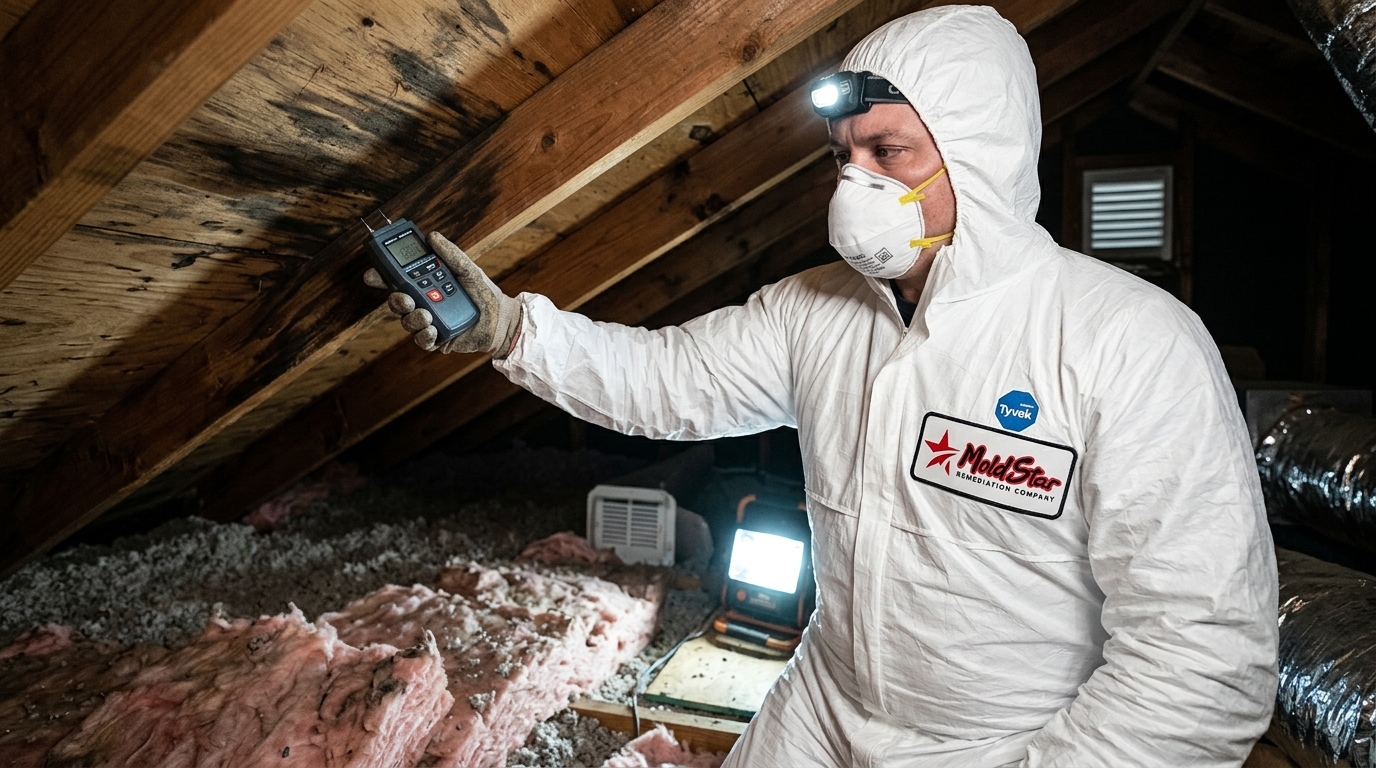
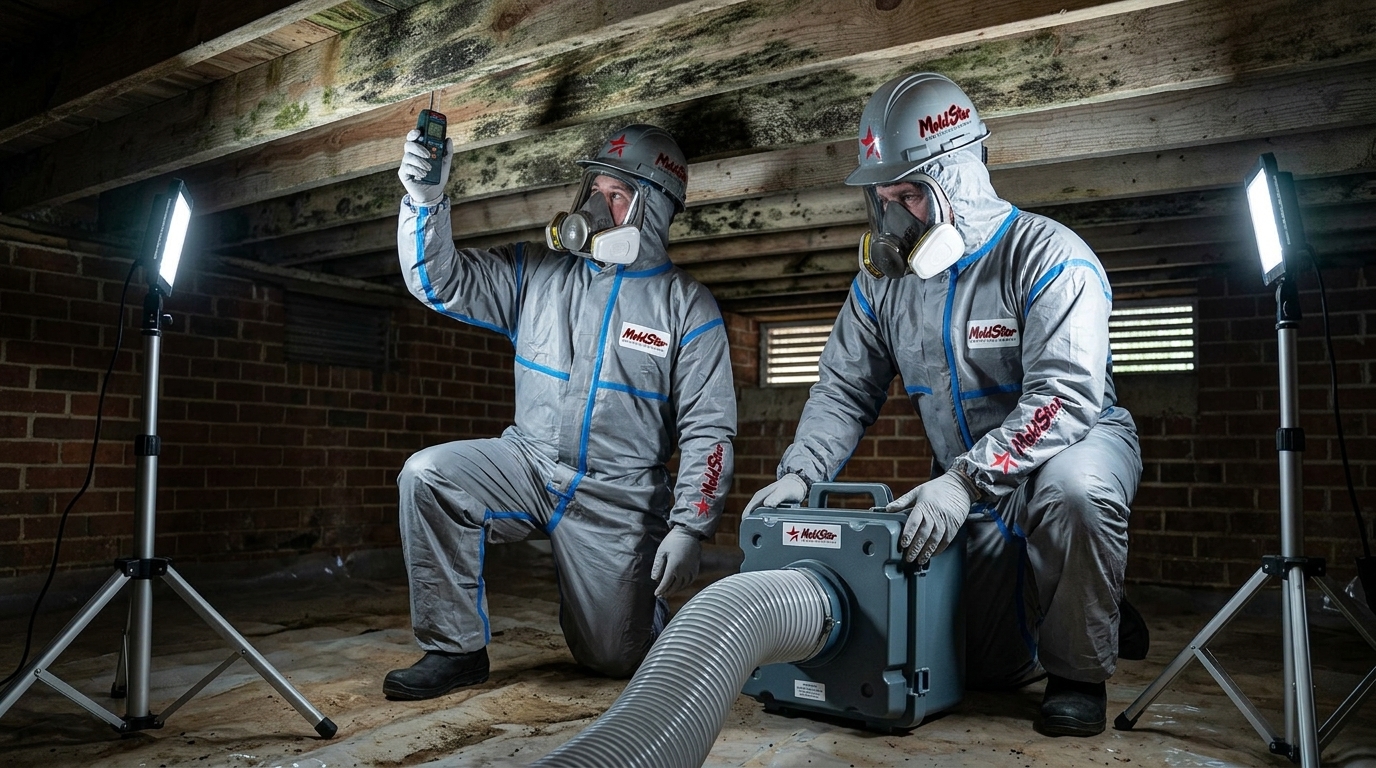
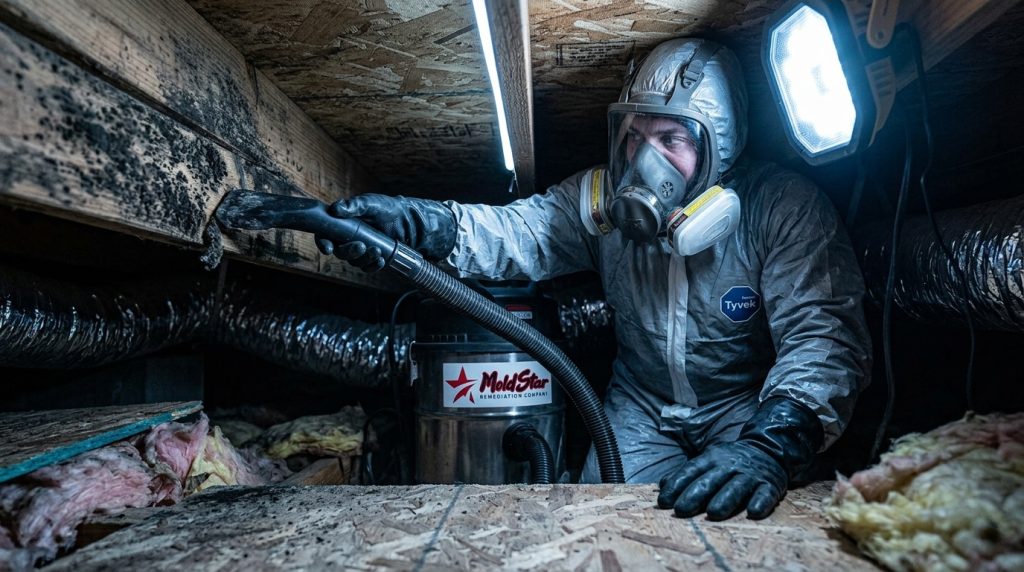
If you do look in the crawl space (or have it inspected), you may see white, gray, green, or black mold growth on the floor joists, subfloor, sill plates, or rim joists. In severe cases, the wood may be discolored and soft to the touch.
Increased Allergy Symptoms
Family members experiencing worsening allergies, respiratory issues, or unexplained coughing and sneezing, especially when they are home, may be reacting to mold spores that have migrated from the crawl space into the living areas.
Health Risks: How Crawl Space Mold Affects Your Family
Here is the part that concerns me most as a remediation professional. Many homeowners assume that because the crawl space is below the house and sealed off from their living space, mold down there cannot affect them. That assumption is wrong.
The Stack Effect
The EPA has documented what is known as the “stack effect” in homes. Warm air rises inside your house and exits through the upper levels and attic. As that air escapes, replacement air is pulled in from the lowest point, which is the crawl space. Studies suggest that 40% to 60% of the air you breathe on the first floor of your home originates from the crawl space. If that crawl space contains mold, you are breathing mold spores every day.
According to the EPA, mold exposure can cause nasal stuffiness, throat irritation, coughing, wheezing, eye irritation, and skin irritation. People with mold allergies may have more severe reactions, and immunocompromised individuals are at risk for serious infections. Long-term exposure to elevated mold levels is not something any family should accept.
Professional Crawl Space Mold Removal: What the Process Looks Like
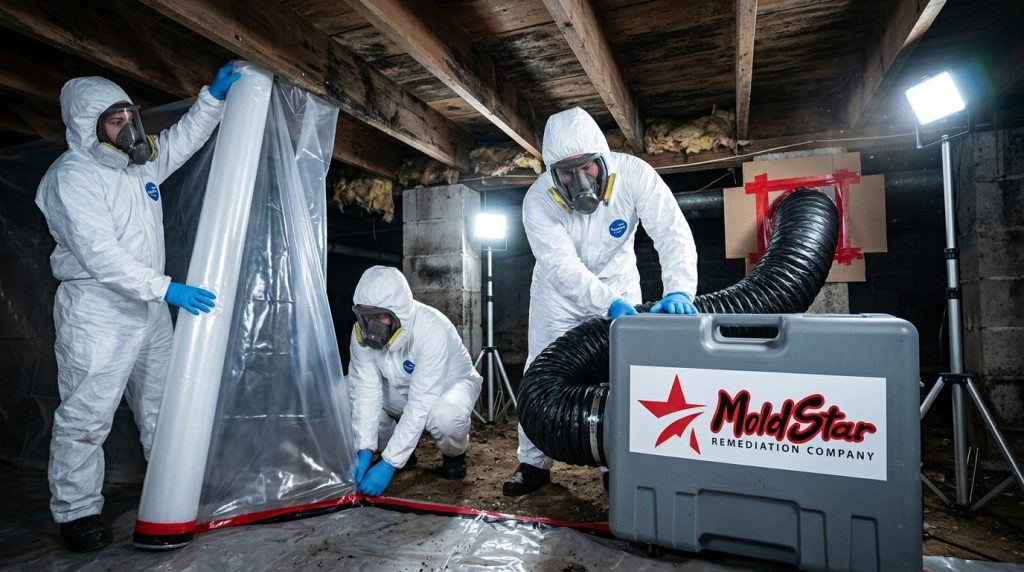
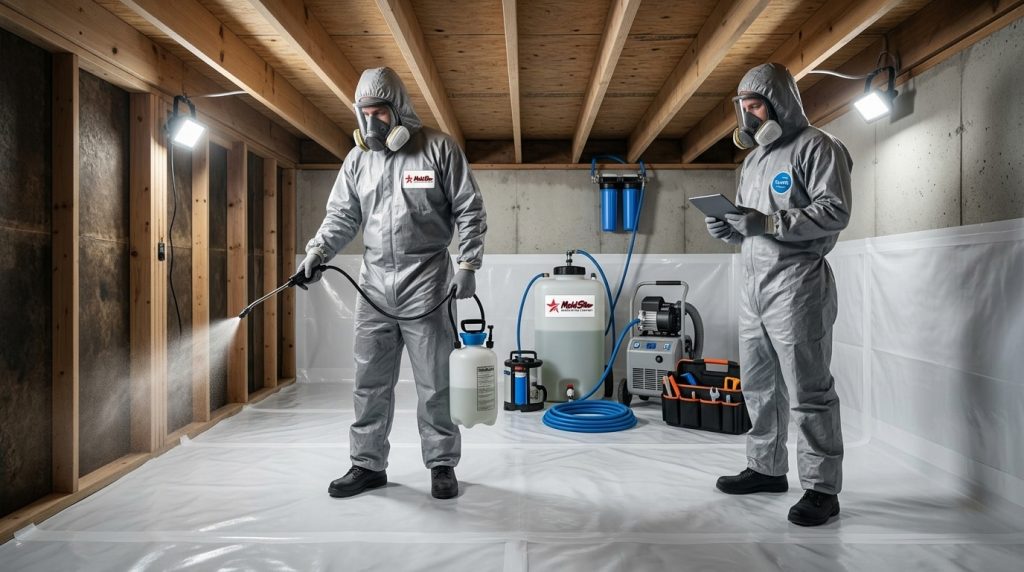
Effective crawl space mold remediation is not a DIY project. The confined space, the scale of contamination, and the need for proper containment and safety equipment make professional remediation essential. Here is how we approach it at MoldStar Remediation.
Step 1: Thorough Inspection and Assessment
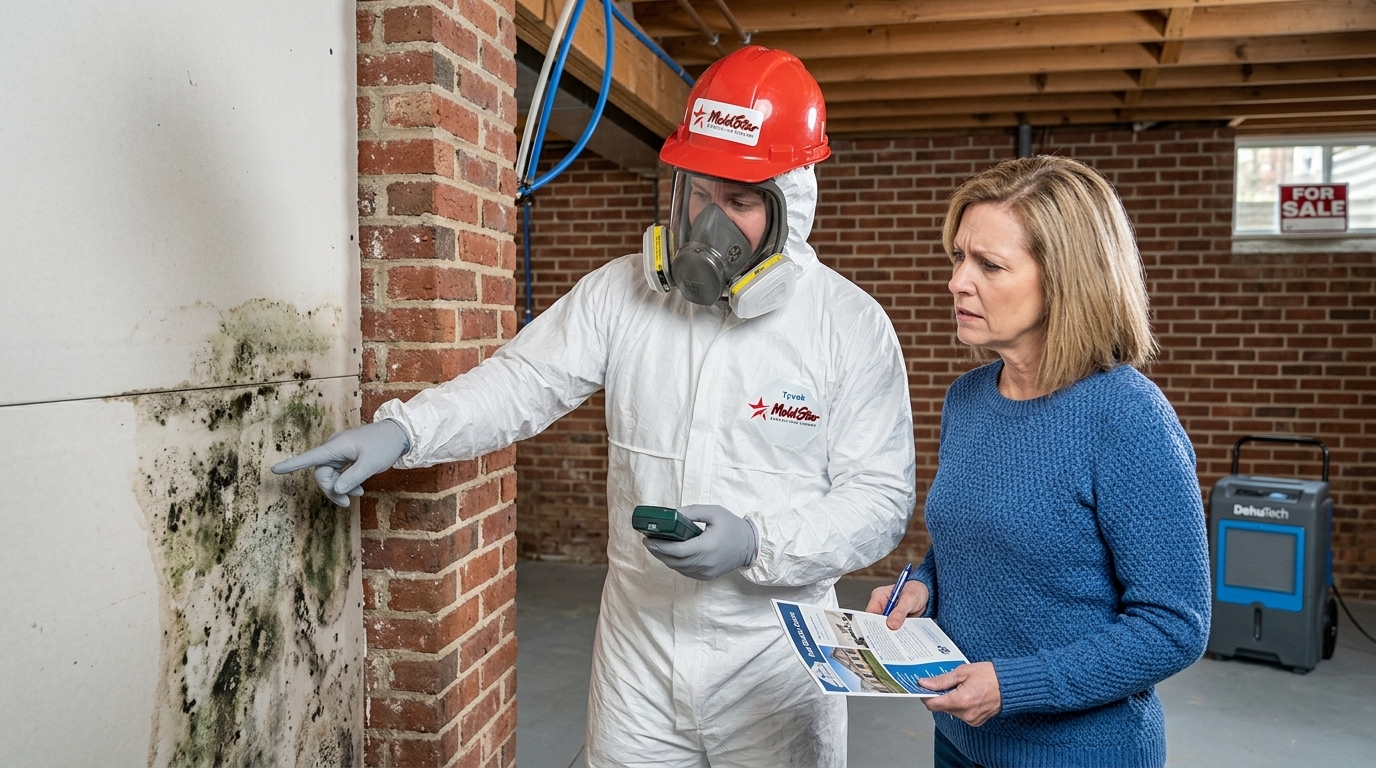
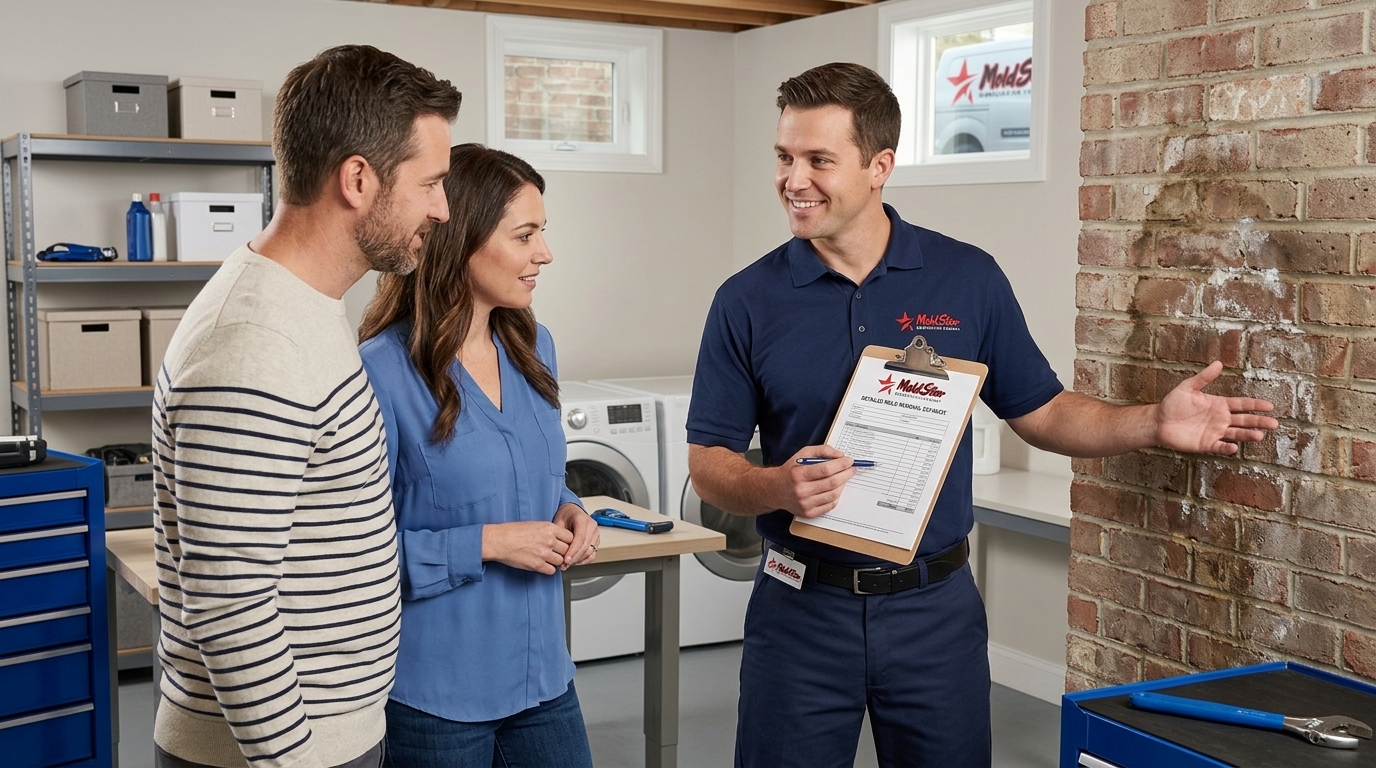
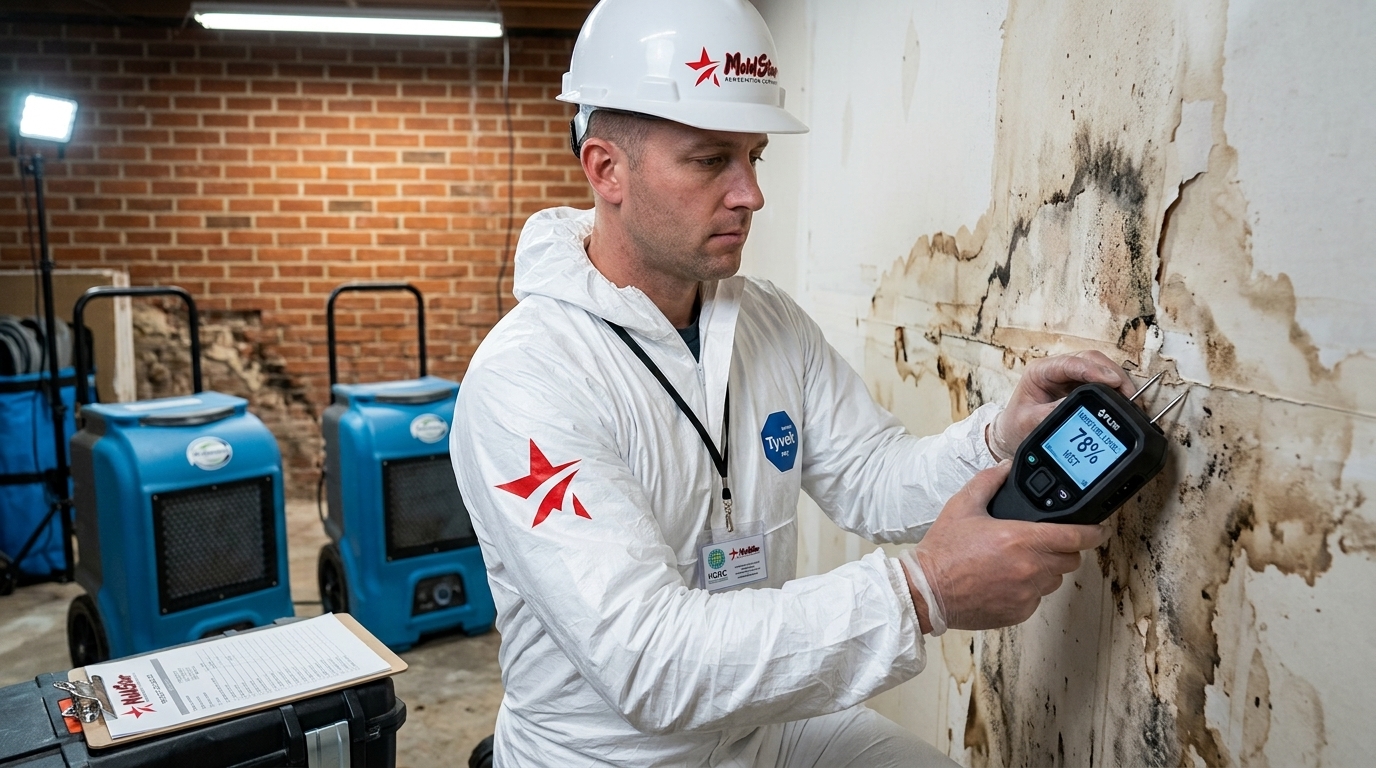
Every project starts with a detailed inspection. I personally assess the crawl space to identify the type and extent of mold growth, the moisture sources driving it, and any structural damage that has occurred. We document everything with photos and moisture readings. This assessment determines the scope of the remediation plan.
Step 2: Containment
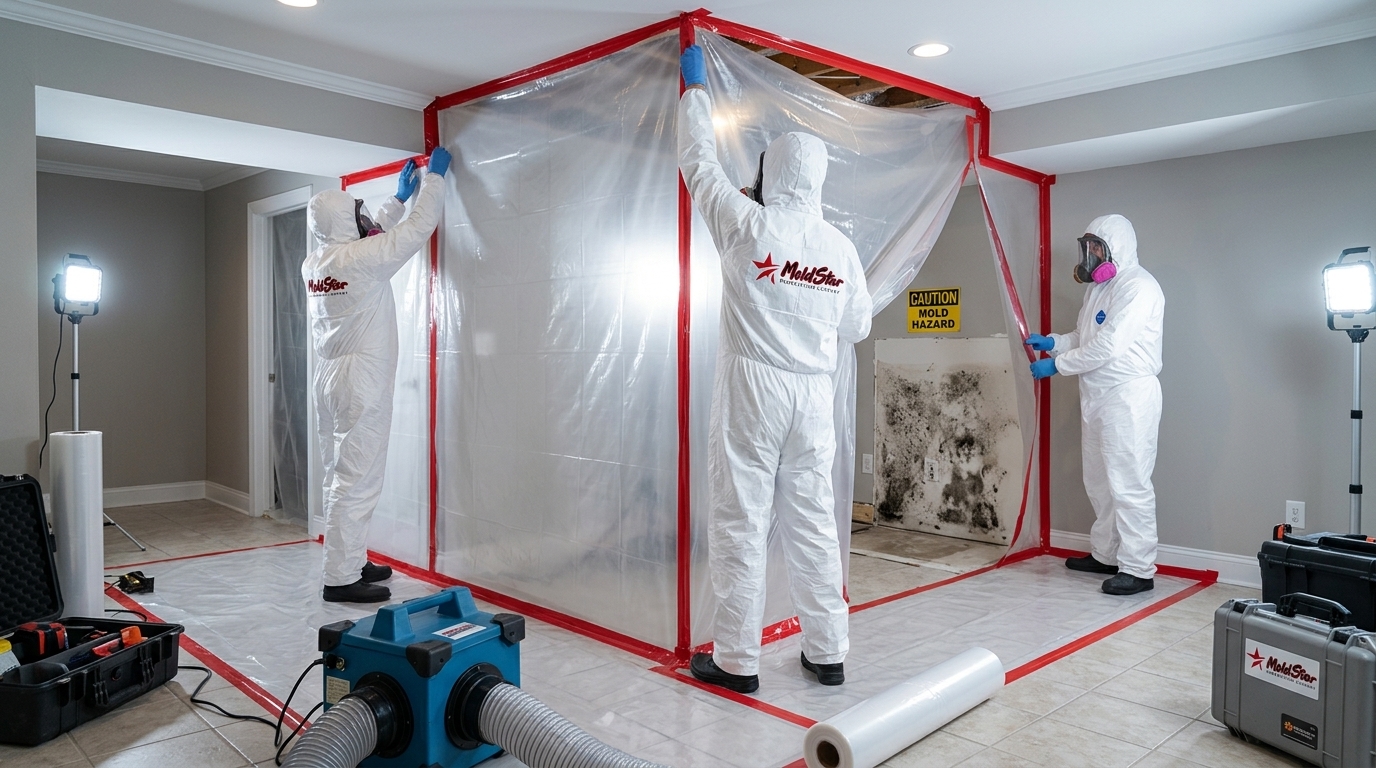
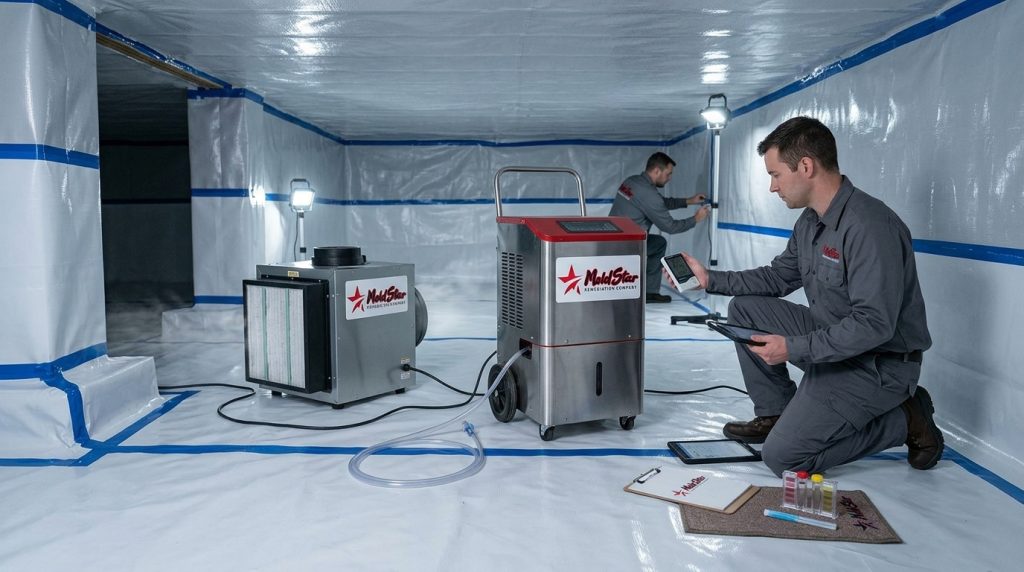
Before any mold is disturbed, we establish containment barriers. This prevents mold spores from spreading into the living space during remediation. We seal openings between the crawl space and the home and use negative air pressure machines with HEPA filtration to keep spores contained
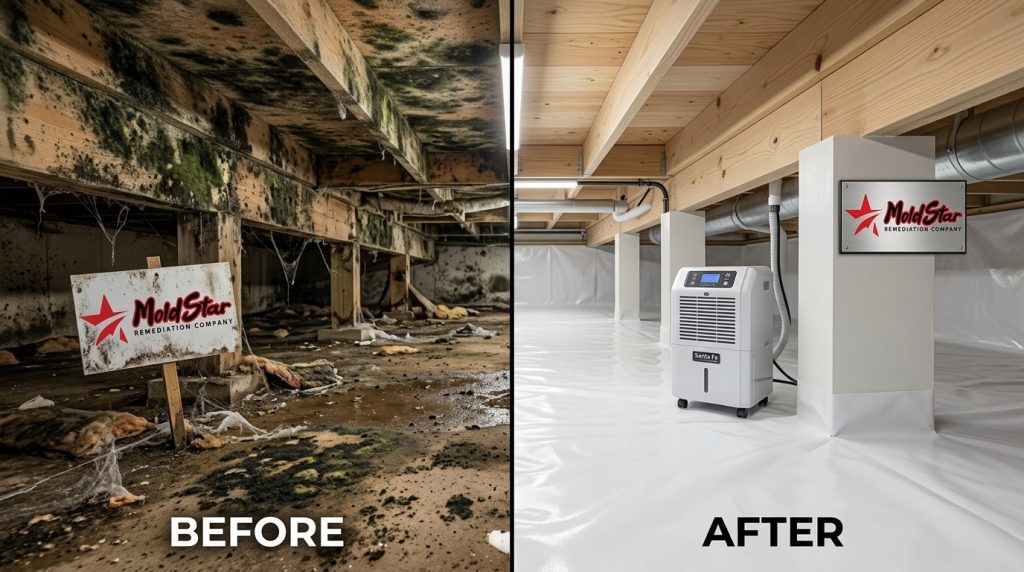
Step 3: HEPA Vacuuming
All accessible surfaces with mold growth are HEPA vacuumed to remove loose spores and debris. HEPA vacuums capture particles down to 0.3 microns, which is small enough to trap mold spores that standard vacuums would simply blow back into the air.
Step 4: Mold Removal from Wood Surfaces
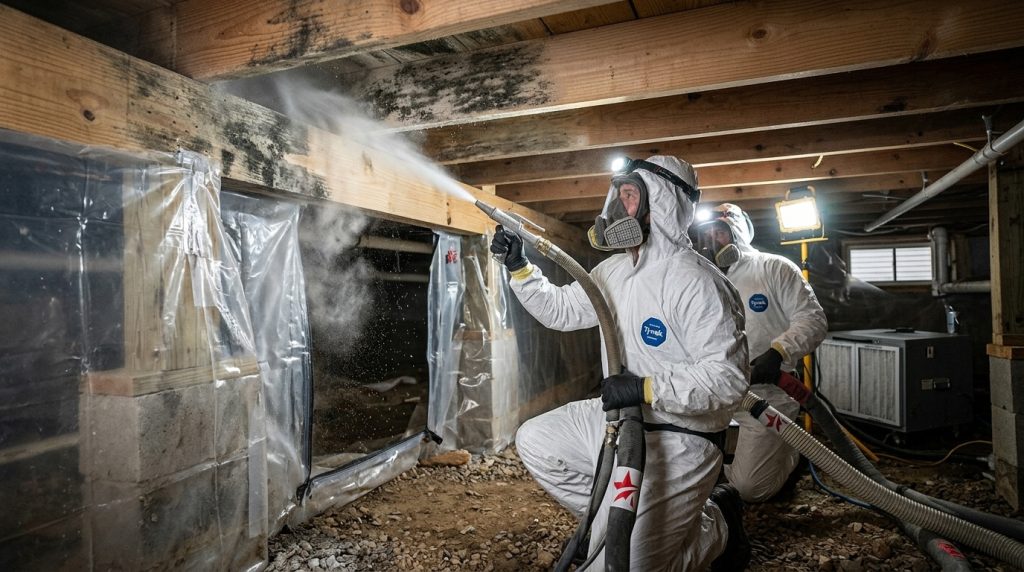
Depending on the severity of the mold growth, we use media blasting (soda blasting), sanding, or wire brushing to remove mold from the wood surfaces of joists, subfloor, and sill plates. Media blasting is highly effective because it strips the mold and the stained surface layer without damaging the structural integrity of the wood. For lighter contamination, sanding or scraping may be sufficient.
Step 5: Antimicrobial Treatment
After the mold has been physically removed, we apply a professional-grade antimicrobial treatment to all affected surfaces. This kills any remaining mold at the microscopic level and provides a protective barrier that inhibits future mold growth on treated surfaces.
Step 6: Clearance Testing
Once remediation is complete, we recommend clearance testing to verify that mold levels have been brought back to acceptable levels. This gives you documented proof that the work was done correctly and that your crawl space is safe.
Prevention: Crawl Space Encapsulation
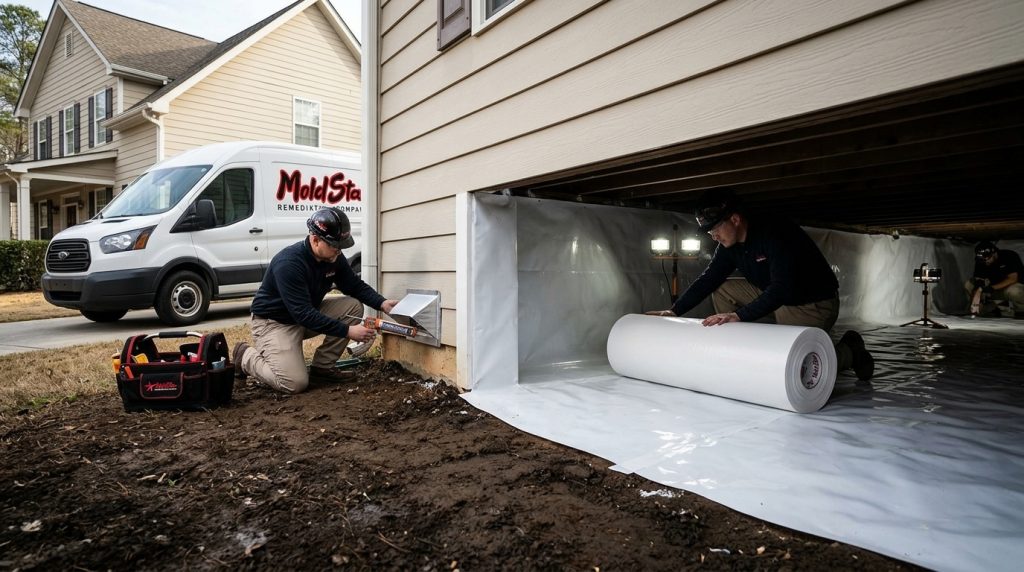
Removing the mold is only half the job. If you do not address the conditions that caused it, the mold will come back. The most effective long-term prevention strategy for crawl spaces in Georgia is full crawl space encapsulation.
What Encapsulation Includes
Heavy-duty vapor barrier: A thick (20-mil) polyethylene vapor barrier is installed across the entire crawl space floor and up the foundation walls. This blocks ground moisture from evaporating into the crawl space. The thin 6-mil plastic sheeting that many builders install is not sufficient for Georgia’s moisture levels.
Sealed foundation vents: Those old-style open vents that pull humid air in? We seal them permanently. This is one of the most impactful single changes you can make. Modern building science has confirmed that sealed, conditioned crawl spaces outperform vented crawl spaces in humid climates like ours.
Dehumidification: A commercial-grade crawl space dehumidifier is installed to maintain humidity below 55%, well under the threshold where mold can grow. These units are designed to operate continuously in the crawl space environment and drain automatically.
Drainage improvements: If water intrusion is an issue, a sump pump system or interior drain tile may be installed to manage water before it can raise humidity levels.
Encapsulation transforms your crawl space from a damp, moldy liability into a clean, dry, controlled environment. It protects your home’s structural integrity, improves your indoor air quality, and can even reduce your energy bills by making your HVAC system more efficient.
Prevention: Crawl Space Repair
Sometimes the damage from long-term moisture and mold requires structural crawl space repair before or alongside encapsulation.
Common Repairs We Handle
Joist repair and sistering: When floor joists have been weakened by wood rot, we reinforce them by sistering new lumber alongside the damaged joists. In severe cases, sections of joist may need to be replaced entirely.
Subfloor replacement: Rotted subfloor sections are removed and replaced with new material. This is often necessary when homeowners have noticed soft or sagging floors above.
Sill plate repair: The sill plate sits on top of the foundation wall and is one of the first structural members affected by crawl space moisture. Damaged sill plates compromise the entire floor system and must be repaired or replaced.
Insulation replacement: Wet, moldy fiberglass insulation in the crawl space is a common sight. It holds moisture against the wood, making the mold problem worse. We remove the contaminated insulation and, when appropriate, replace it with materials better suited to the crawl space environment.
These repairs restore the structural integrity of your floor system and eliminate compromised materials that would continue to harbor mold.
Crawl Space Mold Removal Cost: What to Expect in Atlanta
One of the most common questions I get is about crawl space mold removal cost. The honest answer is that it depends on the size of the crawl space, the extent of the mold growth, the moisture sources involved, and whether structural repairs are needed. But I can give you realistic ranges for the Metro Atlanta area.
Mold Remediation Only
Typical range: $2,000 to $8,000
This covers inspection, containment, mold removal, antimicrobial treatment, and clearance testing. A small crawl space with moderate mold on a few joists will fall toward the lower end. A full-size crawl space with heavy mold growth across the entire subfloor and joists will be on the higher end.