This guide breaks down when insurance typically covers mold, when it does not, what Georgia homeowners need to know, and how to give yourself the best chance of getting your claim approved.
Important note: This article provides general information based on my experience. It is not legal or insurance advice. Every policy is different, and I always recommend speaking with your insurance agent or a public adjuster about your specific situation.
The Short Answer: It Depends on the Cause
Most standard homeowners insurance policies in Georgia cover mold damage only when the mold resulted from a “covered peril.” A covered peril is a sudden, accidental event that your policy specifically protects against, like a burst pipe, a storm, or an appliance malfunction.
Here is the key distinction: insurance companies look at the cause of the mold, not the mold itself.
If mold grows because a pipe burst inside your wall last week and water soaked the drywall, that is typically covered. If mold grows because you have had a slow drip under the kitchen sink for two years and never addressed it, that is typically not covered.
Insurance companies treat mold as secondary damage. They want to know what the primary event was. If that event falls under your policy, the resulting mold damage often does too.
When Homeowners Insurance Typically DOES Cover Mold
Based on what I have seen working with homeowners in Cobb, Fulton, DeKalb, and Gwinnett counties, insurance companies are most likely to cover mold remediation in these situations:
Burst or Broken Pipes
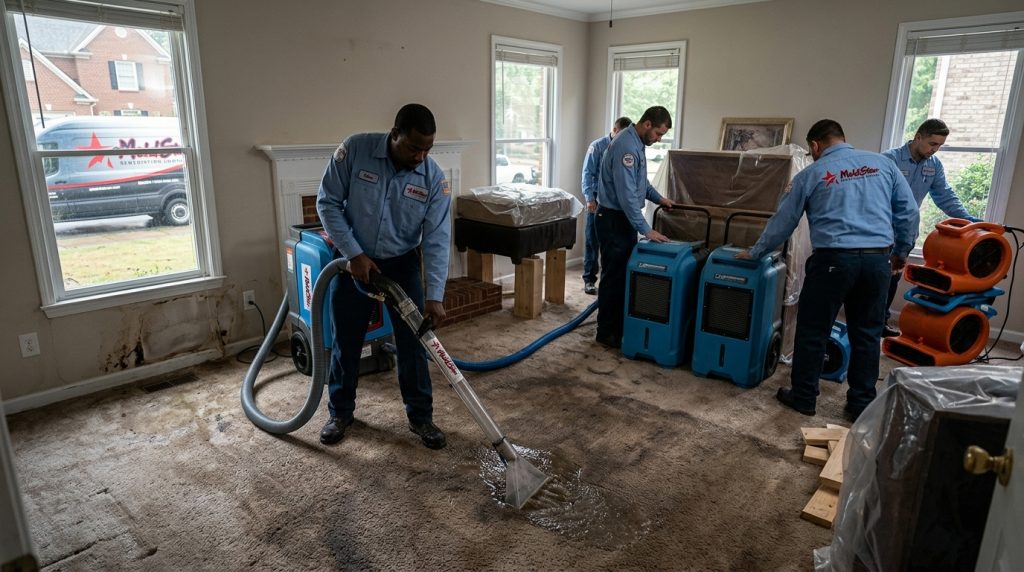
A pipe freezes and bursts during a cold snap. Water floods behind the walls, and within 48 to 72 hours, mold starts growing on wet drywall and insulation. Because the burst pipe is a sudden and accidental event, most homeowners policies cover both the water damage and the resulting mold removal.
Storm Damage
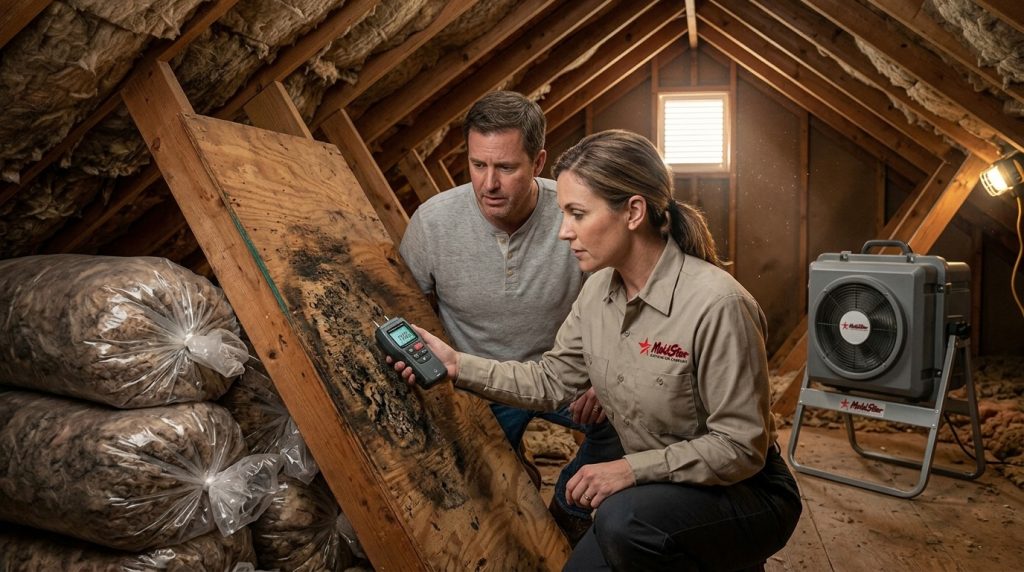
A severe thunderstorm damages your roof, and rainwater leaks into your attic. If the storm damage itself is a covered peril under your policy, the mold growth that follows is generally covered as well.
Appliance Failures
Your washing machine supply line ruptures, your water heater fails, or your dishwasher leaks unexpectedly. When a covered appliance malfunction causes water damage that leads to mold, the remediation is usually part of the claim.
Accidental Overflow or Fire Suppression
A bathtub overflows, a toilet backs up suddenly, or water used to extinguish a fire soaks into building materials. As long as the event was accidental and not the result of ongoing neglect, the resulting mold damage is typically eligible for coverage.
In all of these situations, the common thread is the same: the mold was caused by a sudden, accidental event that you could not have reasonably prevented.
When Homeowners Insurance Typically DOES NOT Cover Mold
This is where most claim denials happen. Insurance companies have specific exclusions that disqualify mold damage from coverage, and in my experience, the most common reason for denial is some form of homeowner negligence or maintenance failure.
Ongoing Leaks or Poor Home Maintenance
If you had a dripping pipe under the bathroom sink for months and never fixed it, the mold that grew behind the vanity is your responsibility. Insurance companies consider this a maintenance issue, not an accidental event. The same applies to neglected roofs, aging HVAC systems, and any other deferred maintenance that leads to moisture intrusion and mold growth.
Flooding Without Flood Insurance
Standard homeowners insurance does not cover flood damage. If your home floods due to rising water from heavy rain, a river overflow, or storm surge, neither the water damage nor the resulting mold is covered. You need a separate flood insurance policy, which I will discuss in the Georgia-specific section below.
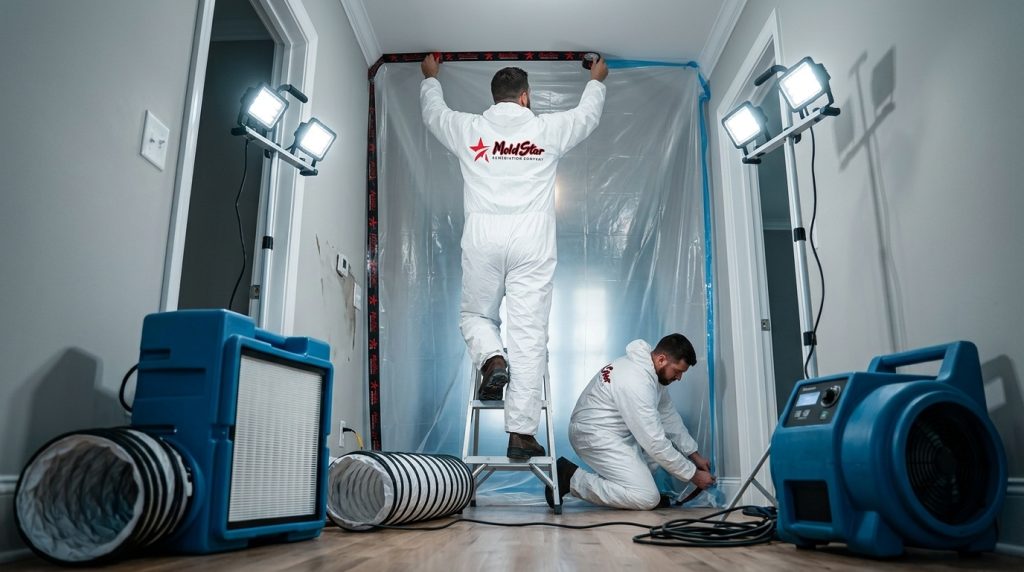
Humidity and Condensation
If mold develops because of high indoor humidity, poor ventilation, or condensation buildup, that is not a covered event. Insurance companies classify this as a maintenance and environmental issue. Running a dehumidifier and maintaining proper ventilation is the homeowner’s responsibility.
Known Pre-Existing Mold
If mold was present before you purchased the home, or if you knew about a mold problem and did nothing to address it, your insurance company will deny the claim. This includes situations where a home inspector noted moisture issues during a pre-purchase inspection and you did not follow up.
Gradual Damage
Many policies specifically exclude “gradual damage.” A slow leak behind a wall that has been growing mold for six months falls into this category, even if you genuinely did not know about it.
Georgia-Specific Insurance Notes for Homeowners
Georgia has some important particularities when it comes to homeowners insurance and mold coverage. Here is what I see most often working with Atlanta-area homeowners.
Georgia Does Not Require Mold Coverage
The state of Georgia does not mandate that homeowners insurance policies include mold remediation coverage. This means your policy may or may not cover mold, depending on your carrier and the specific plan you selected. Many homeowners assume they are covered and find out the hard way that mold was excluded or severely limited in their policy.
Many Georgia Policies Have Mold Caps
Even when mold is covered, many policies sold in Georgia include a cap on mold-related claims. Common caps I see range from $5,000 to $10,000. For a small mold issue in a bathroom, that might be sufficient. For a large-scale remediation involving multiple rooms, HVAC ductwork, and structural materials, $5,000 to $10,000 may only cover a fraction of the total cost. You can learn more about typical pricing in our mold remediation cost guide.
Flood Insurance Is Separate
Georgia homeowners in flood-prone areas should strongly consider flood insurance through the National Flood Insurance Program (NFIP) or a private carrier. Standard homeowners policies do not cover flood-related mold. FEMA flood zone maps have been updated in recent years, and more Metro Atlanta properties near rivers and creeks are affected than you might expect. Check with your insurance agent.
Review Your Policy Now, Not After You Find Mold
Georgia’s high humidity from April through October makes mold prevention more challenging than in drier climates, and insurance companies know it. That is one reason mold caps and exclusions are so common in policies sold here.
I strongly encourage every Georgia homeowner to call their agent and ask these questions before a problem ever arises:
- Is mold remediation covered under my policy?
- What is my mold coverage cap or limit?
- Does my policy require me to report water damage within a specific timeframe?
- Are there any mold-specific exclusions or endorsements?
Knowing the answers now gives you a major advantage if you ever need to file a claim.
How to File a Mold Insurance Claim: Step by Step
If you discover mold in your home and believe the cause falls under a covered peril, here is how to approach the claims process based on what I have seen work best.
Step 1: Document Everything Immediately
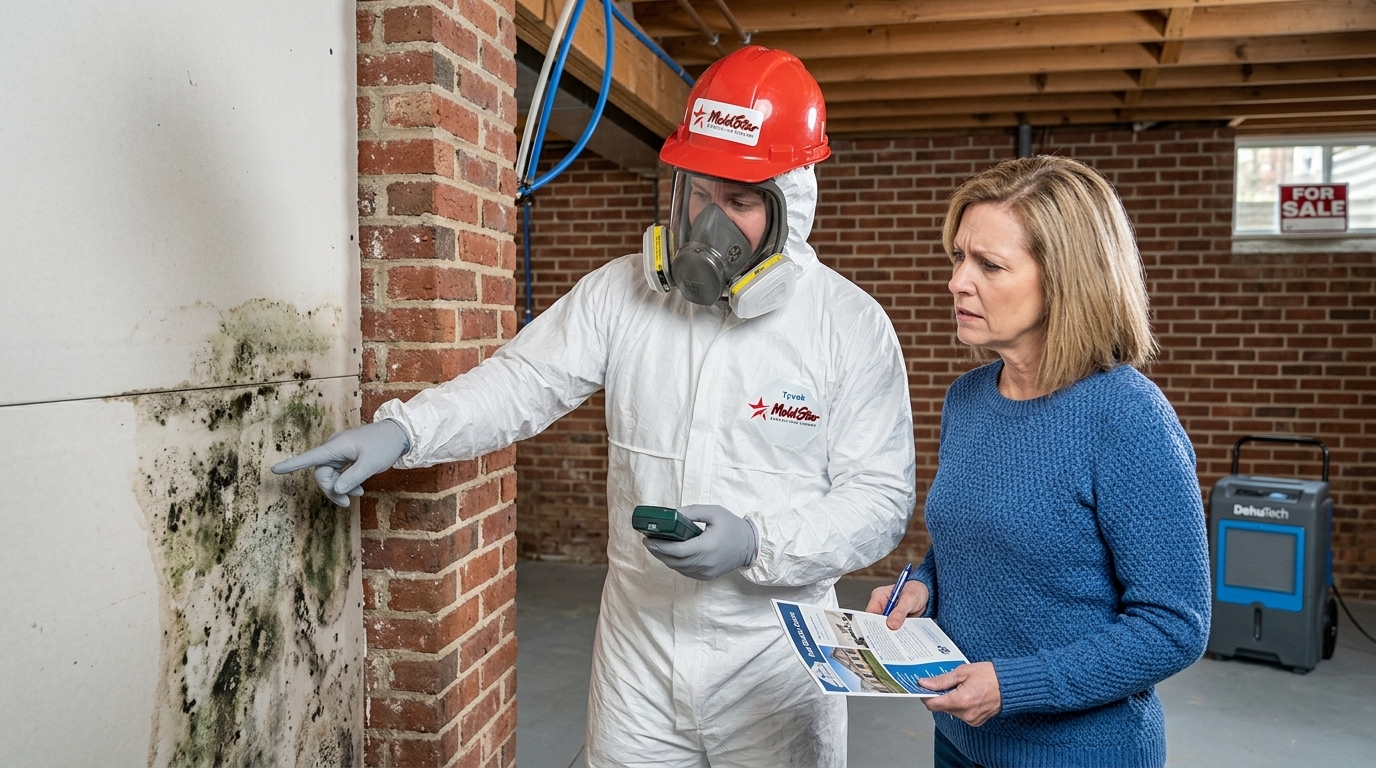
Before you touch anything, take photos and video of the mold damage, the water damage that caused it, and any affected areas. Photograph the source of the water intrusion if visible. Include wide shots of the room, close-ups of the mold growth, and any damaged materials. Save these files with timestamps.
Step 2: Contact Your Insurance Company Promptly
Report the damage as soon as possible. Most policies have reporting requirements, and delays can give adjusters a reason to question whether the damage was truly sudden. Document the name of the person you speak with, the date, and your claim number.
Prevention: Crawl Space Encapsulation
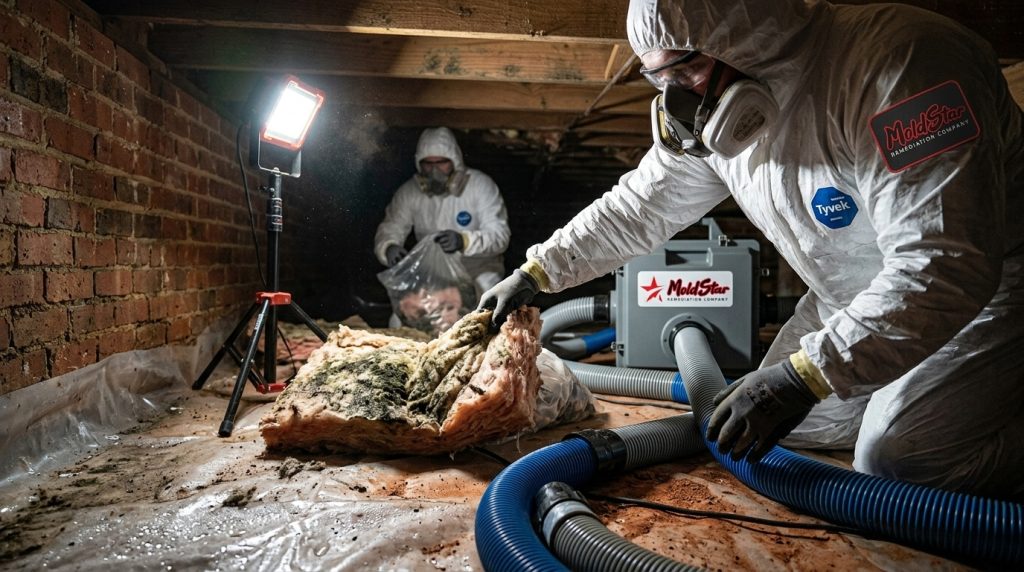
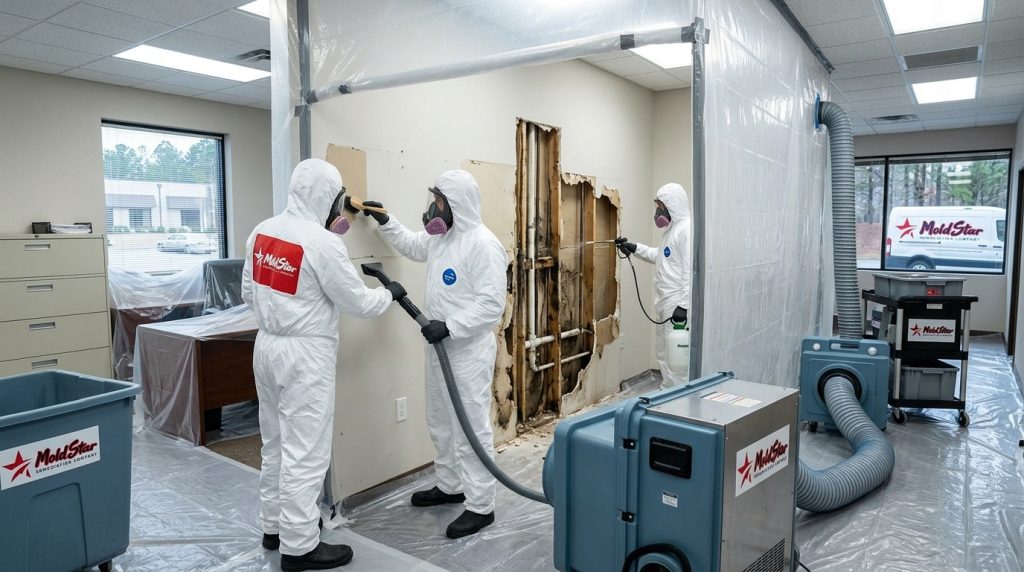
Removing the mold is only half the job. If you do not address the conditions that caused it, the mold will come back. The most effective long-term prevention strategy for crawl spaces in Georgia is full crawl space encapsulation.
What Encapsulation Includes
Heavy-duty vapor barrier: A thick (20-mil) polyethylene vapor barrier is installed across the entire crawl space floor and up the foundation walls. This blocks ground moisture from evaporating into the crawl space. The thin 6-mil plastic sheeting that many builders install is not sufficient for Georgia’s moisture levels.
Sealed foundation vents: Those old-style open vents that pull humid air in? We seal them permanently. This is one of the most impactful single changes you can make. Modern building science has confirmed that sealed, conditioned crawl spaces outperform vented crawl spaces in humid climates like ours.
Dehumidification: A commercial-grade crawl space dehumidifier is installed to maintain humidity below 55%, well under the threshold where mold can grow. These units are designed to operate continuously in the crawl space environment and drain automatically.
Drainage improvements: If water intrusion is an issue, a sump pump system or interior drain tile may be installed to manage water before it can raise humidity levels.
Encapsulation transforms your crawl space from a damp, moldy liability into a clean, dry, controlled environment. It protects your home’s structural integrity, improves your indoor air quality, and can even reduce your energy bills by making your HVAC system more efficient.
Step 3: Do Not Start Remediation Before the Adjuster Inspects
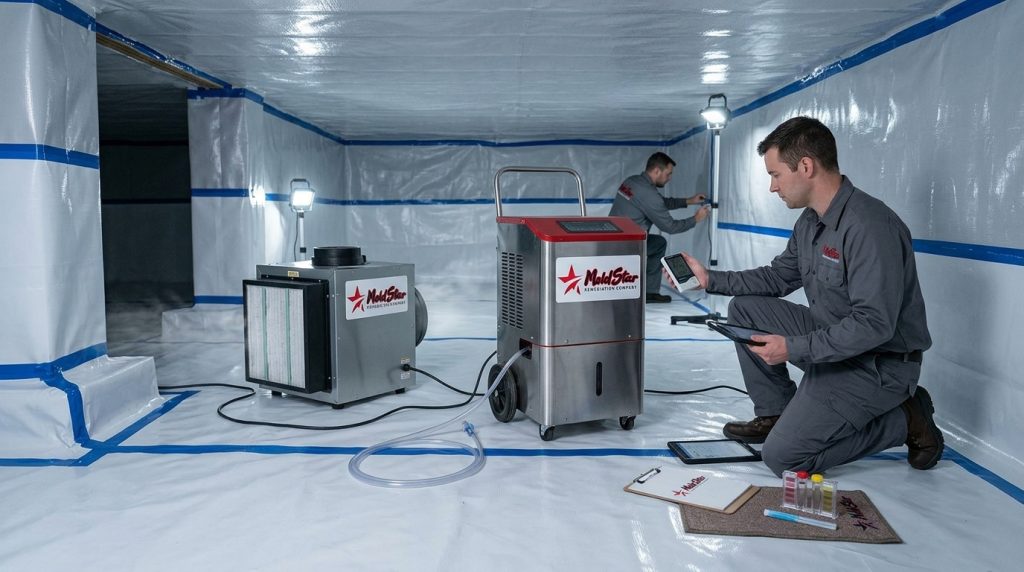
Unless there is an active emergency (sewage backup, standing water creating an immediate health hazard), do not begin tearing out materials before the insurance adjuster has a chance to inspect. If you remove the evidence before they document it, you may weaken your claim significantly.
You should, however, take reasonable steps to prevent further damage. Turn off the water source, run fans, or place tarps. Most policies actually require you to mitigate ongoing damage, and failing to do so can also hurt your claim.
Step 4: Get an Independent Mold Inspection
The insurance adjuster works for the insurance company, not for you. An independent mold inspection from a certified professional gives you a separate, unbiased assessment of the problem’s scope. At MoldStar, we provide detailed mold remediation scoping reports that many homeowners use alongside their insurance claims.
Step 5: Get a Written Remediation Estimate
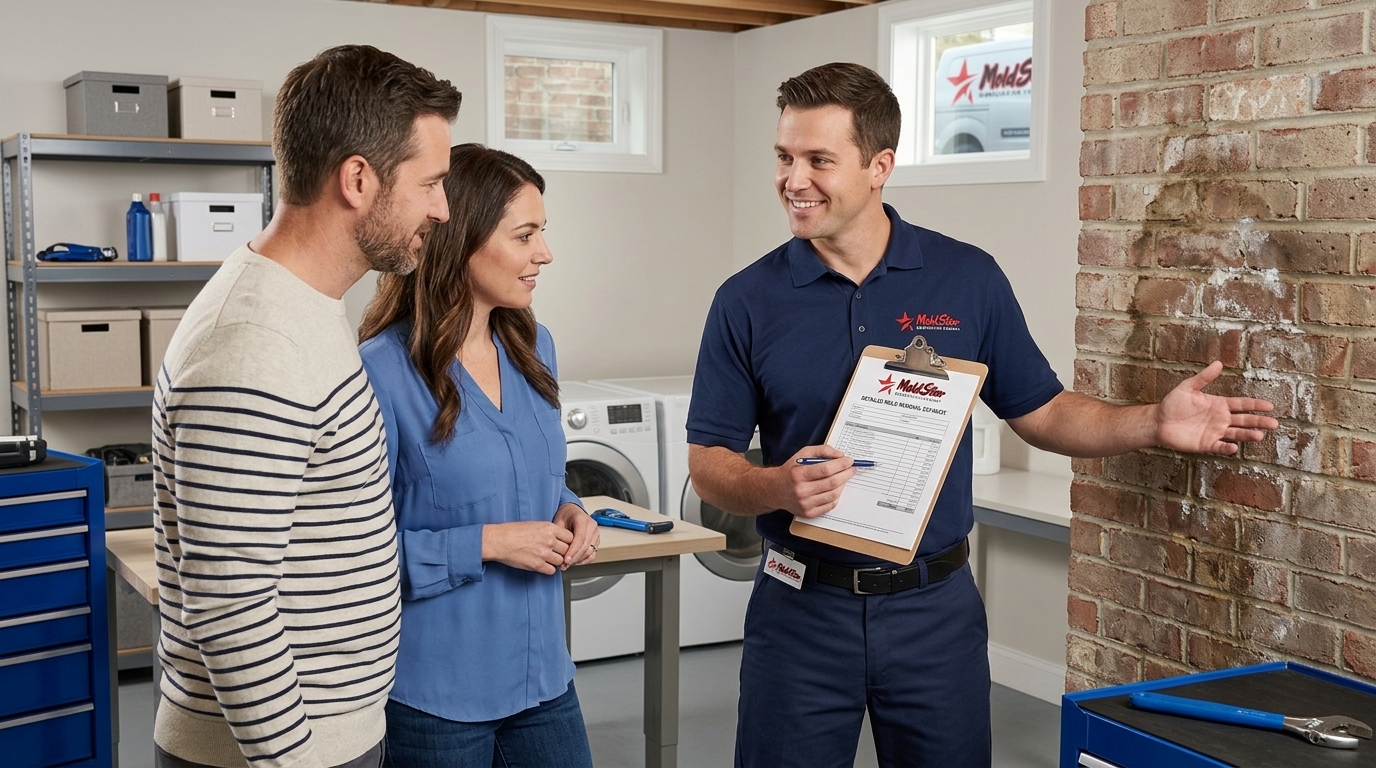
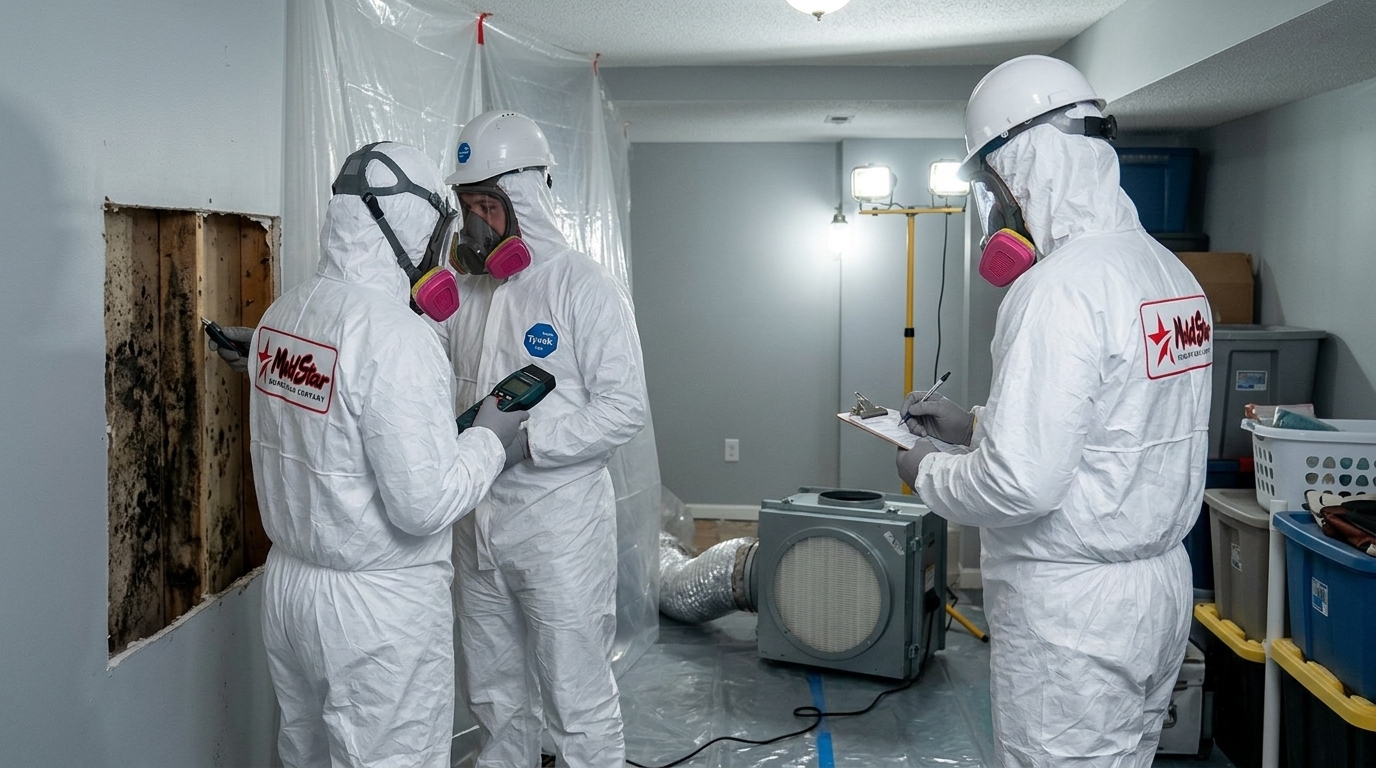
Get a detailed written estimate from an IICRC-certified remediation company before work begins. The estimate should include the scope of work, materials to be removed, containment procedures, equipment needed, and clearance testing. This document becomes part of your insurance file and helps justify the cost.
Tips to Maximize Your Mold Insurance Claim
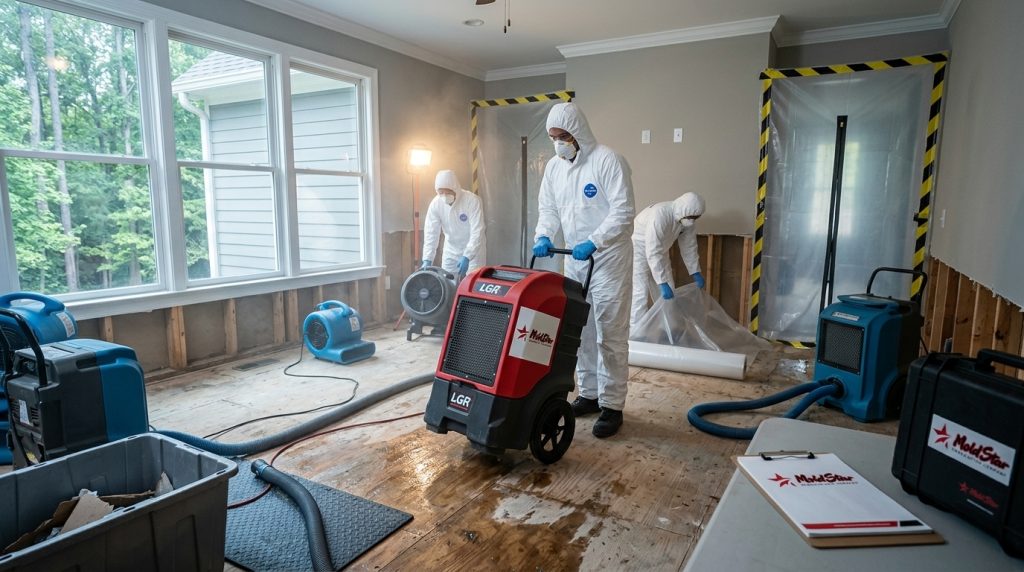
Having worked with homeowners through hundreds of insurance-related mold projects, here are the strategies I have seen make the biggest difference.
- Act fast. Report water damage and mold within 24 to 48 hours. Speed strengthens your case that this was sudden, not a long-term neglect issue.
- Document everything. Photos, videos, written notes, receipts for emergency supplies, records of phone calls. Keep a dedicated folder for your claim.
- Get an independent inspection. Do not rely solely on the insurance company’s assessment. An IICRC-certified mold inspector can identify hidden mold that a general adjuster might miss.
- Get multiple remediation estimates. Two or three written estimates from certified companies give you leverage if the insurance company’s preferred vendor quotes significantly less.
- Keep every receipt. Save receipts for all expenses: temporary housing, cleaning supplies, replacement materials, emergency mitigation. These are all potentially reimbursable.
- Review the first offer carefully. Insurance companies may offer a settlement that does not fully cover the scope of work needed. You have the right to negotiate or hire a public adjuster to advocate on your behalf.
What MoldStar Remediation Provides for Insurance Claims
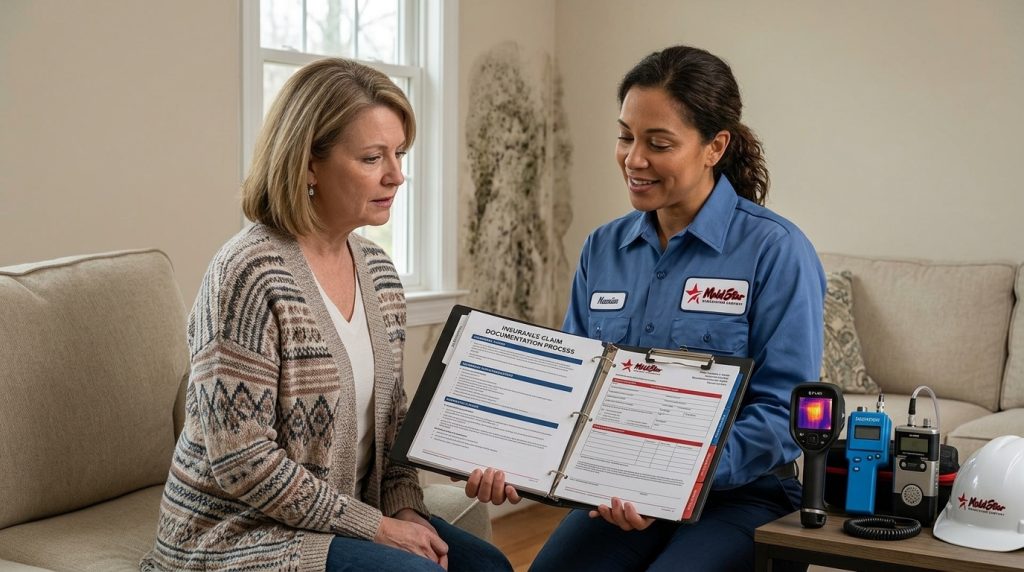
Over the years, we have developed our documentation process specifically to support homeowners filing insurance claims. When you work with MoldStar, you receive:
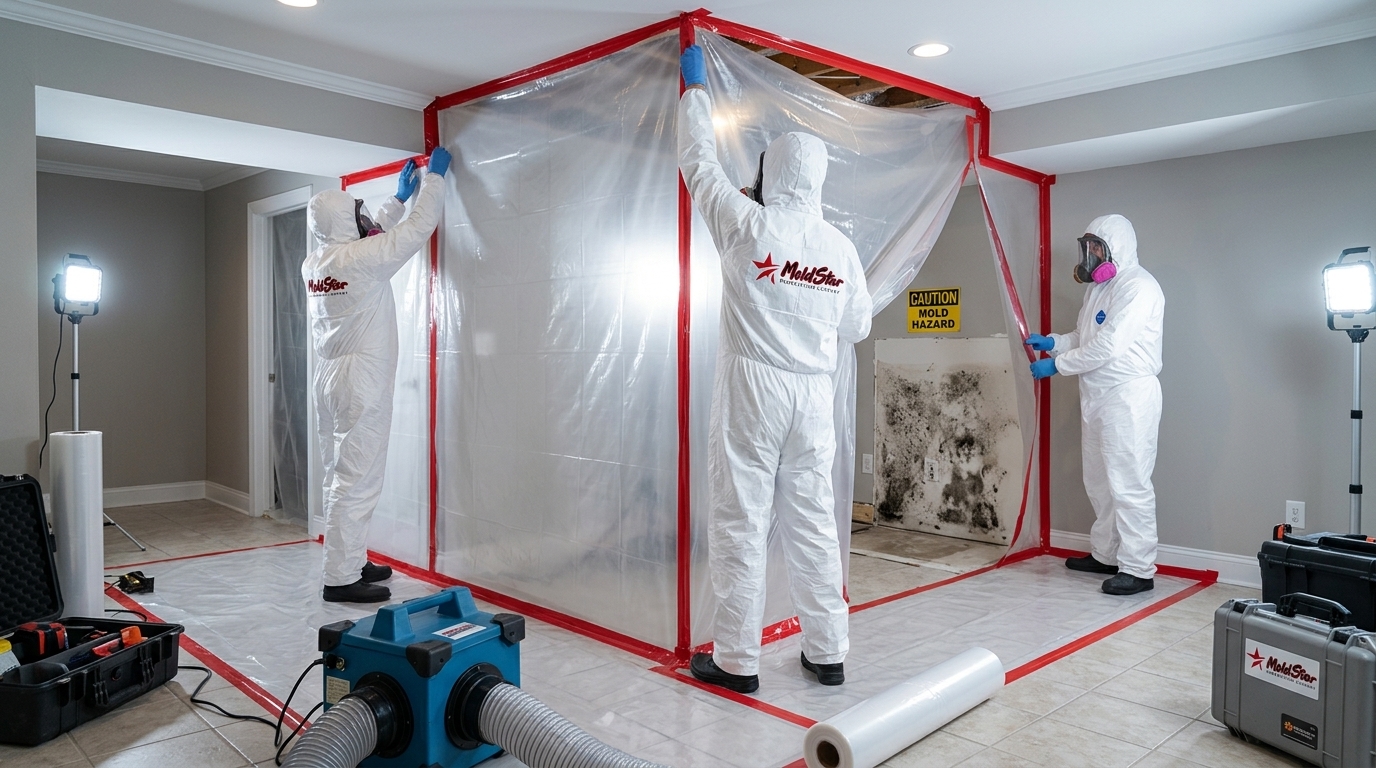
- Detailed scope of work: A written, line-item breakdown of every step of the remediation process, including containment, removal, treatment, and reconstruction needs.
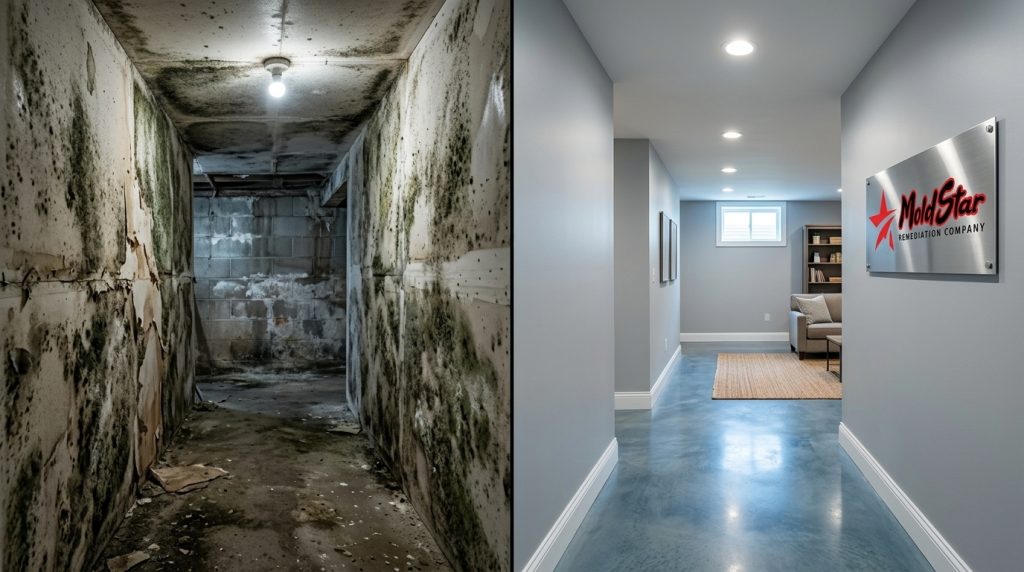
- Comprehensive photo documentation: Before, during, and after photos of all affected areas, suitable for submission to your insurance company.
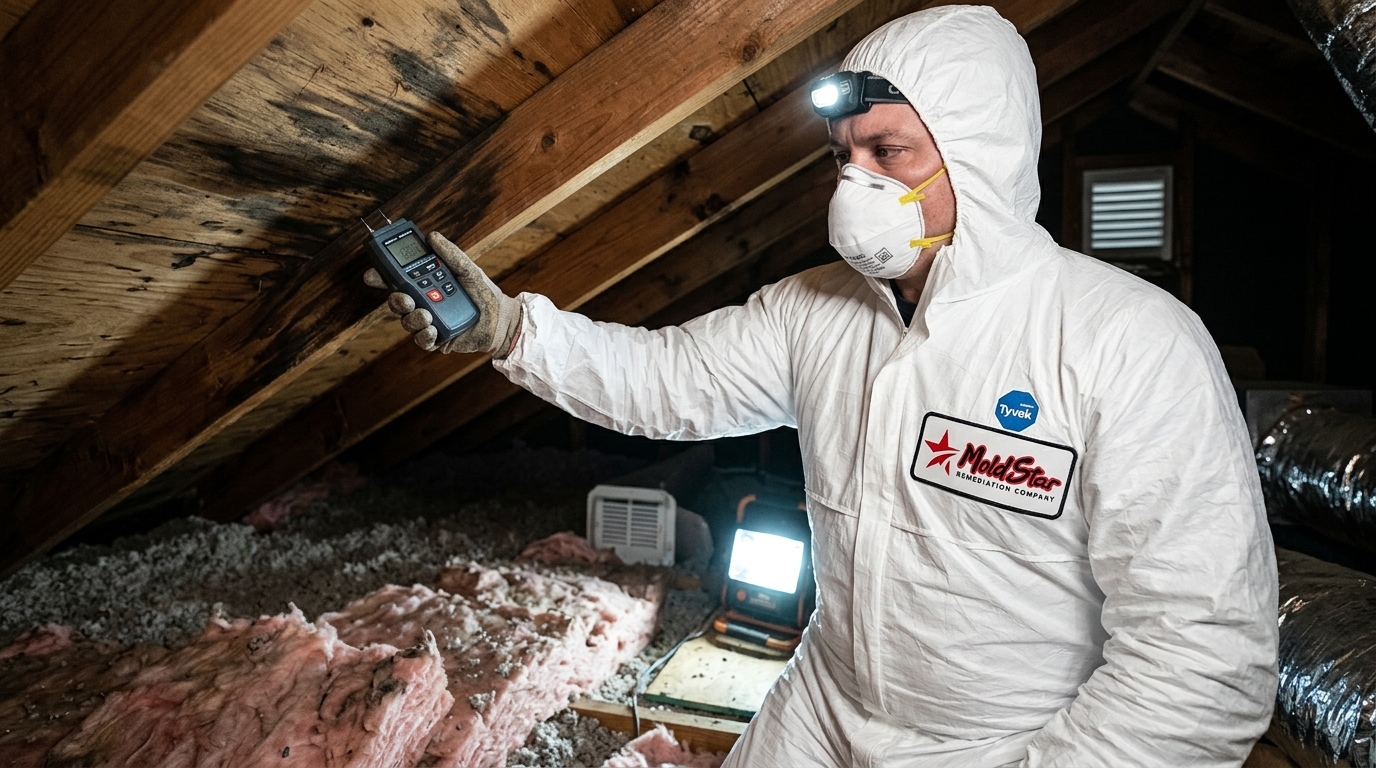
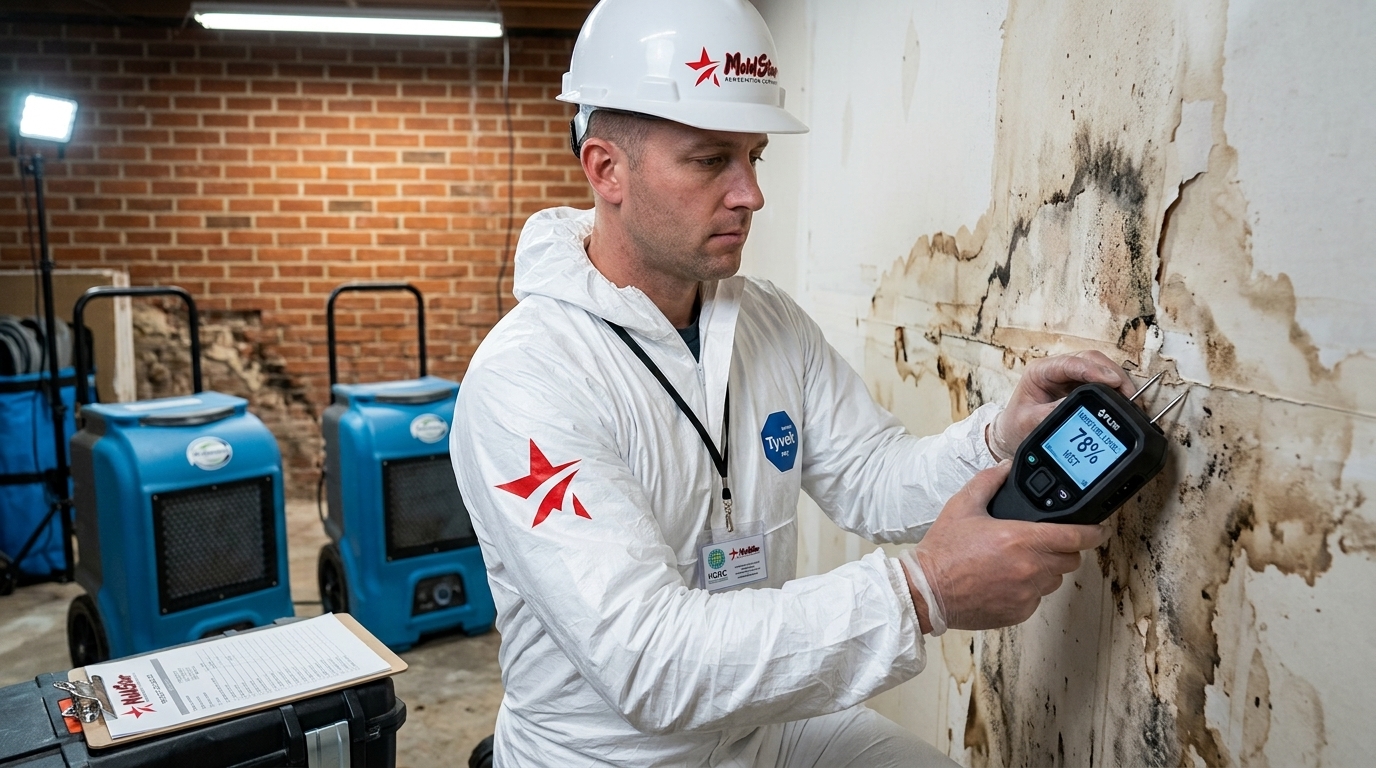
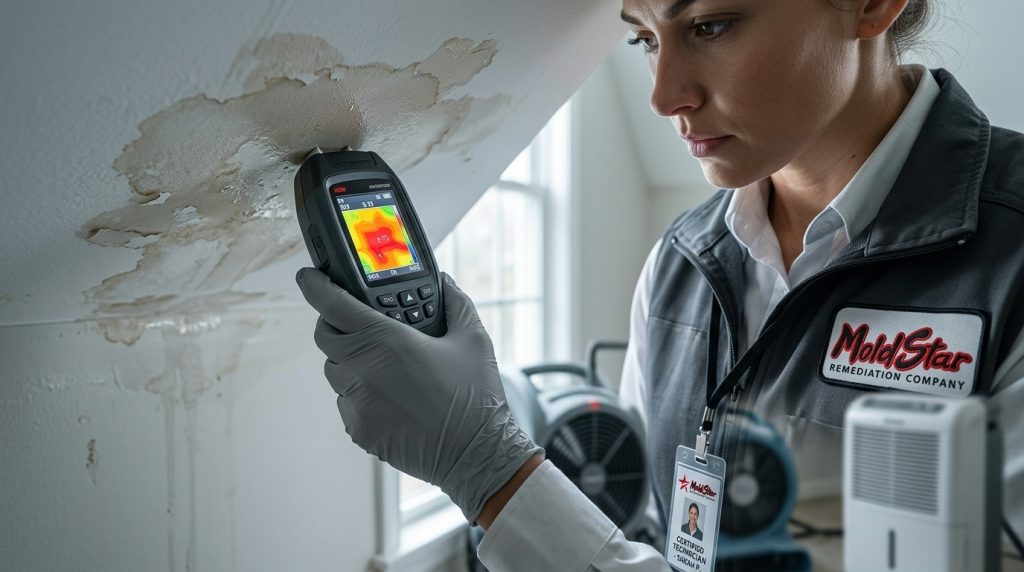
- Moisture readings: Quantitative moisture measurements documenting the extent of water intrusion and confirming that affected areas have been dried to acceptable levels.
- Clearance testing reports: Post-remediation verification testing to confirm that mold levels have returned to normal.
- Direct communication with adjusters: We are happy to speak directly with your insurance adjuster to explain the scope of work and answer technical questions.
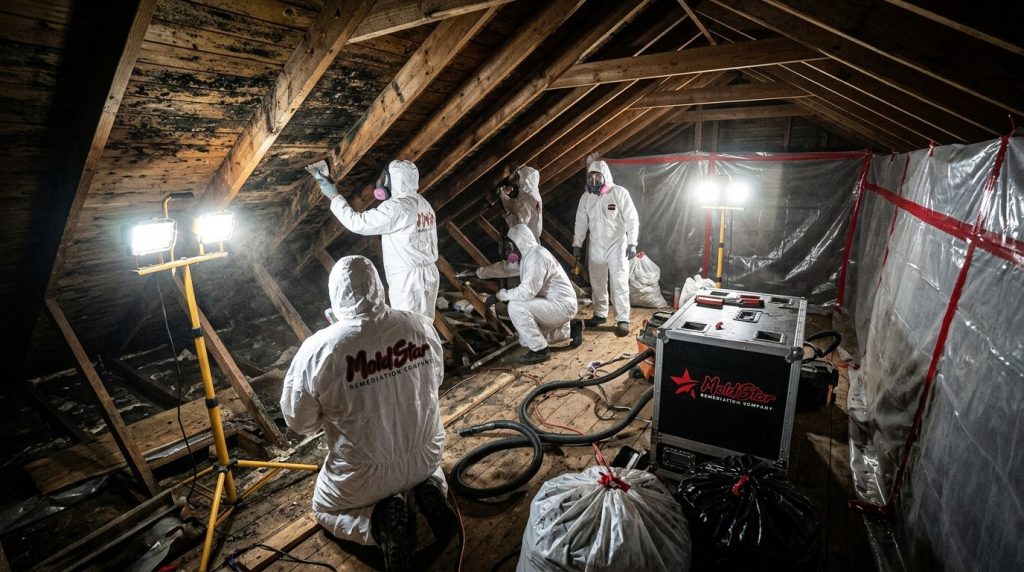
If you need help navigating a mold situation that may involve an insurance claim, contact us or call us directly at 404-585-7319 for a free estimate.