When Do You Need a Mold Inspection?
Not every situation calls for professional mold testing, but many do. Here are the most common scenarios where I recommend homeowners schedule an inspection:
You are buying a home. In Metro Atlanta’s housing market, a mold inspection before closing can save you from inheriting a costly problem. Georgia does not require sellers to disclose mold, so it is on the buyer to investigate. I have seen too many homeowners discover mold in crawl spaces and attics within months of moving in.
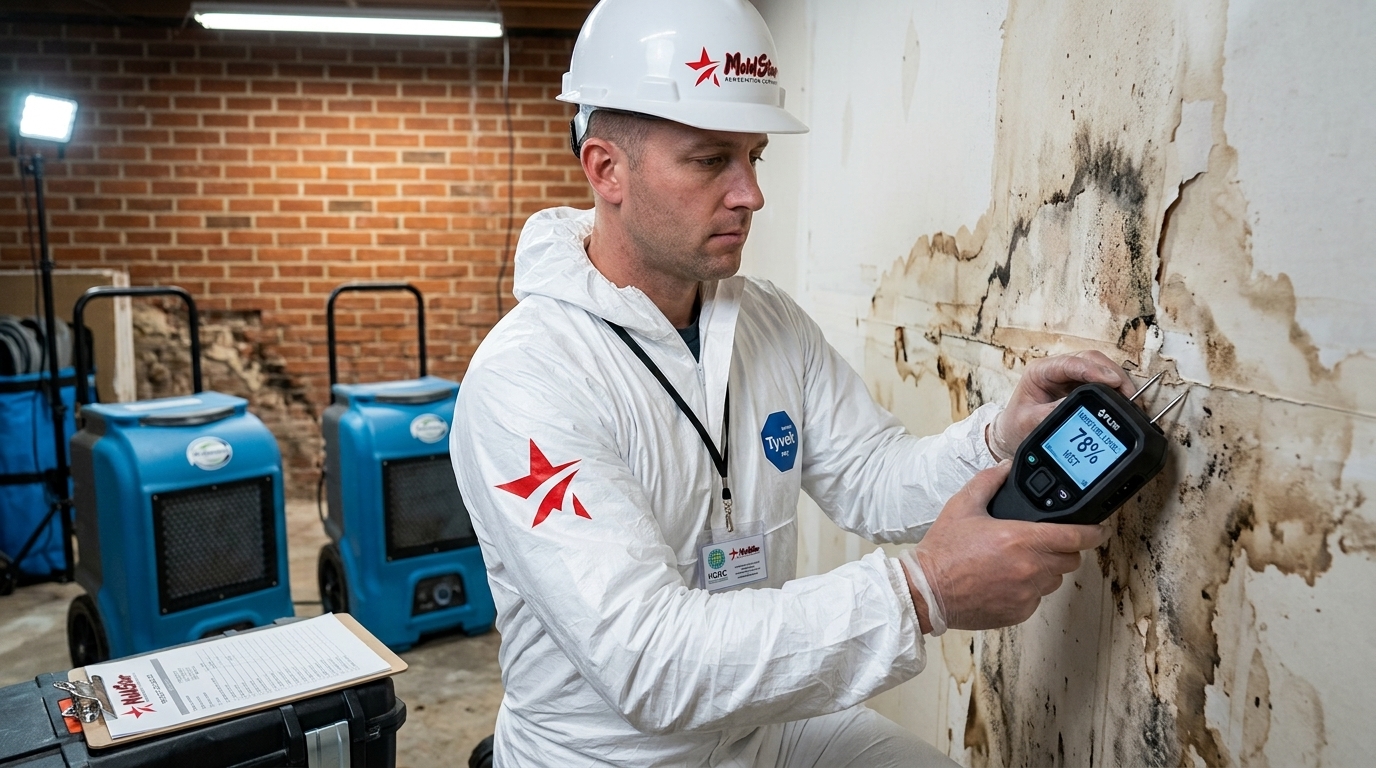
You smell something musty. That earthy, damp smell is one of the most reliable signs of mold in your house. Even if you cannot see anything, mold could be growing behind drywall, under flooring, or inside HVAC ducts. An inspection with moisture mapping can pinpoint the source.
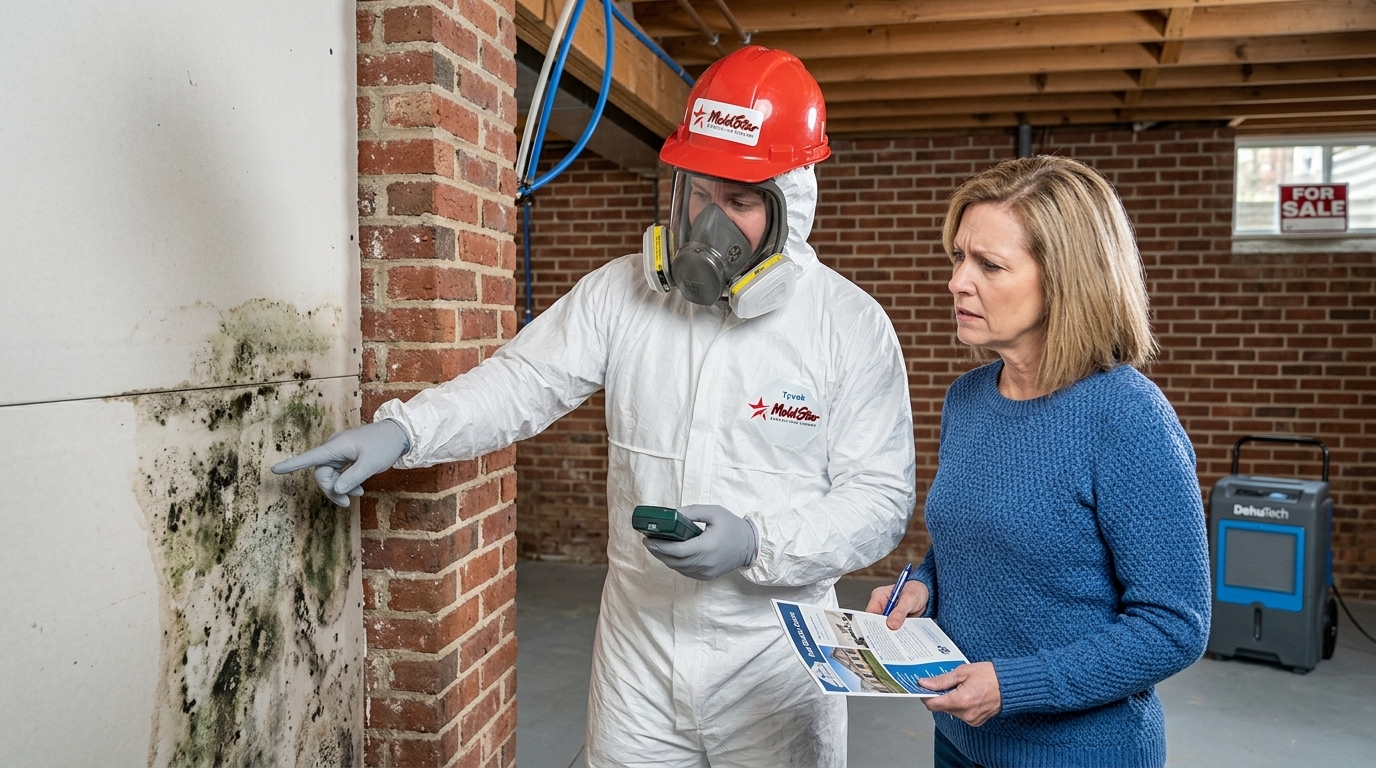
You see visible mold growth. If you can see it, you already know you have a problem. But an inspection tells you whether the visible growth is the entire issue or just the tip of the iceberg. Many homeowners clean what they can see on a bathroom wall only to discover the real colony is behind the wall.
Your home recently had water damage. Whether it was a burst pipe, a roof leak, or flooding from one of Atlanta’s intense summer storms, any water event that was not fully dried within 48 hours creates prime conditions for mold. Even if everything looks dry on the surface, moisture can linger in wall cavities and subfloors.
You or your family are experiencing health symptoms. Persistent coughing, sneezing, itchy eyes, headaches, or worsening asthma that improves when you leave the house can point to mold exposure. A professional mold inspection with air sampling can confirm whether elevated spore counts in your indoor air are the cause.
After mold remediation. A post-remediation inspection (also called clearance testing) verifies that the mold remediation was successful and that spore counts have returned to normal levels. This should always be performed by an independent third-party inspector, not the company that did the remediation.
What Happens During a Professional Mold Inspection: Step by Step
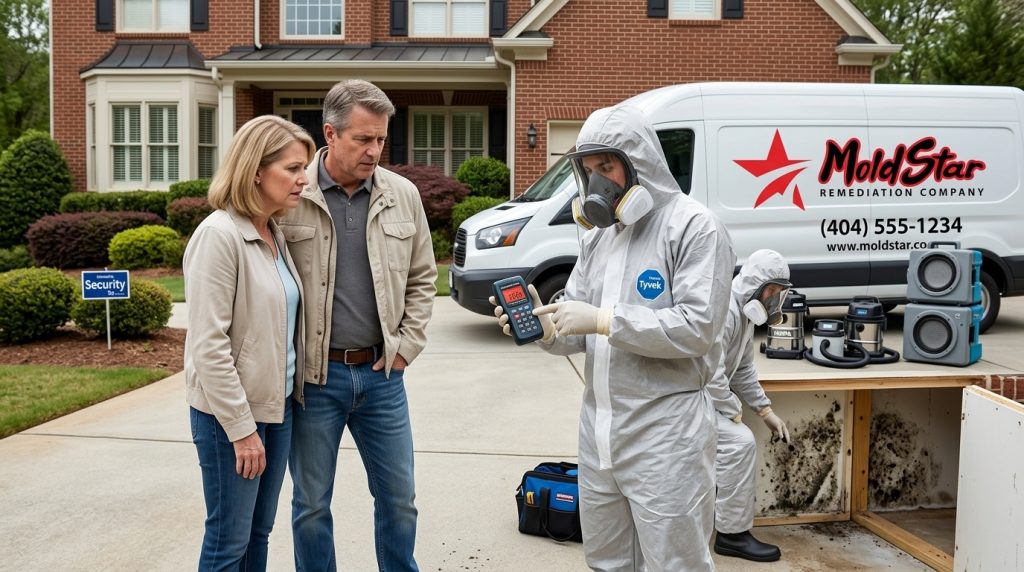
A thorough mold inspection is more than someone walking through your house with a flashlight. Here is what the process actually looks like when a qualified inspector does the job right.
Step 1: Interview and History
The inspector starts by talking with you. They will ask about any water damage history, musty odors, visible growth, health concerns, and the age of the home. In Metro Atlanta, inspectors should also ask about the home’s HVAC system, crawl space configuration, and whether you have had any plumbing work done recently. Georgia’s humidity makes certain parts of the home more vulnerable than others.
Step 2: Visual Inspection
The inspector systematically examines the entire home, focusing on areas where mold commonly grows. This includes:
- Bathrooms (around tubs, showers, toilets, and under sinks)
- Kitchens (under sinks, behind refrigerators, near dishwashers)
- Basements and crawl spaces
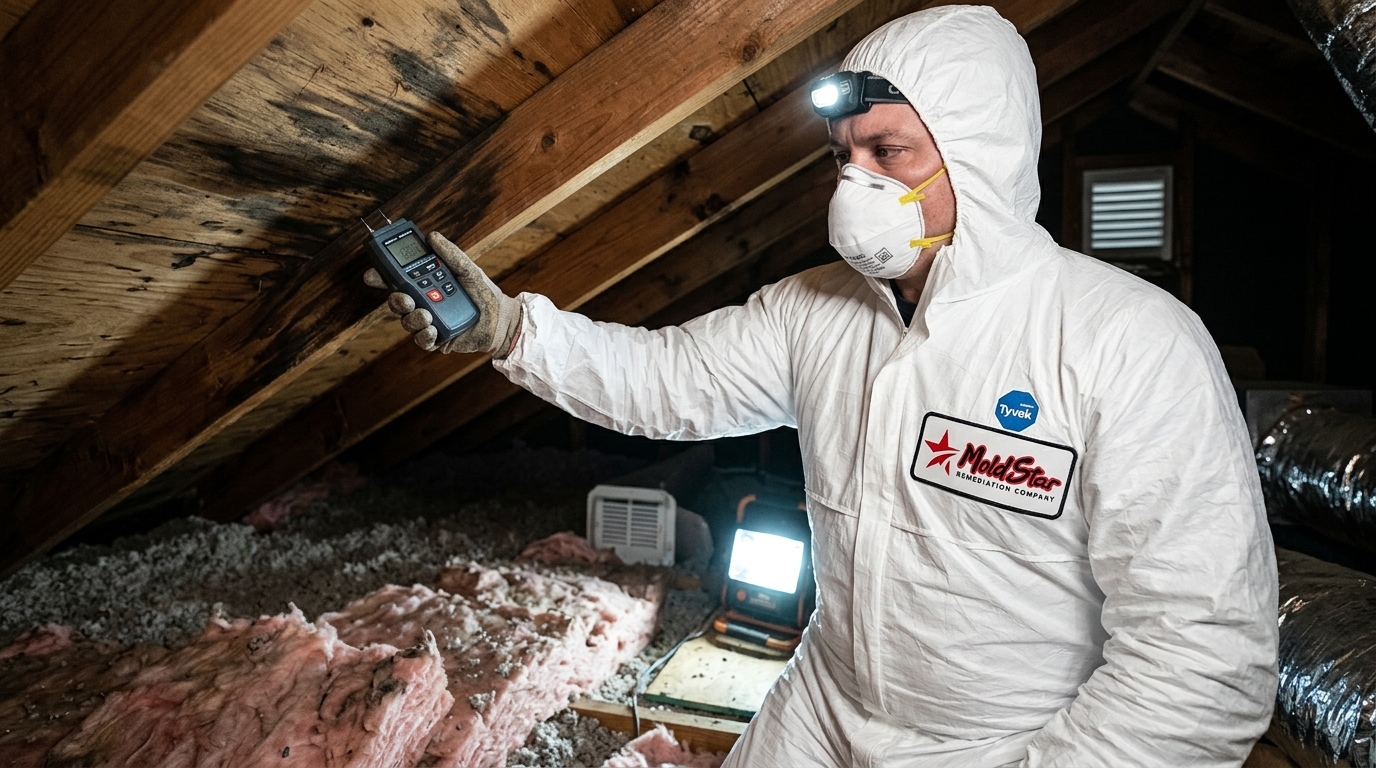
- Attics (especially around roof penetrations and ventilation)
- Around windows and doors (condensation points)
- HVAC systems and ductwork
- Laundry rooms
- Any area with previous water damage
The inspector is looking for visible mold growth, water stains, discoloration, peeling paint, warped materials, and any signs of past or present moisture intrusion.
Step 3: Moisture Mapping
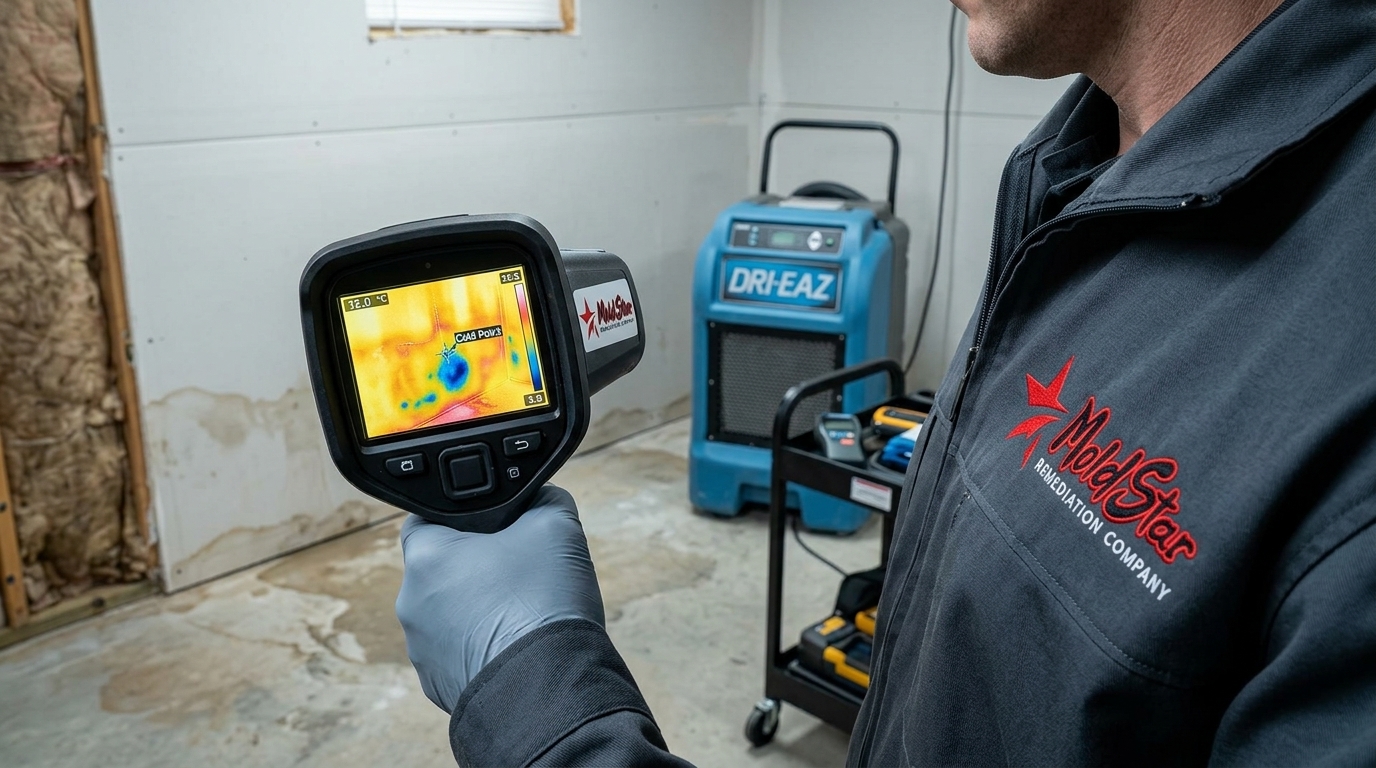
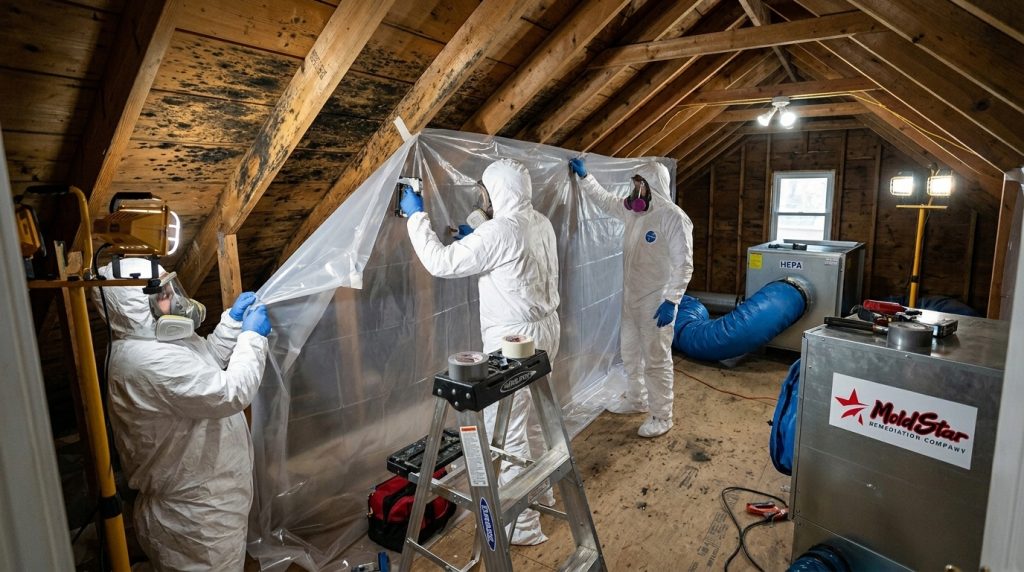
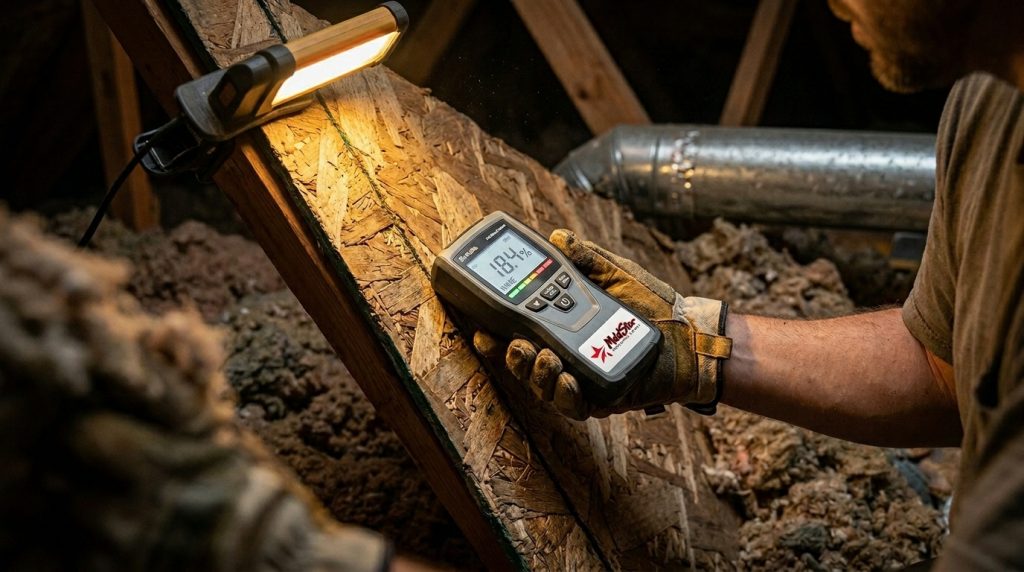
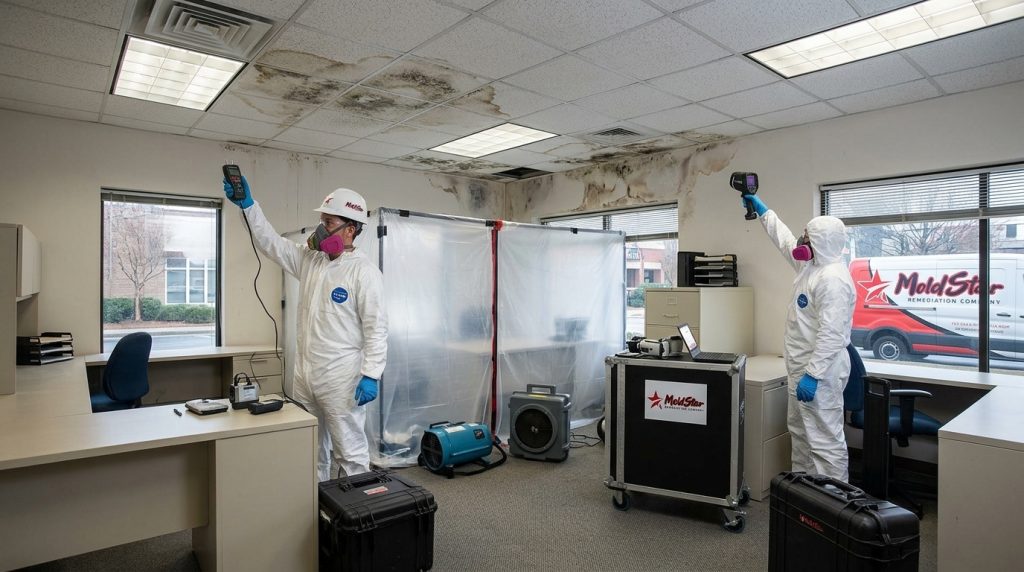
This is where a professional mold inspection separates itself from a casual walkthrough. Using thermal imaging cameras and pin/pinless moisture meters, the inspector creates a moisture map of your home.
Thermal imaging cameras detect temperature differences in walls, ceilings, and floors that indicate moisture behind surfaces. A cold spot on an interior wall, for example, often means water is present even when the surface looks completely dry.
Moisture meters then confirm those readings with precise measurements. The inspector documents moisture levels in materials throughout the home, identifying every area where conditions are favorable for mold growth.
In Georgia homes, I commonly see elevated moisture in crawl spaces (our humid climate makes this nearly universal in unsealed crawl spaces), around bath traps, and in attic sheathing near inadequate bathroom exhaust vents.
Step 4: Air Sampling
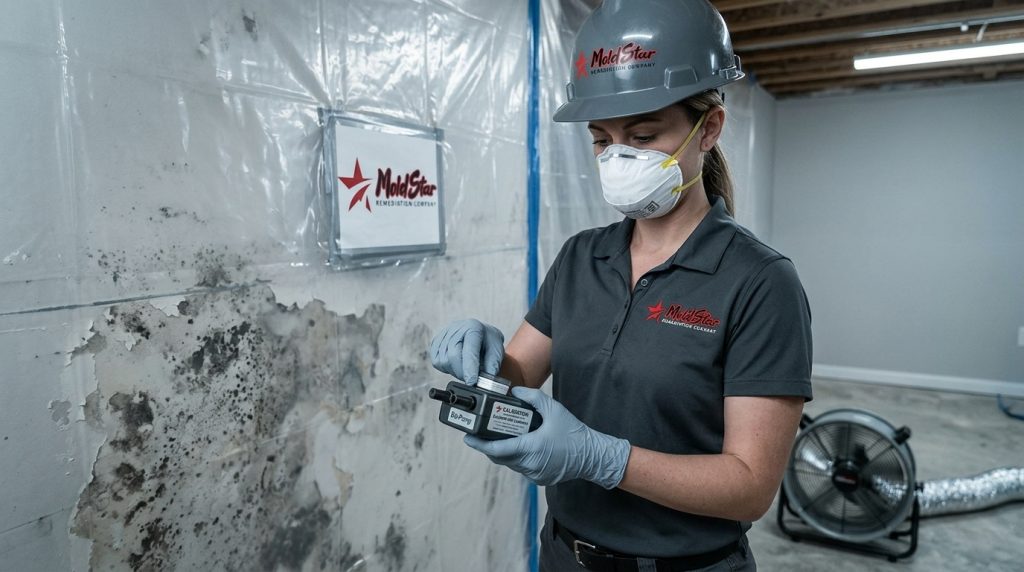
Air samples are the backbone of most professional mold inspections. The inspector uses a calibrated air pump to draw a measured volume of air through a collection cassette. This cassette captures mold spores on a sticky surface that gets sent to a laboratory for analysis.
A standard inspection includes at least two air samples: one from inside the area of concern and one from outside. The outdoor sample serves as a baseline for comparison. Larger homes or homes with multiple problem areas may require additional samples.
Each sample runs for a specific time period (typically five minutes) at a calibrated flow rate, so the lab can calculate spore concentrations per cubic meter of air.
Step 5: Surface Sampling
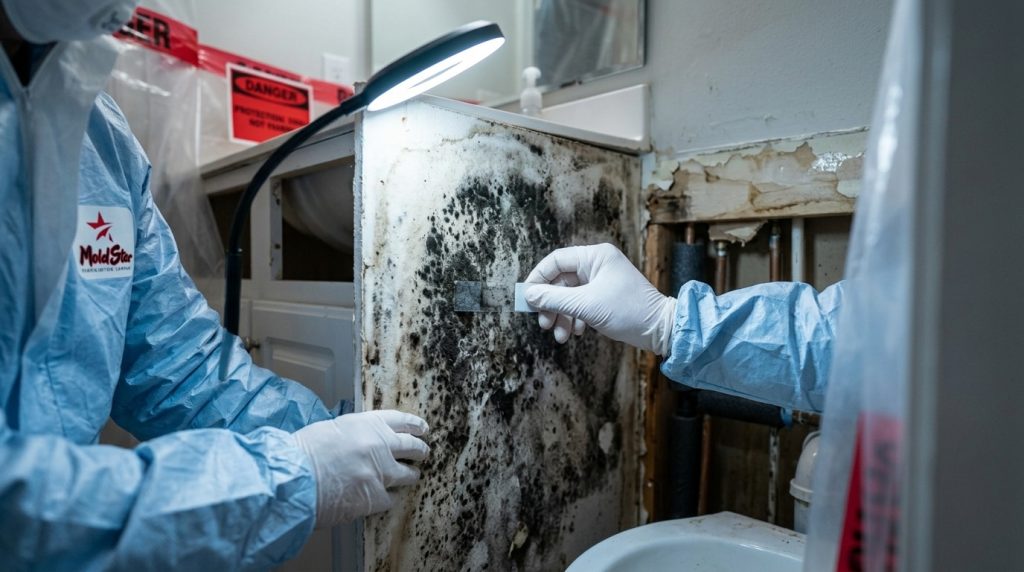
If the inspector finds visible growth or suspects mold on a specific surface, they will collect surface samples. The most common method is a tape lift: pressing a piece of clear tape against the suspect surface, then sealing it in a sample container for the lab.
Surface samples identify the exact species of mold growing on a material. This matters because different species have different health implications and may require different remediation approaches. For example, Stachybotrys (black mold) on drywall typically requires removal of the affected material, while Cladosporium on a bathroom tile can often be cleaned.
Step 6: Lab Analysis
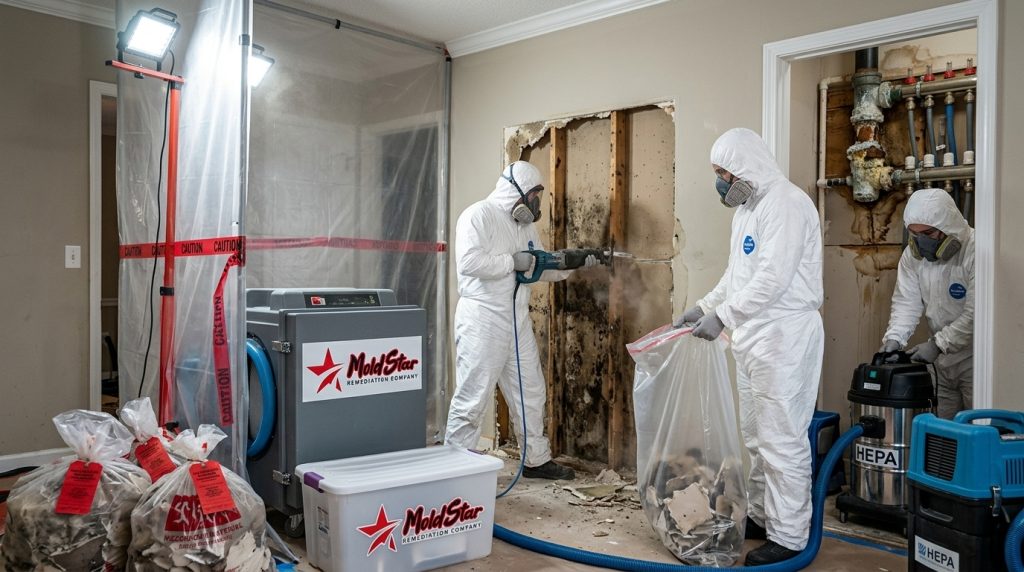
All samples are sent to an accredited laboratory (AIHA or EMLAP accredited) for analysis by a trained mycologist. The lab identifies the types and quantities of mold spores present. Results typically come back within three to five business days, though rush processing is available.
Step 7: Written Report
The inspector compiles everything into a detailed report that includes:
- A summary of findings from the visual inspection
- Moisture readings and thermal images
- Lab results with spore counts and species identification
- Indoor versus outdoor comparison analysis
- Photographs documenting problem areas
- Recommendations for remediation if mold is confirmed
- Recommendations for moisture control to prevent recurrence
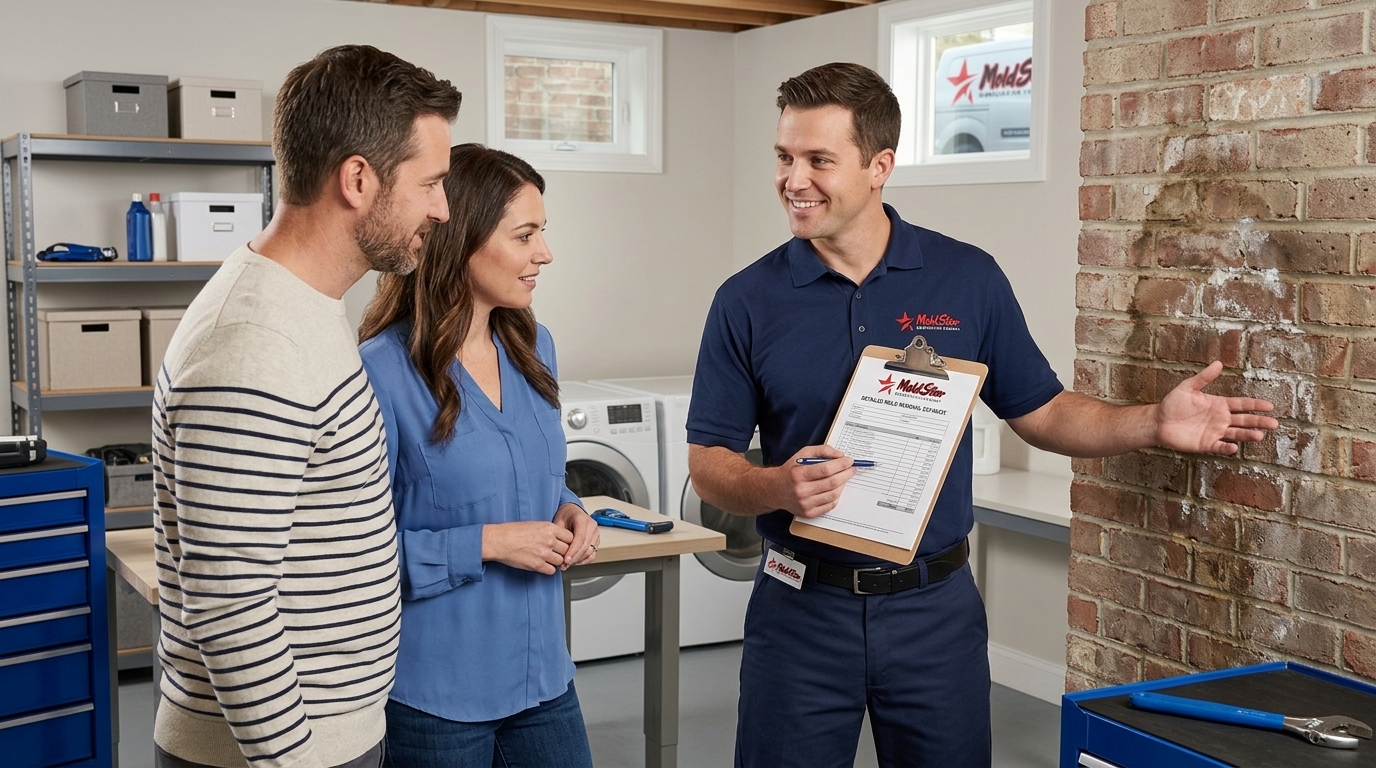
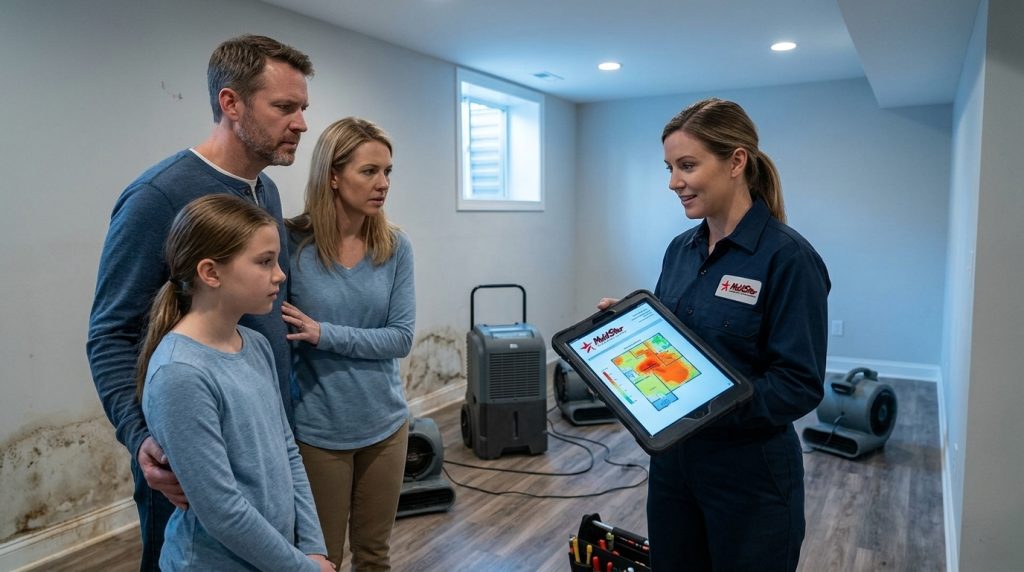
This report becomes your roadmap. If remediation is needed, it tells the remediation company exactly what they are dealing with. It is also useful documentation for insurance claims and real estate transactions.
Types of Mold Testing
Not every inspection uses every type of test. A qualified inspector selects the testing methods that match your situation. Here is what each type tells you.
Air Samples (Spore Trap Analysis)
Air samples measure the concentration and types of mold spores floating in your indoor air. This is the most common type of mold testing and the best way to assess your overall indoor air quality. Air samples can detect mold even when there is no visible growth, making them essential for investigating musty odors and health complaints.
Surface Samples (Tape Lift)
Tape lift samples identify the specific mold species growing on a surface. The inspector presses clear tape against the growth, captures spores and fragments, and sends it to the lab. These are useful for confirming what type of mold you are looking at and determining the appropriate remediation method.
Bulk Samples
Bulk samples involve cutting a small piece of the affected material (drywall, insulation, wood) and sending the entire piece to the lab. This provides the most detailed analysis because the lab can see how deeply the mold has penetrated the material. Bulk samples are typically used when contamination appears significant or when the material type affects remediation decisions.
Dust Analysis (ERMI/HERTSMI-2)
The Environmental Relative Moldiness Index (ERMI) is a DNA-based test that analyzes settled dust for 36 species of mold. It provides a single score that ranks your home’s moldiness relative to a national database. While not used in every inspection, ERMI testing can be valuable for assessing overall mold burden in a home, especially when health concerns are the primary reason for testing.
How to Read Your Mold Inspection Results
Getting your lab results can feel overwhelming if you do not know what you are looking at. Here is how to interpret the key elements.
Spore Counts
Spore counts are reported as spores per cubic meter of air (spores/m3). There is no single “safe” or “unsafe” number established by the EPA or any federal agency. Instead, your results are evaluated by comparing indoor counts to outdoor counts.
As a general guideline:
- If indoor spore counts are lower than or similar to outdoor counts, and the species are the same, your home is likely in normal condition.
- If indoor counts of a particular species are significantly higher than outdoor counts, that species is likely growing somewhere inside the home.
- If a species appears indoors that is not present in the outdoor sample, it is almost certainly growing inside.
Species Identification
The lab report will list every mold species detected. Common species in Atlanta-area homes include:
- Cladosporium: The most common outdoor mold. Frequently found indoors at low levels. Elevated indoor counts suggest moisture issues.
- Aspergillus/Penicillium: These are grouped together in spore trap analysis because they look identical under a microscope. Commonly found indoors. Elevated counts indicate active growth.
- Stachybotrys: Often called “black mold.” Requires very wet conditions to grow. Its presence indoors always warrants remediation.
- Chaetomium: A water-damage indicator mold. Its presence means significant moisture exposure to building materials.
- Alternaria: Common in Georgia. Often enters through open windows. Elevated indoor counts suggest a moisture source.
Indoor vs. Outdoor Comparison
This comparison is the most important part of your results. Your inspector should clearly explain how your indoor environment compares to the natural outdoor baseline. In Metro Atlanta, outdoor spore counts fluctuate significantly by season. Spring and fall typically show higher outdoor counts due to warm, humid conditions. A skilled inspector accounts for these seasonal patterns when interpreting your results.
Mold Inspection Cost
One of the most common questions I hear is, “How much does a mold inspection cost?” Here is a straightforward breakdown.
Standard mold inspection: $300 to $600 for a typical single-family home. This includes the visual inspection, moisture mapping, two to four air samples, lab analysis, and a written report.
Factors that affect the price:
- Home size: Larger homes require more time and potentially more samples.
- Number of samples: Each additional air or surface sample adds $50 to $100 to the cost.
- Type of testing: Standard spore trap analysis is the most affordable. ERMI/DNA-based testing costs more (often $300+ for the lab analysis alone).
- Accessibility: Tight crawl spaces or difficult attic access can increase inspection time.
- Urgency: Rush lab processing typically adds $50 to $150.
For homes in the Metro Atlanta area, most standard inspections with two to three air samples fall in the $350 to $500 range. Larger homes or homes with multiple areas of concern may run $500 to $800+.
Is it worth the cost? Absolutely. A $400 inspection can save you from a $10,000 remediation surprise after you have already closed on a house. It can also confirm that you do not have a problem, giving you peace of mind that is well worth the investment.
DIY Mold Test Kits vs. Professional Mold Inspection
You have probably seen $10 to $40 mold test kits at hardware stores. I understand the appeal. They are cheap and easy. But I have to be direct: DIY mold test kits are unreliable and can actually lead you to make bad decisions about your home.
Here is why:
They almost always come back “positive.” Most DIY kits are petri dish cultures that you leave open in a room. Mold spores are everywhere in outdoor air, especially in Georgia. A petri dish left open in your home will grow mold even if your home has no mold problem. A positive result from these kits means almost nothing.
They do not measure concentration. Professional air sampling calculates exact spore counts per cubic meter. DIY kits just tell you mold exists, which is always true. The important question is whether you have more mold inside than outside, and DIY kits cannot answer that.
They do not compare indoor to outdoor. Without a baseline outdoor sample analyzed under the same conditions, the indoor sample has no context.
They do not identify the source. Even if a DIY kit tells you that mold is present, it does not tell you where it is growing, how extensive it is, or what is causing it. A professional inspection includes moisture mapping and visual assessment that identifies the root cause.
They can create false peace of mind. Some DIY kits come back “negative,” leading homeowners to assume they are safe when they actually have a significant problem that the kit was not designed to detect.
For $300 to $500, a professional mold inspection gives you lab-analyzed results with spore counts, species identification, indoor versus outdoor comparison, moisture mapping, a visual assessment of your entire home, and a written report with actionable recommendations. There is no shortcut that delivers that level of information.
How to Choose a Mold Inspector
Not all mold inspectors are equally qualified. Here is what to look for when hiring one.
Certifications Matter
Look for inspectors with these credentials:
- ACAC (American Council for Accredited Certification): Certified Microbial Consultant (CMC) or Certified Microbial Investigator (CMI). These are the gold standard in the mold inspection industry.
- IICRC (Institute of Inspection, Cleaning and Restoration Certification): Certifications in Water Damage Restoration (WRT) and Applied Microbial Remediation (AMRT) demonstrate a thorough understanding of moisture and mold.
- State licensing: Georgia does not currently require a specific mold inspection license, which means the barrier to entry is low. Certifications from ACAC and IICRC are the best way to verify competence.
Independence From Remediation
Here is something I tell every homeowner, even though it means I am sending business to someone else: your mold inspector should ideally be independent from the company that does the remediation. When the same company inspects and remediates, there is a built-in incentive to find problems and recommend expensive solutions.
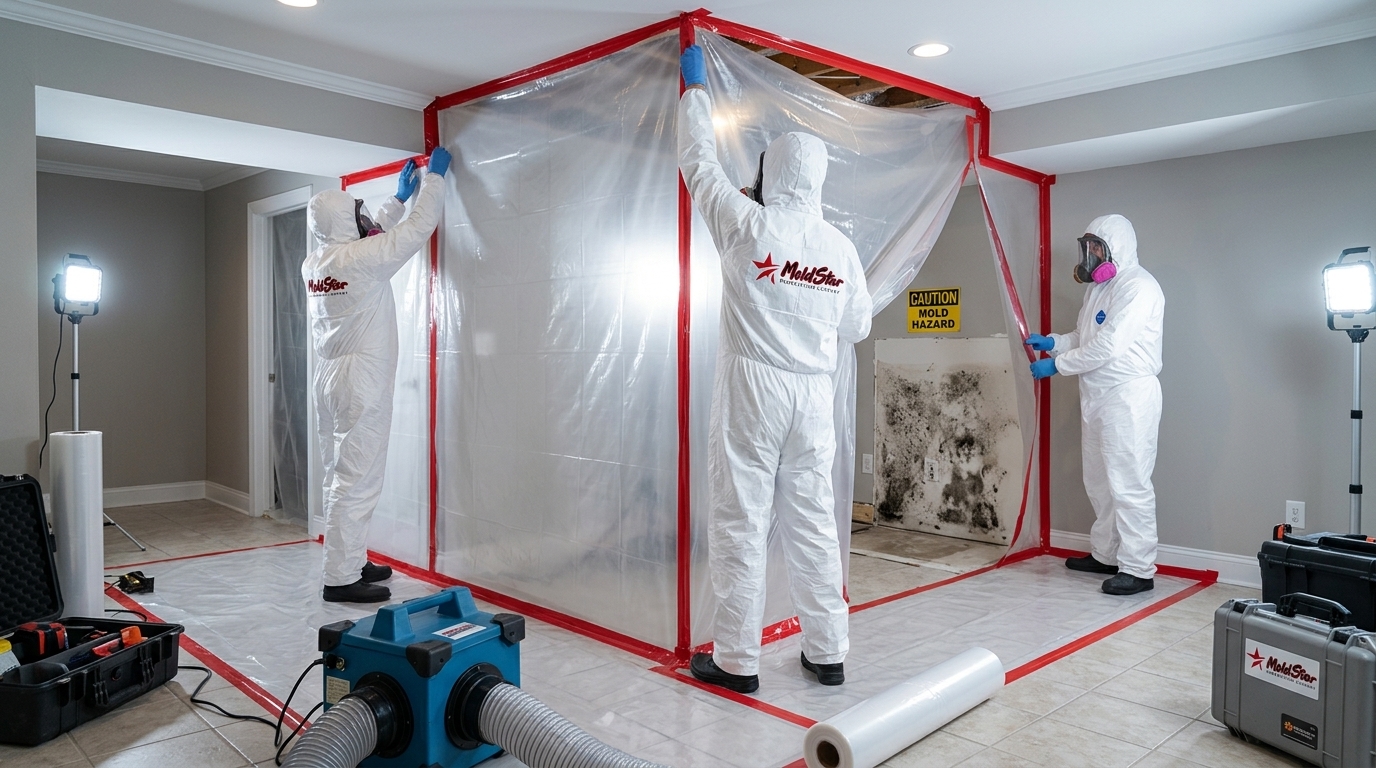
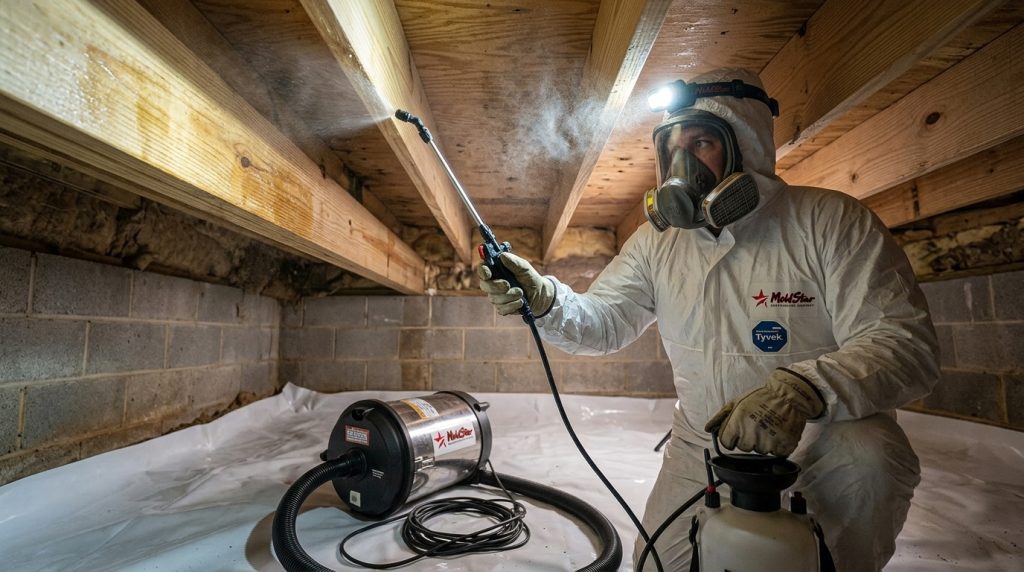
At MoldStar, we specialize in mold remediation. We are not a mold inspection company. When clients call us suspecting mold, we recommend they hire a certified third-party inspector first. We work with several trusted independent inspectors in the Metro Atlanta area and are happy to provide referrals. That inspector’s report then becomes the scope of work for our remediation, and after we finish, the same independent inspector returns to perform clearance testing.
This separation protects you. It ensures the inspection is unbiased and that the remediation is verified by someone who has no financial stake in the outcome.
Questions to Ask Before Hiring
- What certifications do you hold? (Look for ACAC or IICRC.)
- What lab do you use, and is it AIHA or EMLAP accredited?
- How many samples will you take, and what type?
- Do you perform remediation as well? (If yes, consider whether that creates a conflict of interest.)
- What is included in your report?
- How long until I receive results?