The First Step: Written Notice of Claim
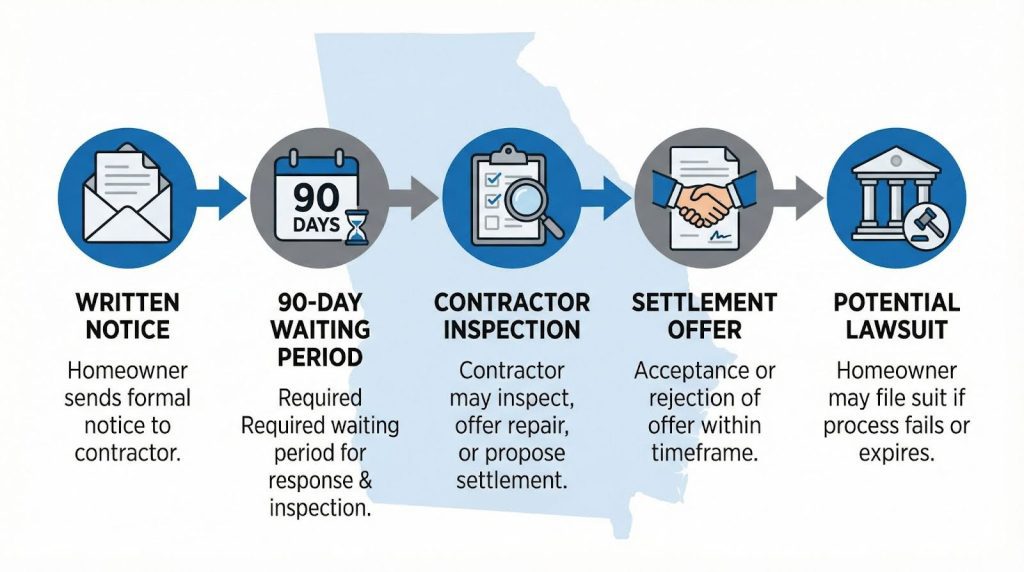
Before you file a lawsuit, the Act requires you to serve a written notice of claim on the contractor at least 90 days before starting legal action.
Key points about this initial notice:
- You must provide written notice that clearly states you are asserting a construction defect claim under Georgia’s Right to Repair.
- The notice must describe each alleged defect in reasonable detail, including the location, nature of the problem, and any visible damage.
- You should send the notice by certified mail or overnight delivery with return receipt requested to the contractor’s last known address, so there is proof it was served.
Supporting materials such as photos, inspection reports, or expert reports can be included to help explain the alleged defect and the remedy you are seeking.

Contractor Inspection and Prompt and Reasonable Access
After you serve written notice, the contractor has the right to inspect the alleged defects before you proceed to litigation.
Under the Act, you must provide prompt and reasonable access so the contractor and its subcontractors or experts can:
- Inspect the areas where you claim there is a construction defect.
- Perform necessary testing, including non‑destructive and, if needed, destructive testing, to determine the cause and extent of the problem and appropriate repairs.
If destructive testing is proposed, the contractor should conduct it in a reasonable manner and restore the area after testing. This inspection stage is part of the claim process and repair process that the law requires before legal action.

The Contractor’s Written Response and Settlement Offer
Once the contractor receives your notice of claim, the Georgia Right to Repair Act gives them a short deadline, generally 30 days, to respond in writing.
The contractor’s written response may:
- Accept the claim and offer to repair the defects.
- Reject the claim, with a written statement explaining the rejection.
- Make a settlement offer, which can include repairs, a monetary payment, or a combination of both.
If the contractor makes a written offer to settle the claim, the offer should describe in detail:
- The specific repairs proposed and how they will remedy the alleged defect.
- Any monetary amount offered, which might reflect the reasonable cost of repairs or fair market considerations.
You normally have about 30 days to accept or reject the contractor’s offer. If you reject it, you typically must give a written explanation of the reasons for rejection.

How the Right to Repair Act Fits into Construction Defect Law
The Georgia Right to Repair Act works alongside other Georgia construction laws to create a structured process for resolving defect claims. It does not take away a homeowner’s right to sue, but it establishes procedures that must be followed first. For more information about Georgia’s Right to Repair Act, you can visit the Georgia Attorney General’s Consumer Protection Division.
In summary:
- A homeowner who believes they have a construction defect must first provide written notice, allow inspection, and review any settlement offer made in good faith.
- The contractor must respond within the required time, inspect the defects, and make a reasonable effort to settle or explain why the claim is rejected.
- If these procedures are followed and the claim is not resolved, the homeowner can file a lawsuit, subject to normal statutes of limitation and repose.
Because failure to follow these procedures can delay or limit your claim, talking to a Georgia construction or real‑estate attorney early in the process is usually the safest approach.
About MoldStar Remediation
MoldStar Remediation is a mold inspection and remediation company serving homeowners and businesses in Marietta, East Cobb, and the greater Atlanta area. Many of the homes we inspect have problems that started with water intrusion, leaks, or building defects, and our role is to help document and remediate the resulting mold and moisture issues.