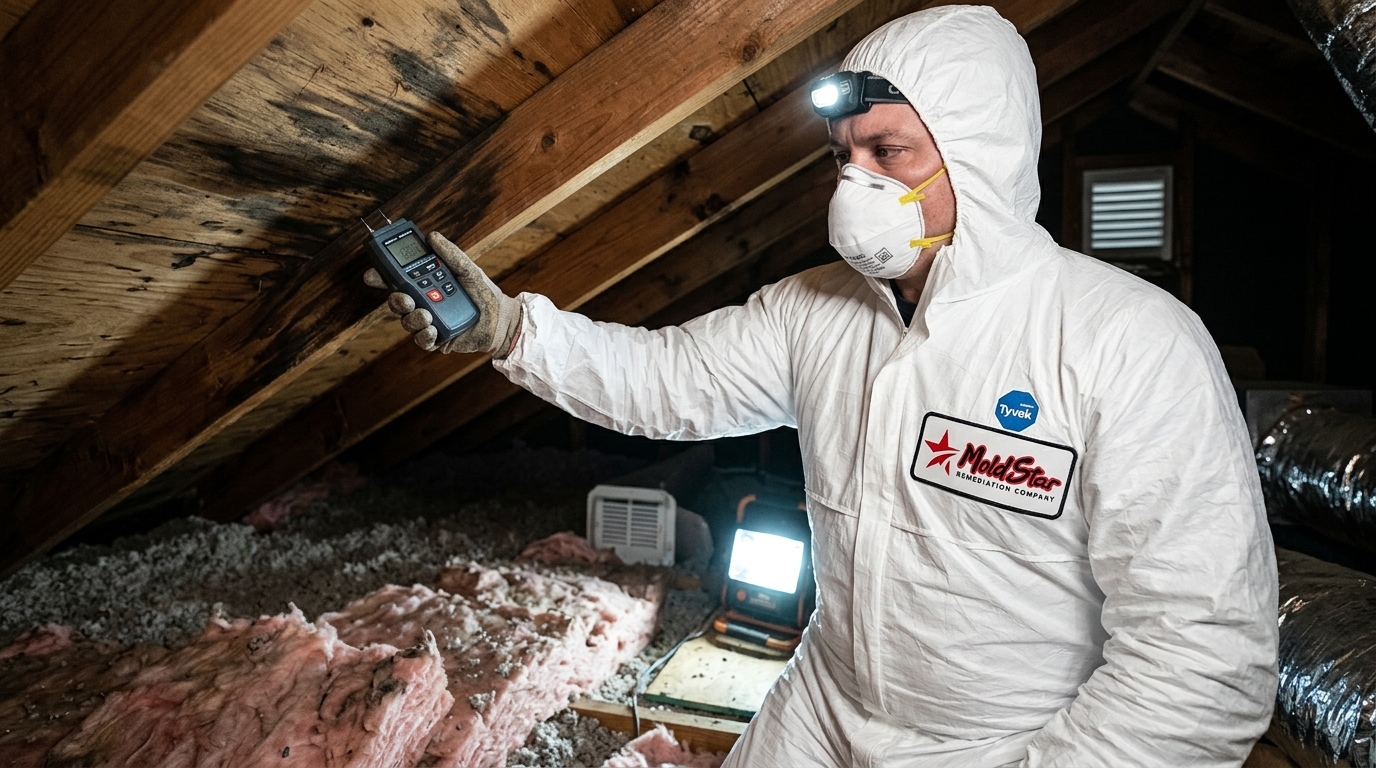
Attic mold can be easy to miss because most homeowners do not spend much time looking at the underside of their roof deck.
It may first be discovered during a home inspection, roof repair, HVAC visit, insulation project, or real estate transaction.
If you see suspicious staining on roof sheathing, rafters, trusses, or insulation, the first question should not be how quickly you can cover it.
The first question should be:
Where is the moisture coming from?
What Causes Mold in an Attic?
Attic mold is usually connected to excess moisture.
Potential sources include:
- Roof leaks
- Condensation
- Inadequate attic ventilation
- Bathroom exhaust fans venting into the attic
- Dryer exhaust problems
- HVAC moisture
- Air leakage from the living space
- Previous water intrusion that never dried properly
Mold control starts with moisture control. If the source remains, cleaning the visible growth may not provide a lasting solution.
What Does Attic Mold Look Like?
Possible signs include:
- Black or dark spotting
- White or light-colored growth
- Discoloration on roof sheathing
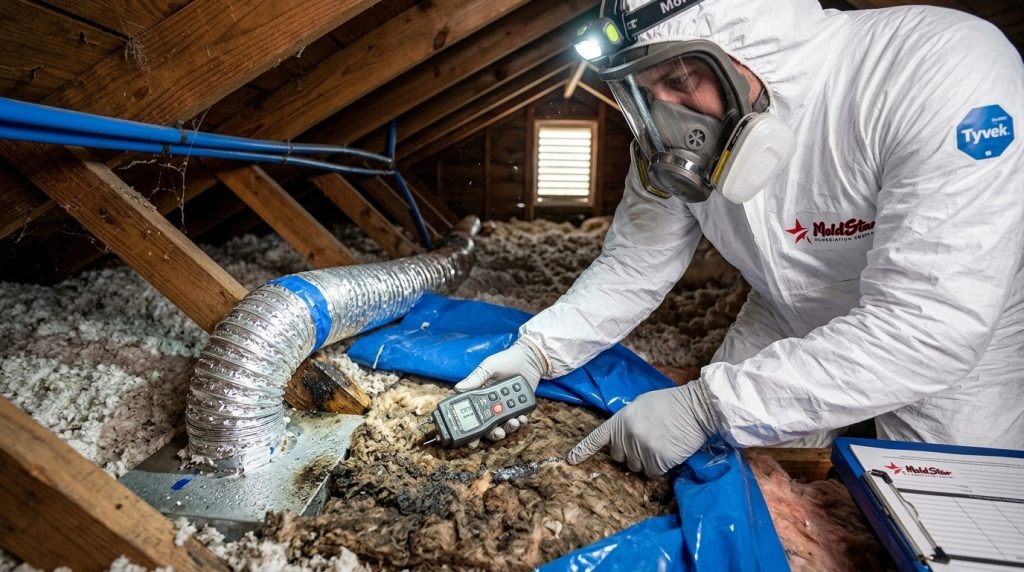
- Staining around nails or roof penetrations
- Growth on rafters or trusses
- Musty odors
- Damp insulation
Color alone cannot reliably tell you what type of mold is present.
You also should not assume every dark mark on wood is active mold. Water staining and other discoloration can sometimes look similar.
When the cause or extent is unclear, an inspection can help determine what is actually happening.
Does All Attic Mold Require Professional Remediation?
Not every small mold problem requires the same response.
However, attic remediation becomes more complicated when growth is extensive, difficult to access, connected to ongoing moisture, or likely to release significant contamination during cleaning.
Attics also create additional working challenges because of limited access, insulation, heat, electrical systems, HVAC equipment, and unfinished walking surfaces.
If a large section of the roof deck is affected, professional evaluation is a sensible starting point.
Can You Just Spray Attic Mold?
Spraying a product onto visible mold does not solve the moisture problem that allowed it to develop.
A successful plan needs to consider both:
- The existing contamination
- The cause of the excess moisture
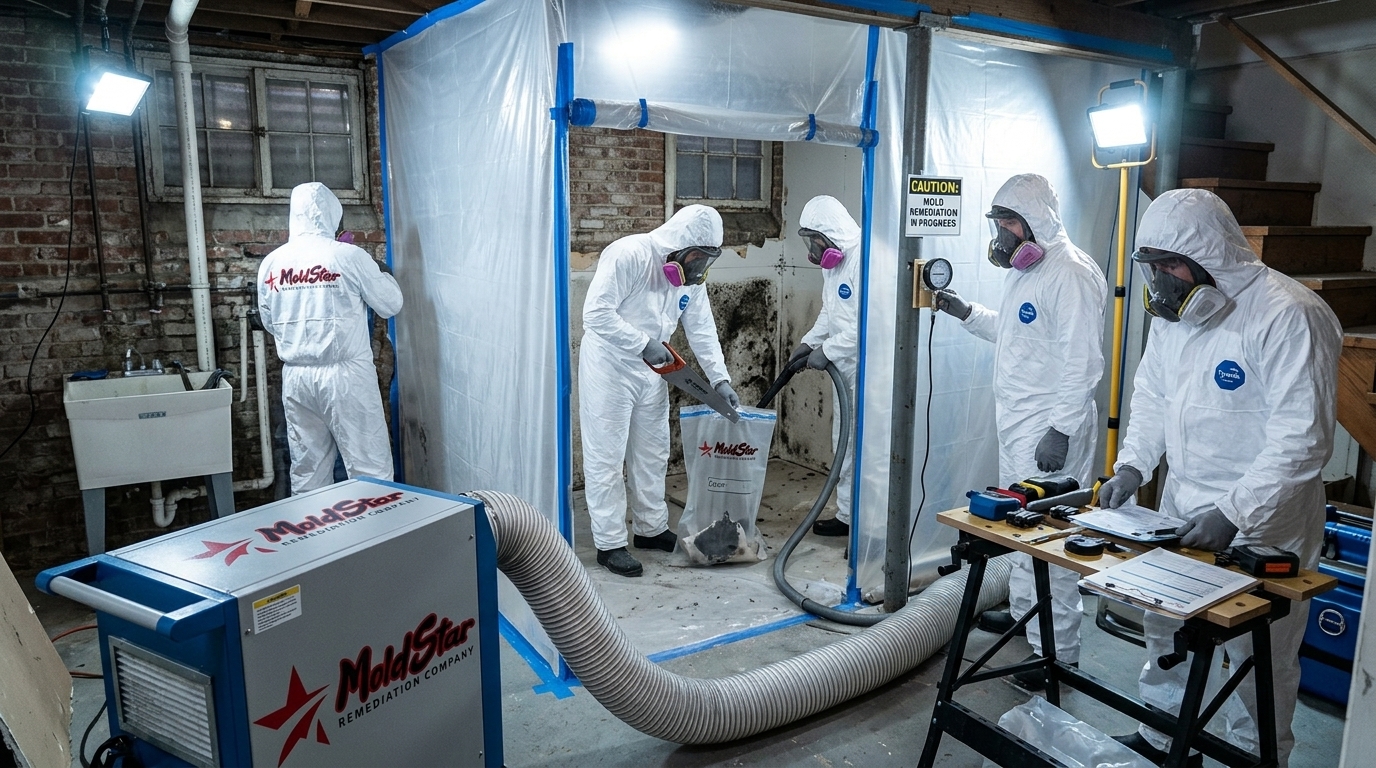
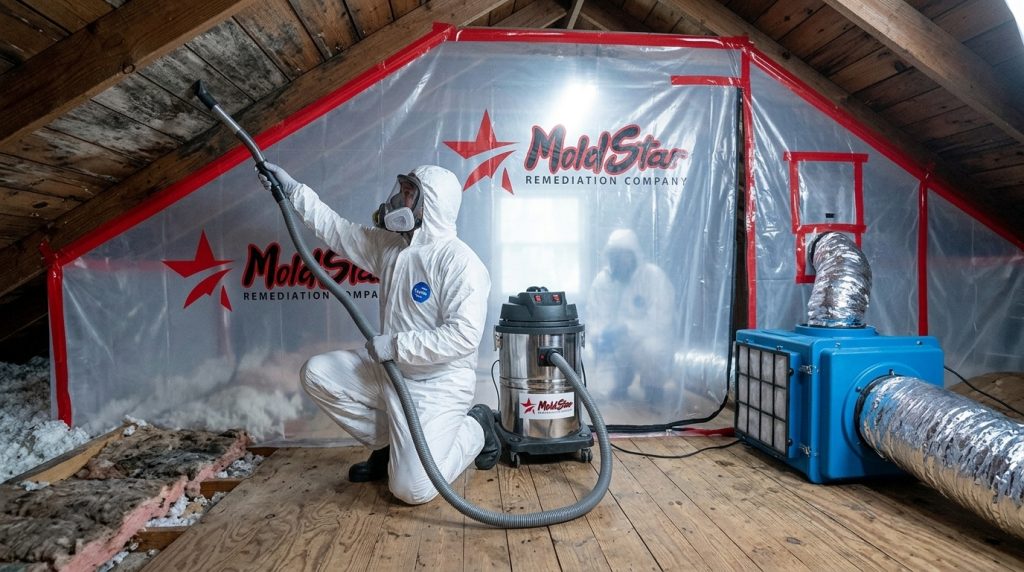
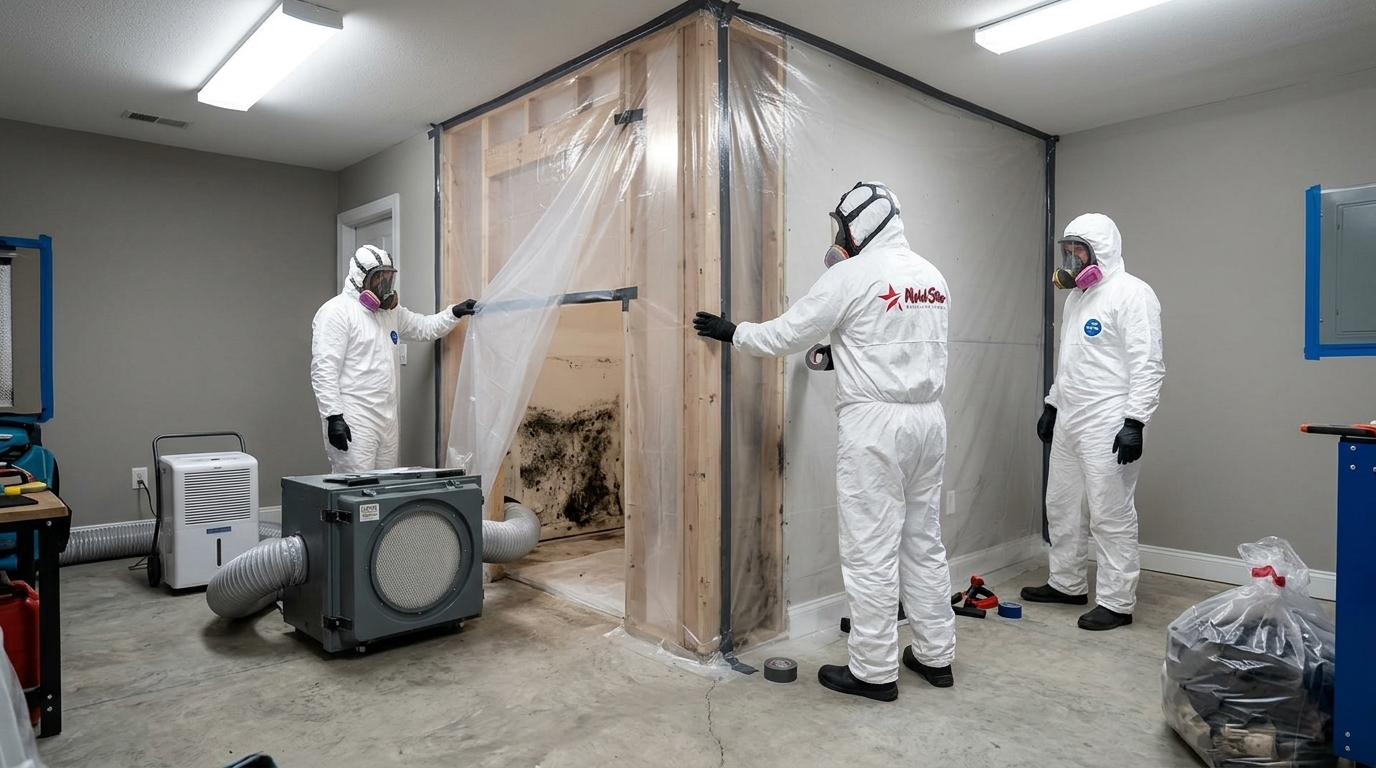
Depending on the material and extent of growth, remediation may involve HEPA vacuuming, cleaning, controlled removal, containment, air filtration, or other methods.
The correct method depends on what the inspection finds.
Does Attic Mold Mean the Roof Needs to Be Replaced?
Not necessarily.
Attic mold does not automatically mean the roof deck or roofing system must be replaced.
The condition of the wood matters.
A contractor should distinguish between surface contamination and material that has suffered physical deterioration or other damage.
Roof leaks still need to be repaired, but mold remediation and roof replacement are not automatically the same project.
How Much Does Attic Mold Remediation Cost in Atlanta?
Cost depends heavily on:
- Size of the affected area
- Accessibility
- Amount of growth
- Condition of the roof sheathing
- Whether insulation is involved
- Containment requirements
- Moisture repairs
- Required cleaning methods
MoldStar’s current Atlanta pricing guide explains that attic remediation costs can vary significantly based on scope and access.
For current pricing factors, read how much mold remediation costs in Atlanta.
What If Attic Mold Is Discovered During a Home Sale?
Do not cover or ignore it.
A buyer’s inspector may identify staining or suspected microbial growth and recommend further evaluation.
Having the attic assessed gives you better information about:
- The extent of the issue
- The moisture source
- Recommended remediation
- Expected cost
- Whether additional repairs are needed
Addressing the cause is especially important because a buyer wants to know that the conditions responsible for the mold have also been corrected.
What Should Happen After Attic Mold Remediation?
The attic should not simply look cleaner.
The moisture problem should also have been addressed.
Depending on the cause, follow-up work may include:
- Roof repair
- Correcting exhaust vent termination
- Improving ventilation
- Air sealing
- Moisture control
- HVAC repair
- Insulation corrections
Otherwise, the conditions that supported the original growth may continue.
Have Mold in Your Atlanta-Area Attic?
MoldStar Remediation has experience evaluating and remediating mold in attics, crawl spaces, basements, and living areas throughout Metro Atlanta.
If you have discovered attic staining, mold, or an unexplained moisture problem, call 404-585-7319 or request an estimate.
You can also learn more about our complete mold remediation services.