Once you know your home needs mold remediation, two practical questions usually come next:
How long will this take?
And:
Can I stay in my house while the work is happening?
There is no single timeline that fits every property. A localized remediation project can be considerably different from a project involving several rooms, an attic, crawl space, or whole-house contamination.
The safest answer is based on the actual scope of work.
How Long Does Mold Remediation Usually Take?
Several factors determine the timeline:
- Size of the contaminated area
- Number of rooms affected
- Materials that need to be removed
- Accessibility
- Required containment
- Water or moisture repairs
- Drying requirements
- Contents that need to be moved or cleaned
- Whether post-remediation testing will be performed
MoldStar’s existing Atlanta cost guide notes that many residential projects fall within a range of roughly one to five days, while larger projects may require longer.
Your contractor should provide an expected schedule after evaluating the property.
What Happens on the First Day?
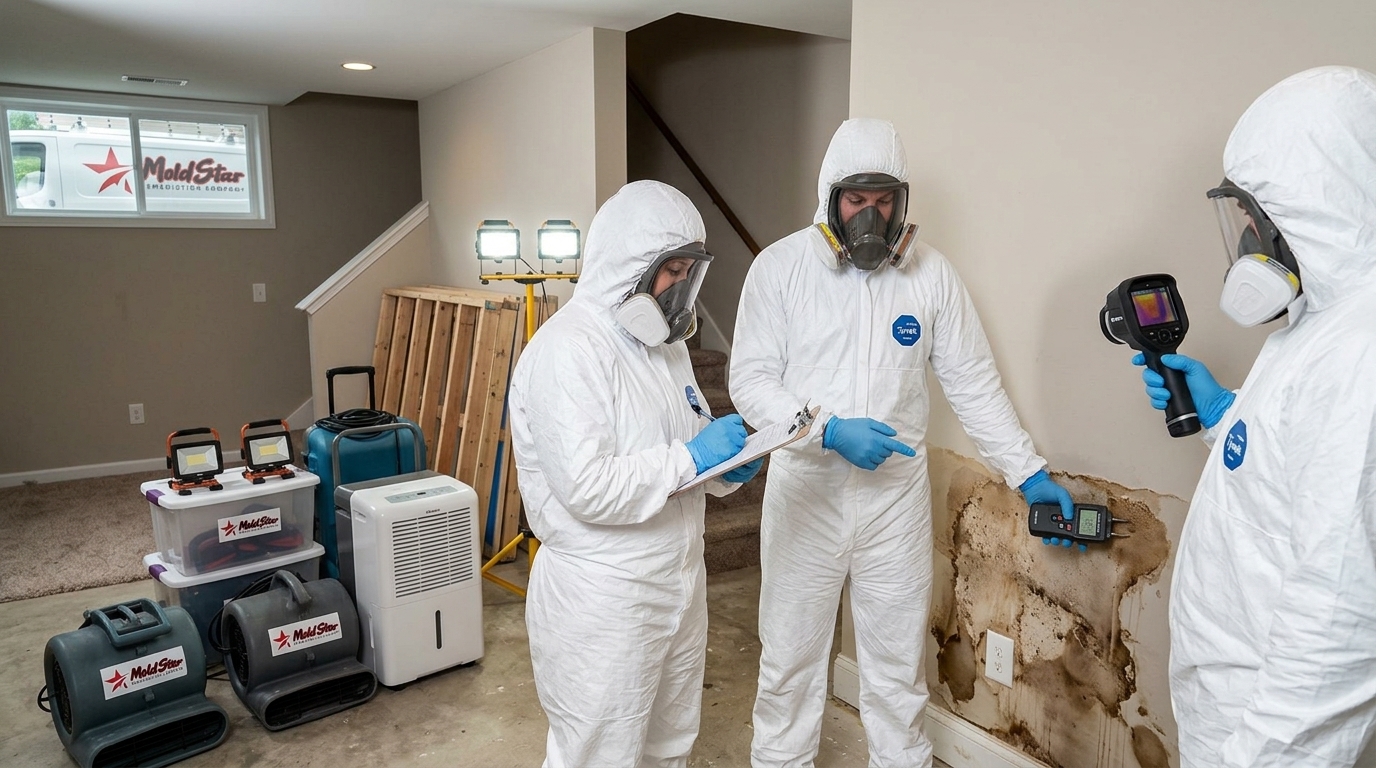
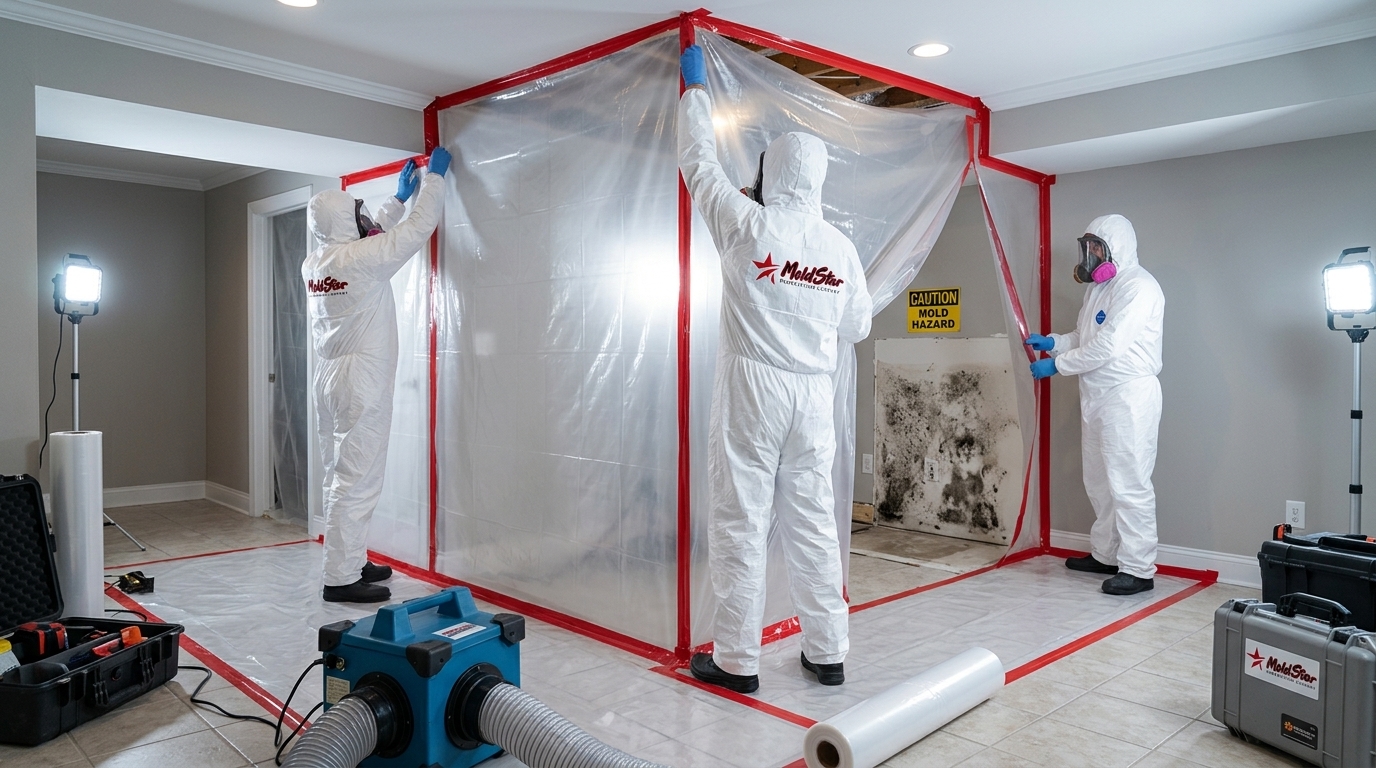
The first day may include preparation and containment before significant removal begins.
Depending on the project, technicians may:
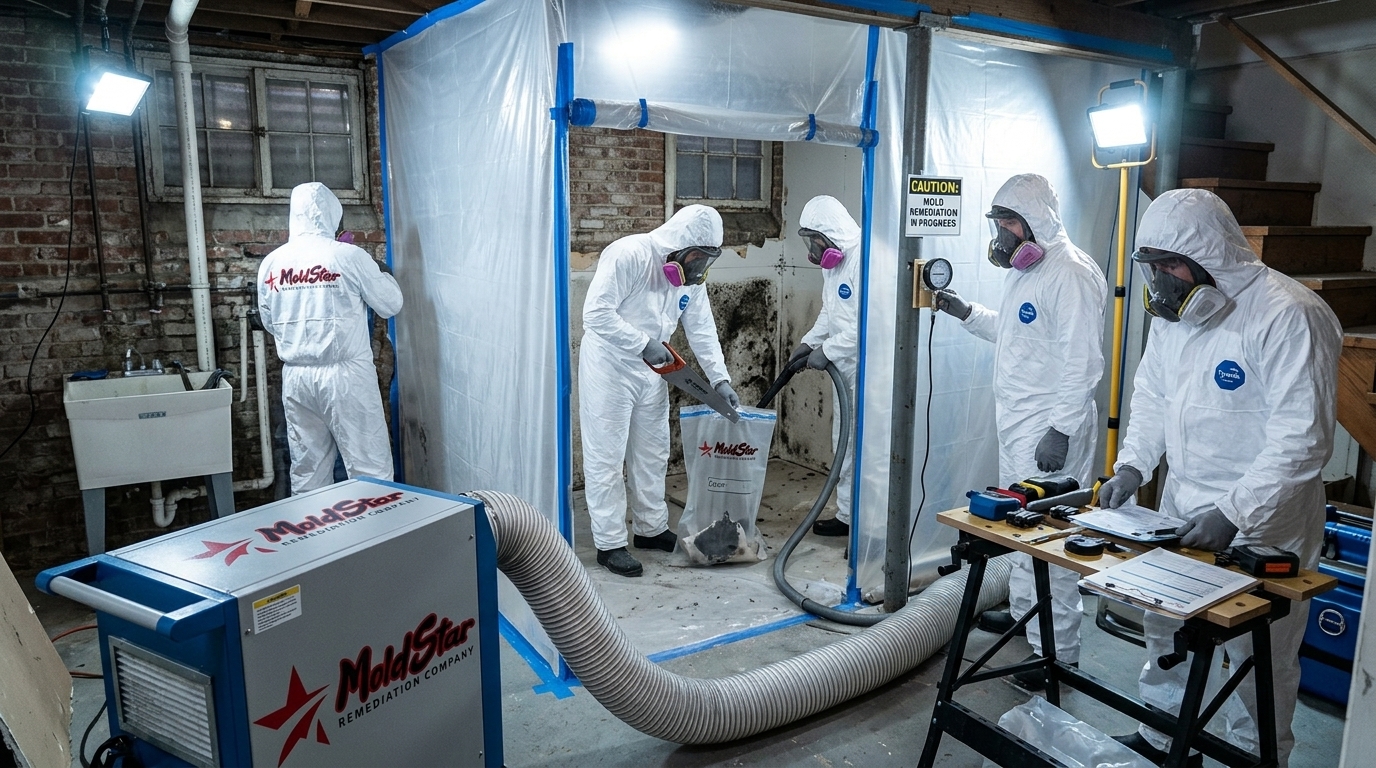
- Protect unaffected areas.
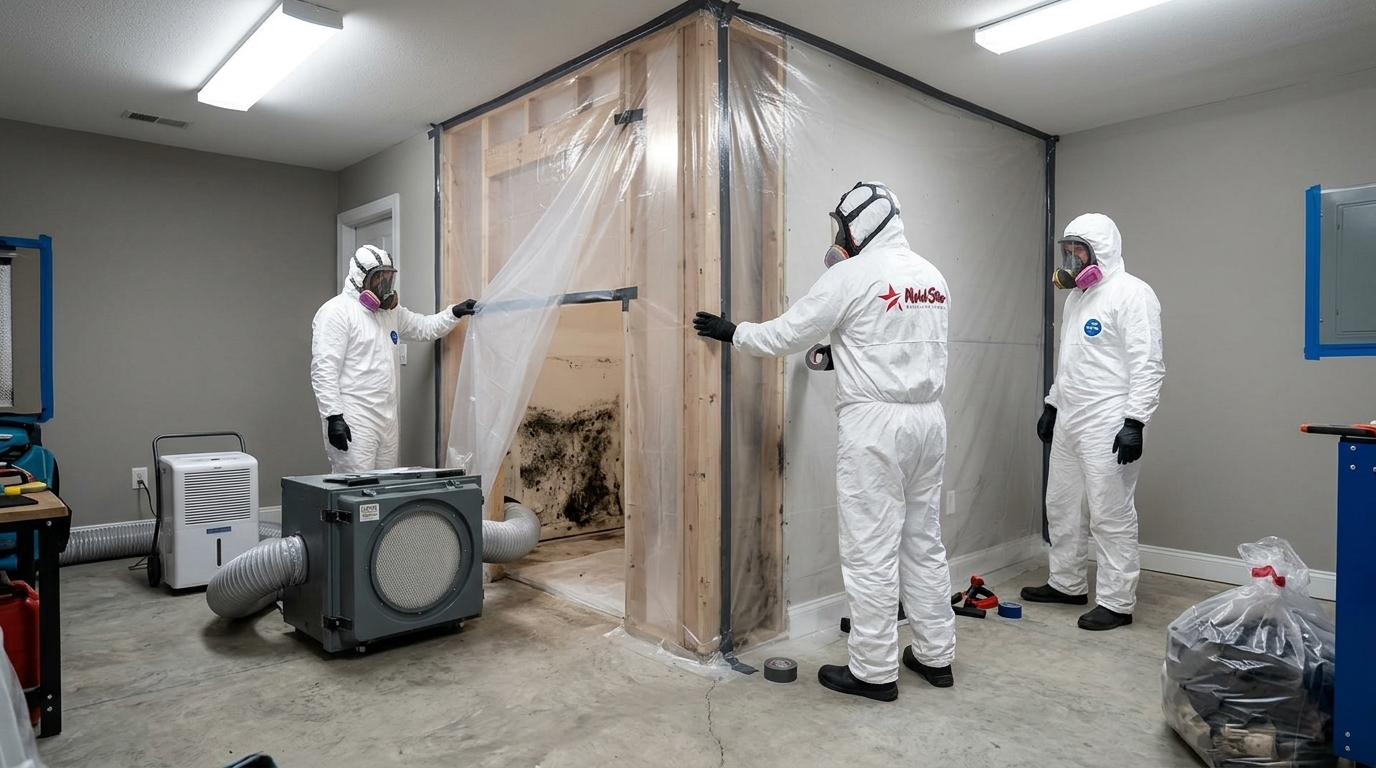
- Establish containment.
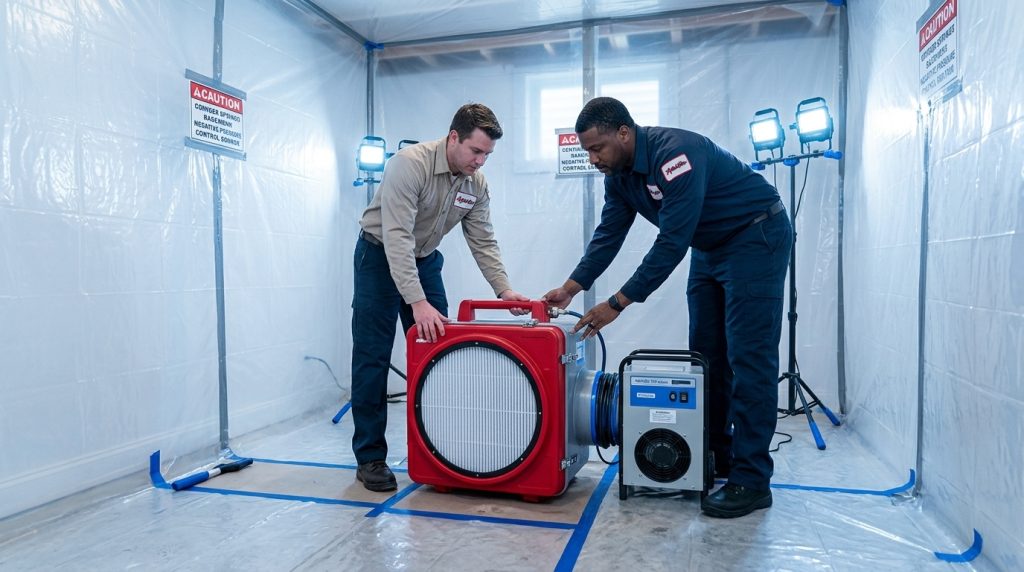
- Set up air filtration or negative pressure.
- Remove affected contents from the work zone.
- Begin removal or cleaning of contaminated materials.
Containment is designed to help prevent contamination from spreading into unaffected areas while materials are disturbed.
Can You Stay in Your Home During Mold Remediation?
Sometimes.
Whether remaining in the home is appropriate depends on where the remediation is occurring, how extensive it is, how the home is laid out, and who occupies the property.
A contained project in one isolated part of a house may be very different from remediation involving multiple occupied areas.
A more cautious approach may be appropriate when sensitive occupants are present.
Ask your remediator about occupancy before work begins, not after containment has already been installed.
When Might Temporary Relocation Make Sense?
Your remediation professional may recommend additional precautions when:
- Multiple areas of the house are affected
- Access routes pass through occupied rooms
- Extensive demolition is required
- HVAC systems are involved
- Containment significantly restricts use of the house
- Someone in the household has particular sensitivities
- The scope involves extensive contamination
The appropriate decision depends on the property and occupants.
If you have medical concerns about mold exposure, discuss them with a qualified healthcare professional.
Can You Use the HVAC System During Remediation?
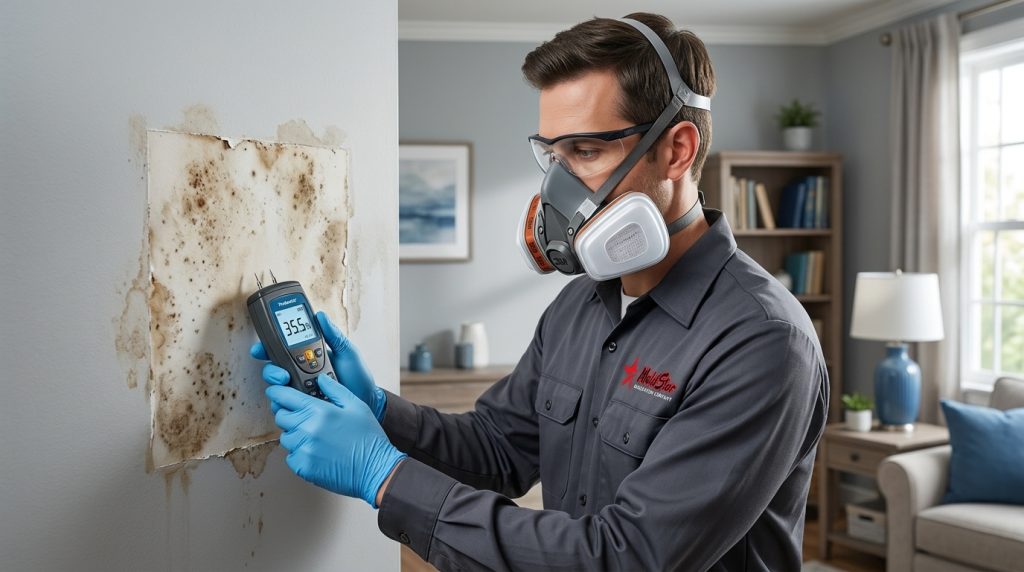
Do not assume the heating or cooling system should operate normally.
If the affected area involves supply registers, returns, ductwork, or nearby building cavities, the remediation contractor may need to isolate parts of the HVAC system.
Your contractor should explain whether HVAC equipment needs to remain off, be isolated, or can continue operating.
What Happens After Contaminated Material Is Removed?
Removal is only part of remediation.
The remaining work may include:
- Detailed HEPA vacuuming
- Surface cleaning
- Air filtration
- Drying
- Cleaning the containment area
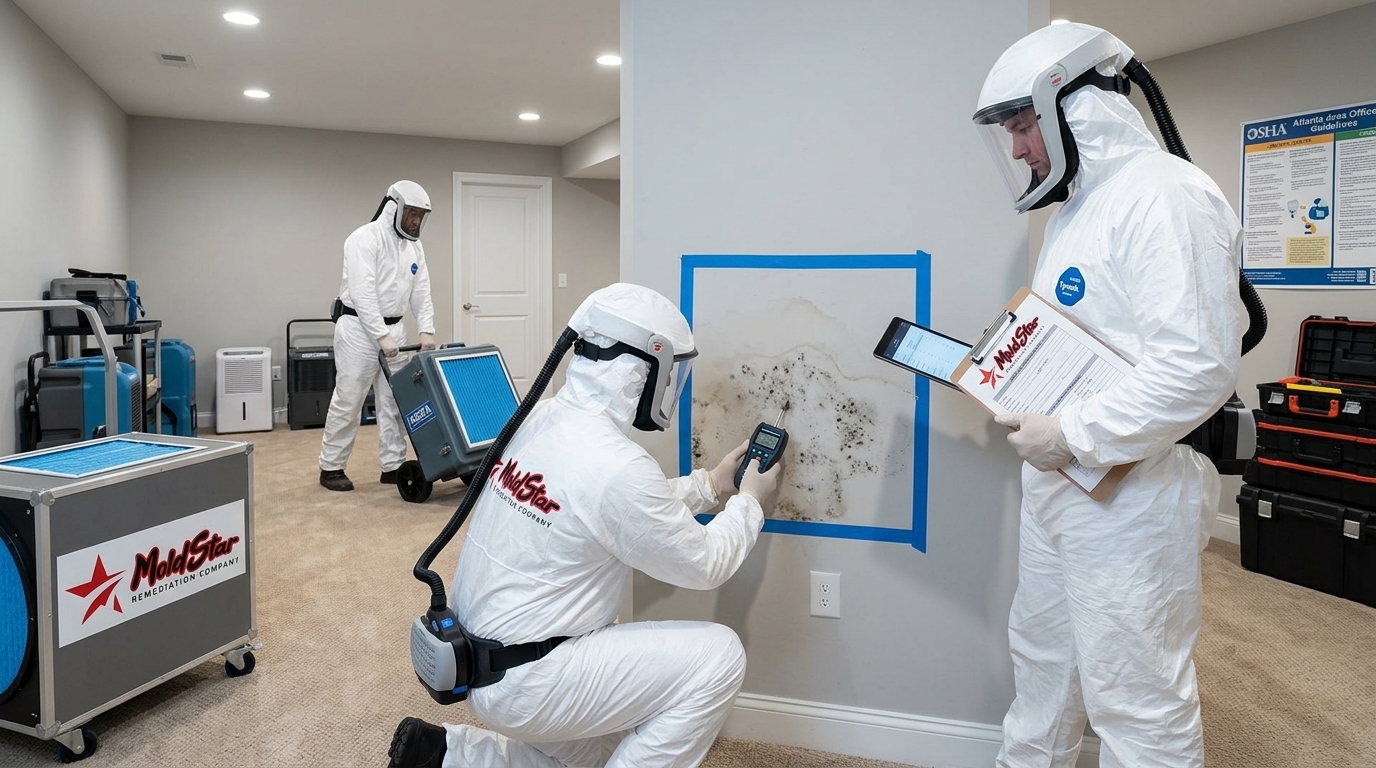
- Final visual inspection
- Post-remediation verification when appropriate
The goal is not simply to make visible mold disappear.
The underlying moisture problem must also be corrected or controlled.
Can You Speed Up Mold Remediation?
The best way to avoid unnecessary delays is to resolve known moisture problems and make the affected areas accessible before the scheduled work.
That may include coordinating:
- Plumbing repairs
- Roof repairs
- HVAC corrections
- Moving furniture
- Access to crawl spaces or attics
- Insurance documentation
Trying to rush actual remediation procedures can be counterproductive.
A realistic scope and organized work area are more important than choosing the contractor promising the shortest timeline.
What Should You Ask Before Remediation Begins?
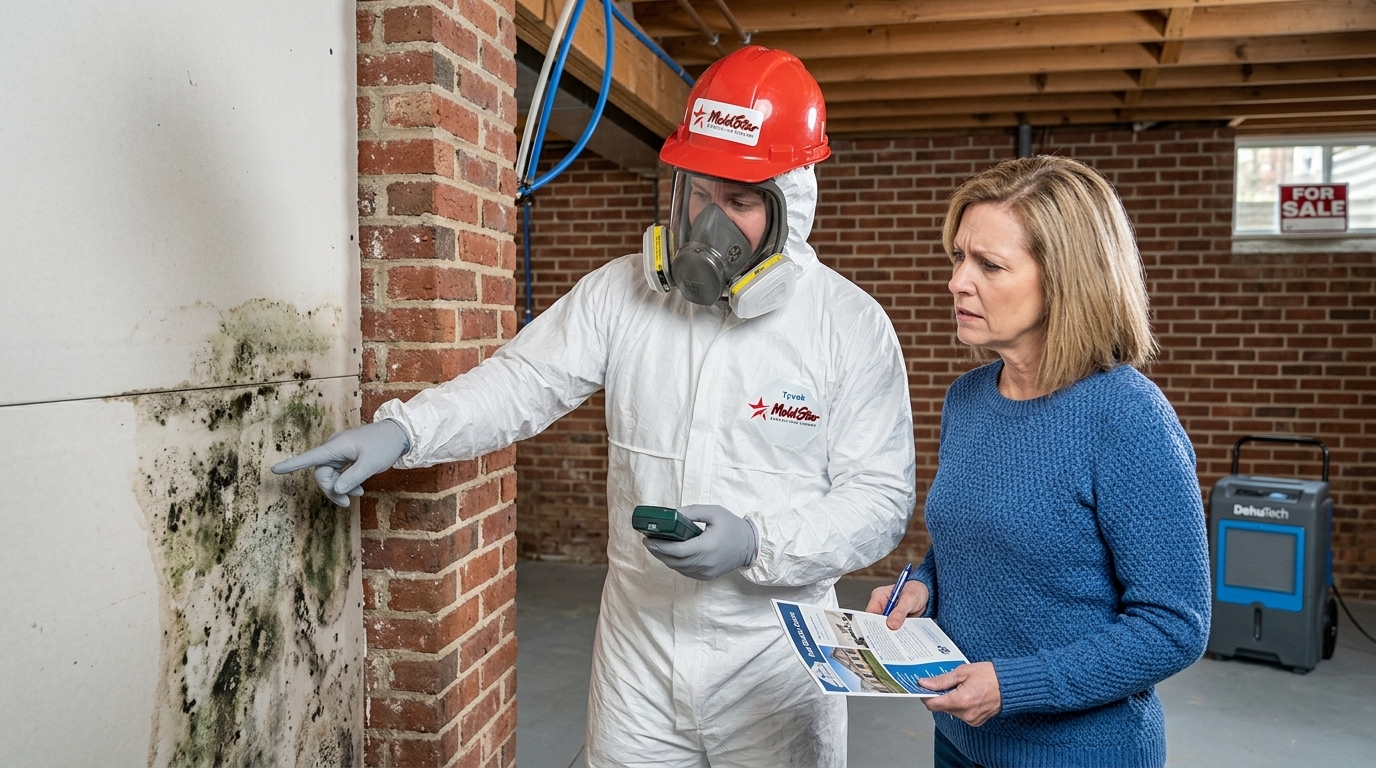
Ask your contractor:
- How many days do you expect the project to take?
- Which rooms will be unavailable?
- Can we remain in the house?
- Will the HVAC system be affected?
- What should we remove beforehand?
- Will contents need to be cleaned?
- What needs to happen before containment comes down?
- Is any follow-up testing recommended?
Knowing these answers makes the project much easier to plan around.
Schedule Mold Remediation in Atlanta or Marietta
MoldStar Remediation provides professional mold remediation for homes and businesses throughout Metro Atlanta.
For homeowners closer to our Marietta office, learn more about mold remediation in Marietta.
Call 404-585-7319 or request an estimate to have your property evaluated and receive a project-specific scope and timeline.