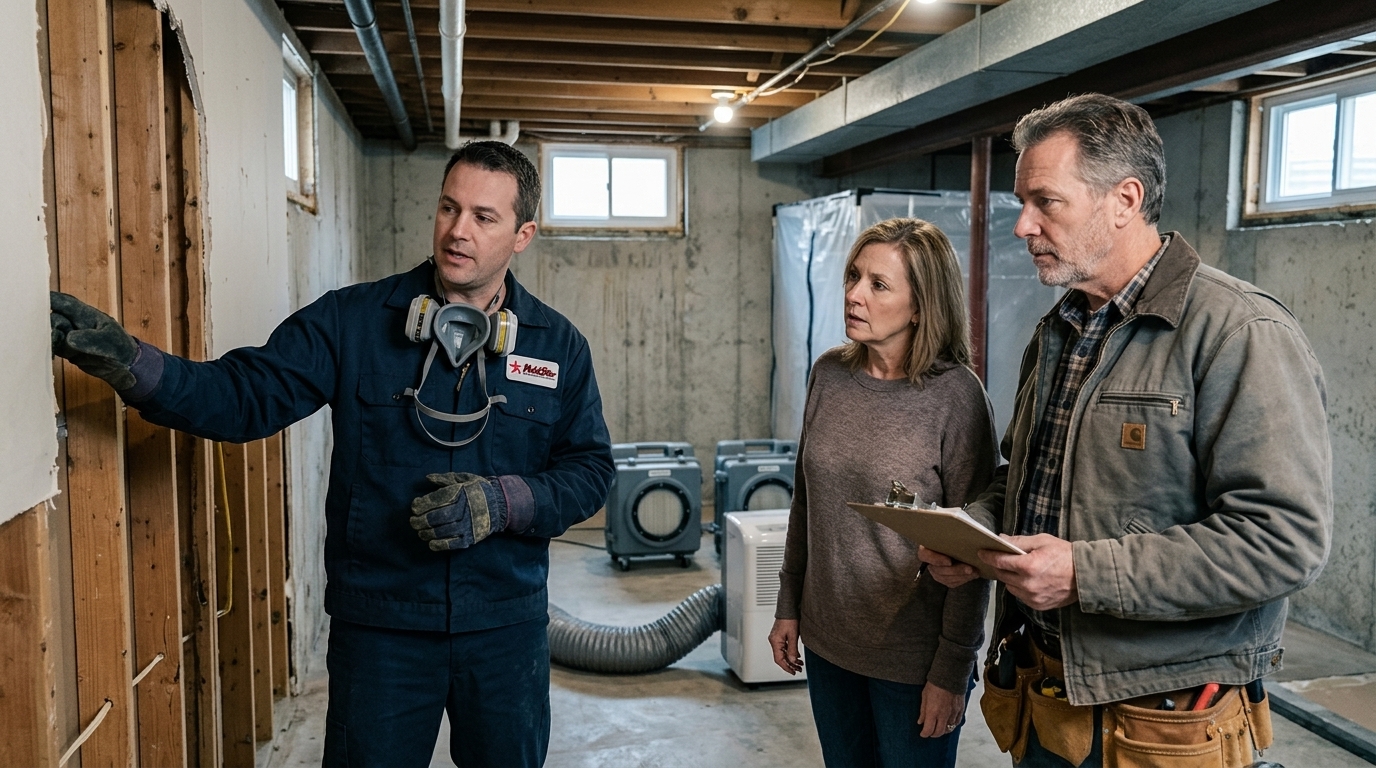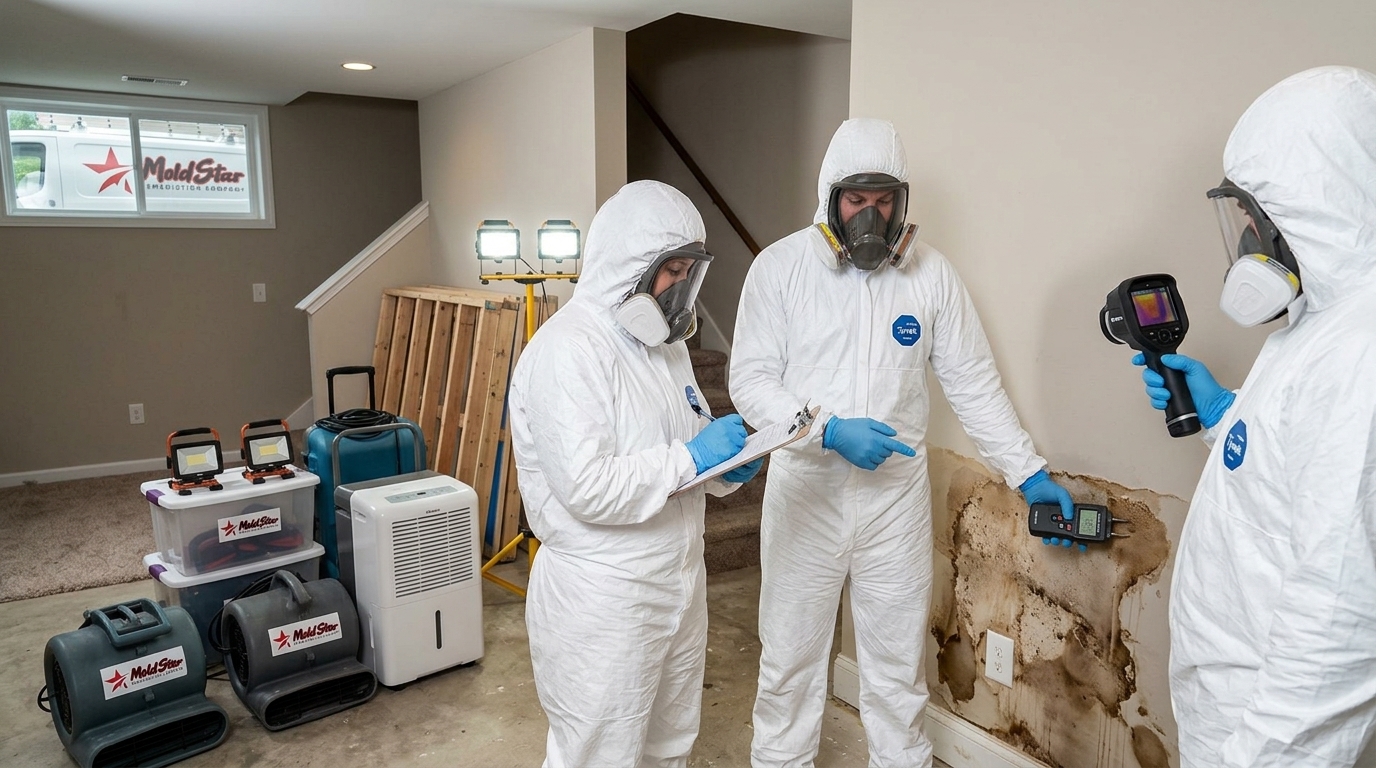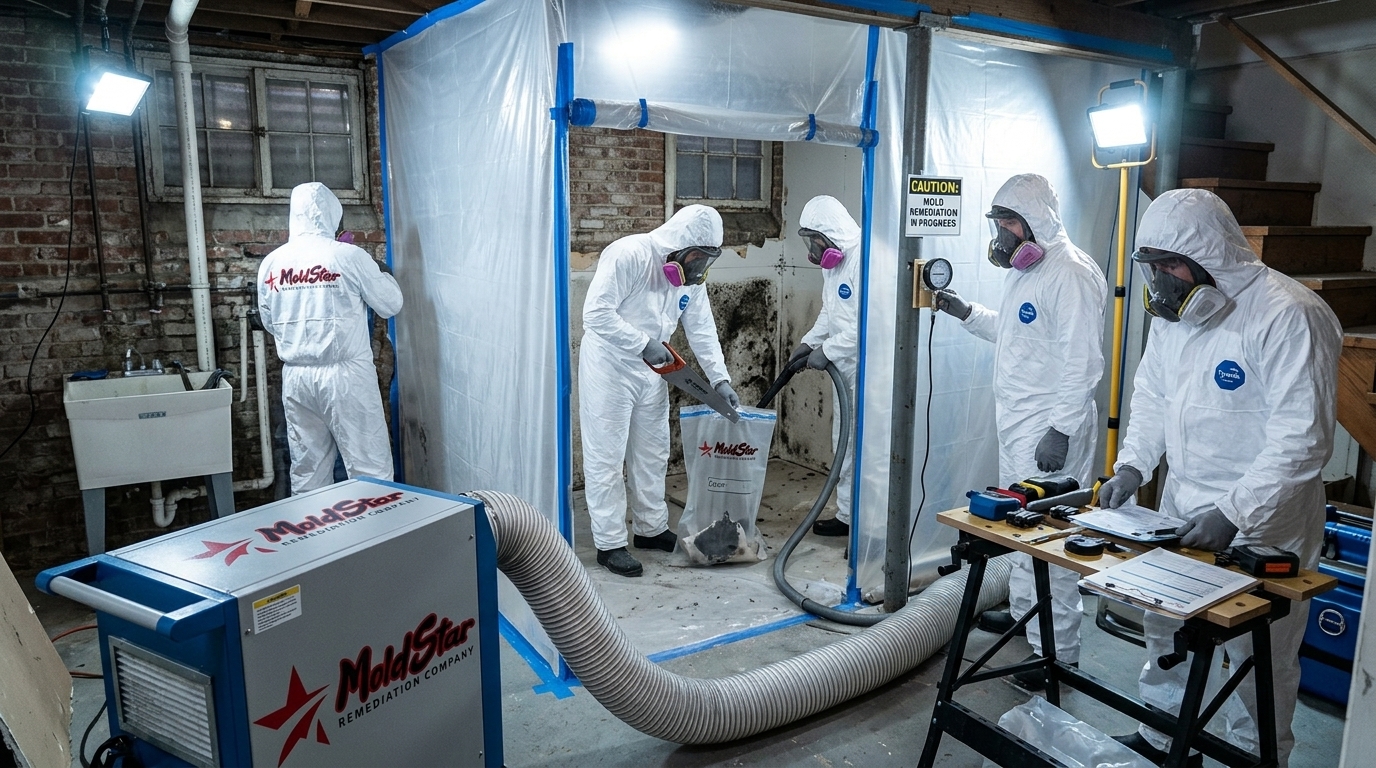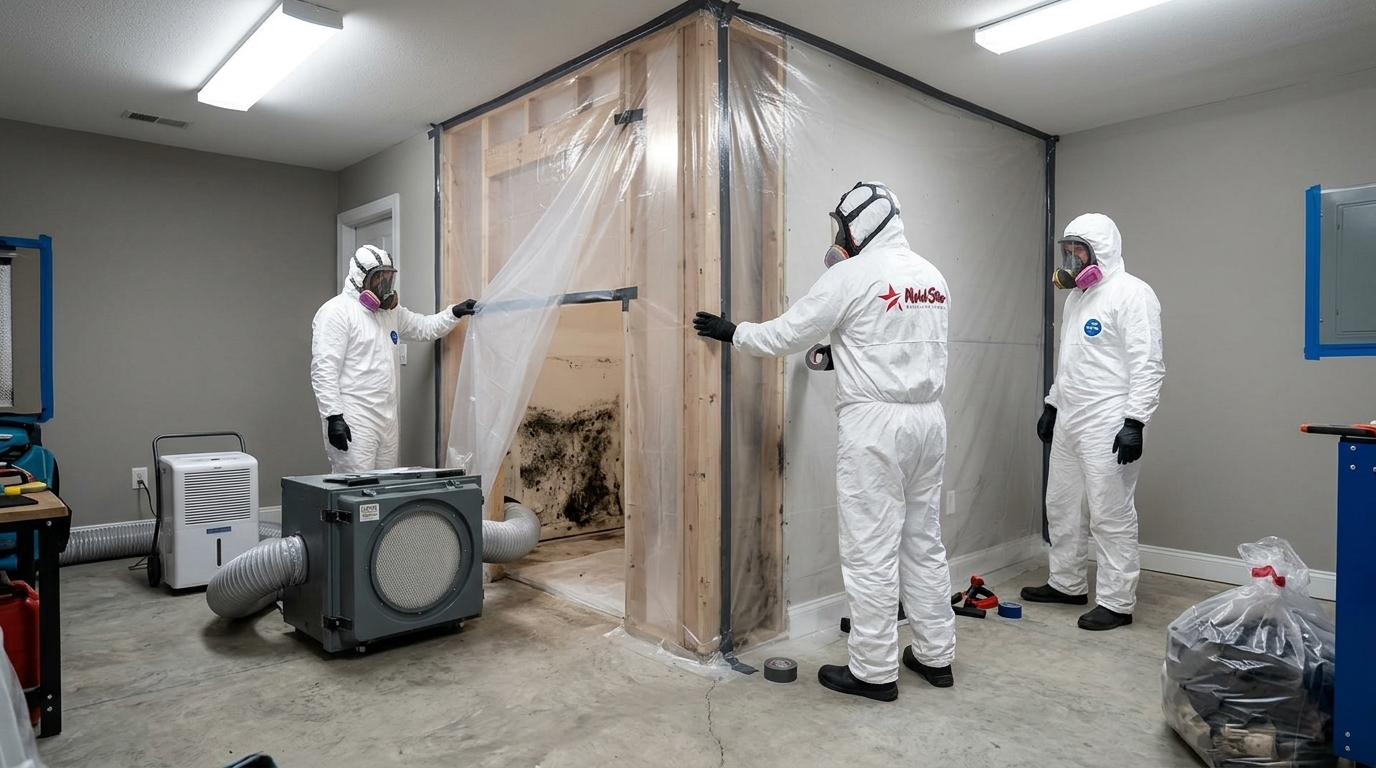
Why Containment and Dehumidification Matter During Remediation should address both the affected material and the moisture condition that allowed the problem to develop. Mold remediation is not simply painting a stain, applying a surface product, or running drying equipment without a plan. A responsible scope defines the work area, controls removal and cleaning activities, manages moisture, and documents completion.
The short answer
Start by identifying and controlling the water source. Then define affected materials, containment, removal or cleaning methods, drying needs, debris handling, and any verification requirements. Reconstruction should not begin until the remediation and moisture-control steps for the project are complete.
Correct the moisture source first
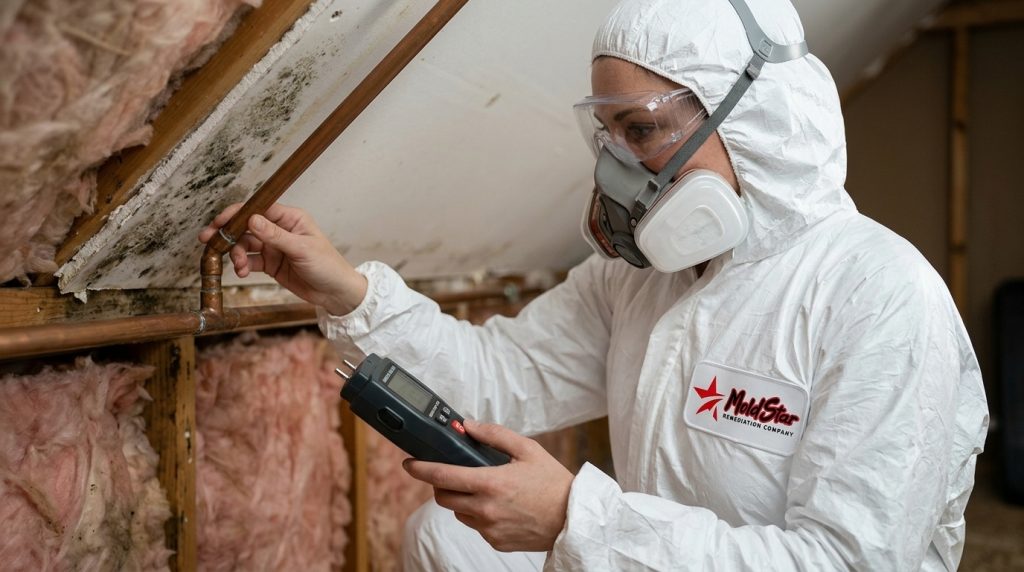
Mold growth requires moisture. Roof leaks, plumbing failures, groundwater intrusion, condensation, appliance leaks, or humidity can create different patterns. Removing affected material without correcting the moisture source increases the chance that the condition will return. For an active incident, MoldStar’s emergency water-damage cleanup page explains the water-damage service.
Define the affected area and scope
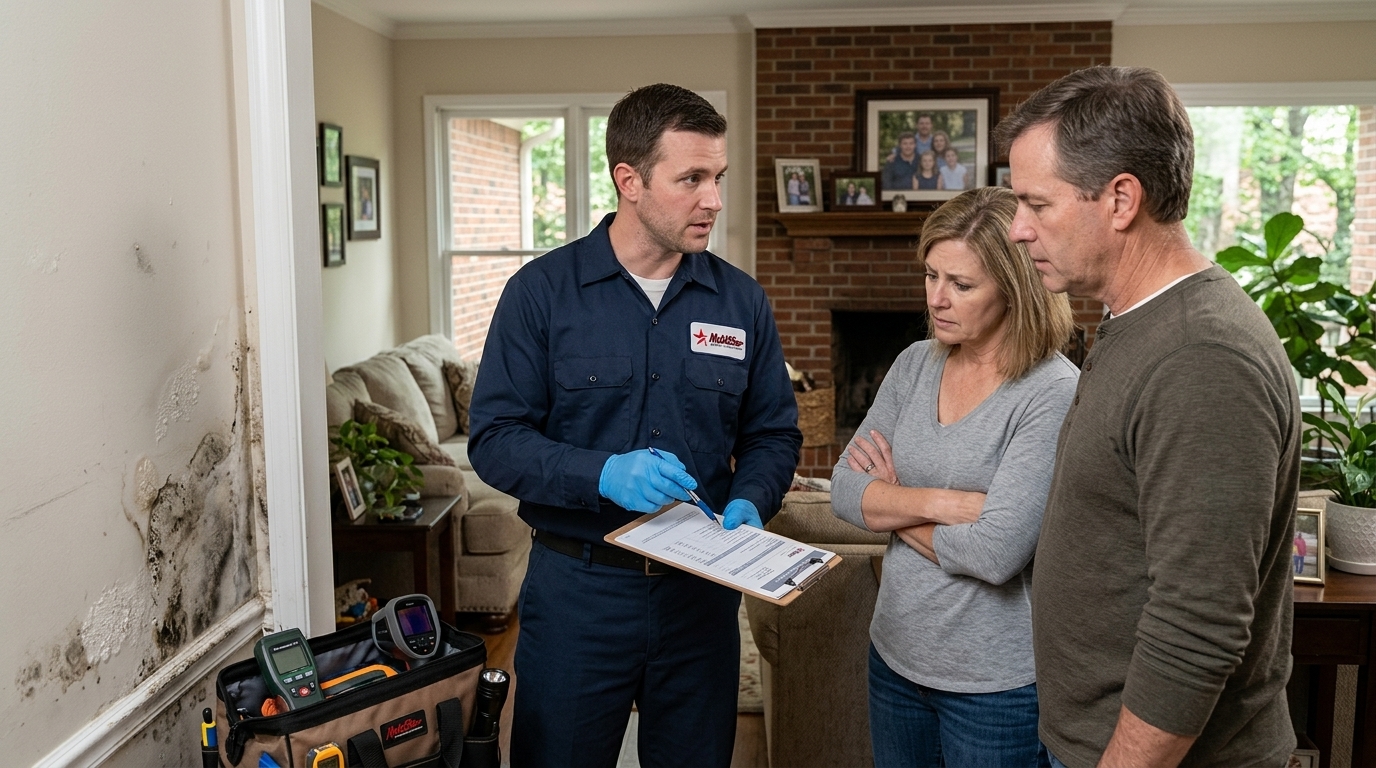
The work plan should identify the rooms and materials involved, what can be cleaned, what should be removed, how the area will be isolated, and what must occur before repairs are closed. Concealed conditions behind walls, cabinets, floors, or finishes can change the scope after work begins.
Why containment matters
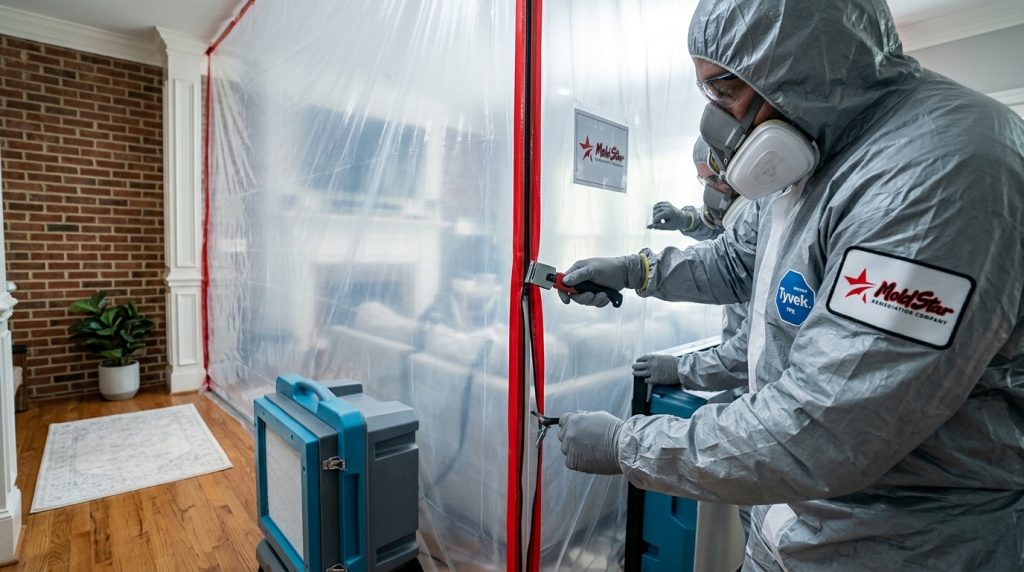
Containment separates the work zone from occupied or unaffected areas. Depending on the project, it may include barriers, controlled access, pressure management, air filtration, and careful debris handling. The purpose is to keep work activities from distributing dust and material beyond the defined area.
Why drying and dehumidification matter
Wet materials must reach acceptable conditions before the building is closed. Air movement and dehumidification may be part of the drying plan, but equipment should be selected and monitored for the building and materials. Drying equipment does not replace removal when a material cannot be adequately cleaned or restored.
What affects remediation cost
- Size and location of the affected area
- Material types and how easily they can be accessed
- Containment and air-management requirements
- Demolition, cleaning, drying, and disposal needs
- Work in crawl spaces, attics, or occupied areas
- Repair of the moisture source
- Reconstruction and finish work, if included
- Assessment, clearance, or verification requirements
Because these variables change from property to property, an online price cannot replace a project-specific scope. Review the professional mold remediation service before comparing estimates that may include different work.
What property owners should document
- Record the source and date of water damage.
- Take photos before, during, and after work when safe.
- Keep inspection or assessment documents.
- Save the remediation scope and approved changes.
- Keep drying and moisture records when provided.
- Retain invoices, disposal documentation, verification, and reconstruction records.
Common mistakes to avoid
Do not cover visible growth before the condition is assessed. Do not rebuild over wet materials. Do not assume a strong odor alone identifies the full affected area. Do not compare bids based only on the final price without comparing containment, removal, cleaning, drying, disposal, and reconstruction responsibilities.
Frequently asked questions
Can mold simply be painted over?
No. A coating does not correct moisture or remove affected material.
Does dehumidification remove mold?
No. Moisture control supports drying but does not replace cleaning or removal required by the scope.
When should reconstruction begin?
After remediation work is complete, moisture conditions are acceptable, and any required verification has been satisfied.
Why can the scope change after work begins?
Concealed conditions may only become visible after finishes or damaged materials are removed.
Plan the work around verified conditions
If you need help with mold containment dehumidification in Atlanta Metro, GA, review Atlanta mold remediation or contact MoldStar Remediation. A clear scope should connect the moisture source, affected materials, work controls, and completion criteria.