Have a Mold Problem? Call us now

Bathroom Mold After a Plumbing Leak: What Happens Next?

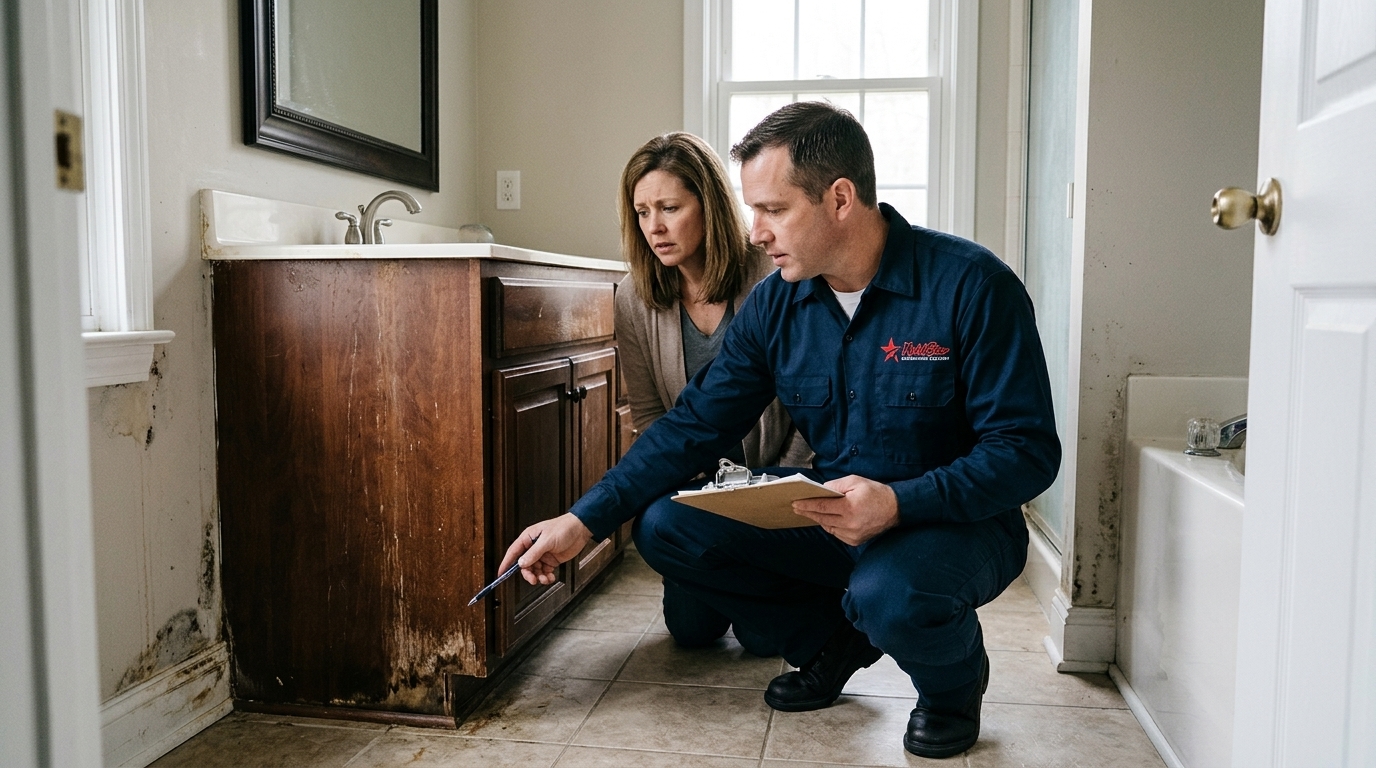
Technician_discussing_bathroom

Repairing a bathroom leak stops one part of the problem. It does not automatically tell you whether the cabinet, wall, flooring or nearby materials were affected by moisture or mold. If you still see suspicious growth, notice a recurring musty odor or have unresolved water damage, the next step is to understand the remaining condition before covering it with new finishes.

For homeowners in Marietta, a useful plan separates three questions: has the water source been corrected, what materials need attention, and who is responsible for each stage? Keeping those questions distinct helps avoid a bathroom that looks finished while important work remains unclear.

Start with the leak history

Tell the provider what happened, when it was discovered and which fixture or pipe was involved. A sudden supply-line leak, intermittent water near a shower and moisture beneath a toilet are not identical situations. If the source has not been confirmed, say so rather than describing an assumed cause as a completed repair.

Gather the plumber’s invoice and any photographs taken before materials were removed. Note whether the water appeared in another room, below the bathroom or inside a cabinet. These details help establish the area to assess. They do not replace a site visit or prove how far water travelled.

If water is still entering the area, arrange appropriate help to stop it safely. Keep away from water near electrical equipment and do not open walls or flooring simply to investigate suspected mold yourself.

A repaired pipe is not the same as a dry assembly

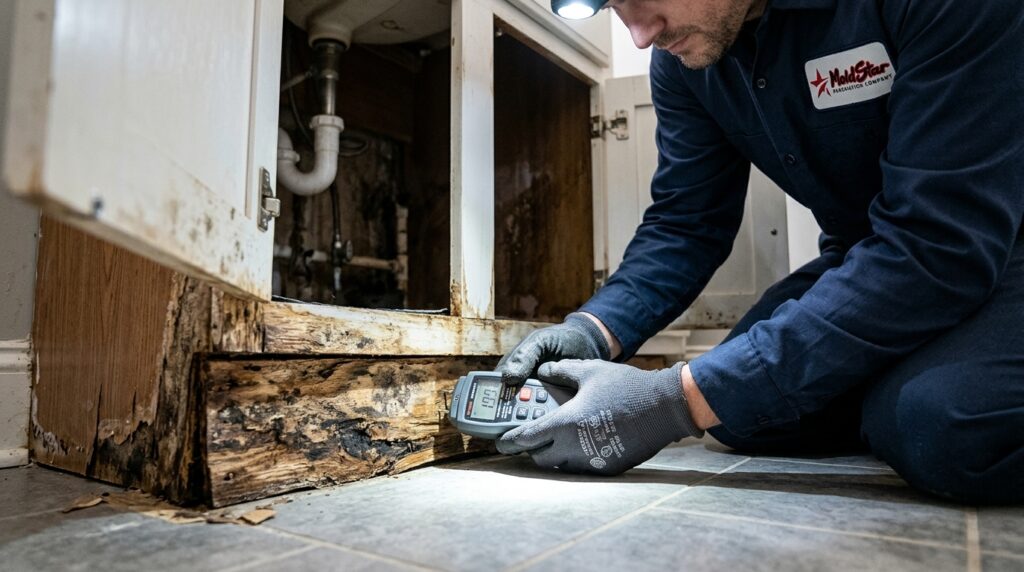
A visible surface can look dry while the condition of concealed materials remains uncertain. Conversely, an old stain does not by itself prove that mold is actively growing. The assessment should distinguish observations, measurements and areas that could not be evaluated.

Ask what the provider inspected and whether additional access is needed. If opening a cabinet base or wall is proposed, clarify who authorizes that work, how affected materials will be handled and what repairs are outside the remediation scope. Avoid starting reconstruction before those decisions are clear.

The EPA’s mold guidance links cleanup with correction of the moisture problem. Simply painting over a suspicious area is not a substitute for determining what happened or addressing affected materials.

Decide whether the problem is surface moisture or a leak-related project

Bathrooms experience routine moisture, but a known plumbing leak deserves a different conversation from ordinary cleaning around a shower. Repeated growth, damaged materials or evidence that water entered a wall or floor calls for an assessment of the underlying condition.

Do not identify mold species or health risk from color. A black spot, white patch or musty odor cannot establish a medical diagnosis. If someone has health concerns, seek advice from a qualified healthcare professional; the property assessment addresses the building and the work needed there.

For a water incident that also needs cleanup, describe the conditions when asking about emergency water damage cleanup. Do not assume every plumbing incident requires the same remediation scope.
Technician_reviewing_plumbing

Ask what is included before work begins

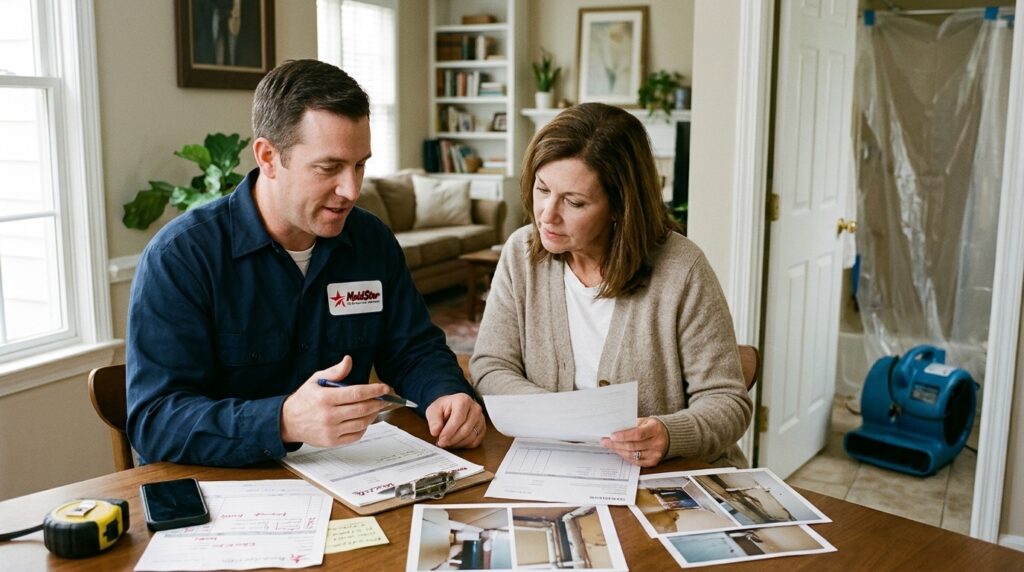
A useful written proposal identifies the rooms and materials involved, the intended work and the exclusions. It should also explain how changes will be handled if further damage becomes apparent.

Ask these practical questions:

  • Is the leaking fixture or pipe already repaired, or is that a separate task?
  • Which wall, cabinet, floor or ceiling materials are included?
  • Will the bathroom be unavailable during the work?
  • Do toiletries, towels or stored items need special handling?
  • Who will coordinate any independent assessment or verification?
  • Are replacement finishes, cabinets or painting included?

The estimate comparison guide helps you compare those responsibilities. A lower total may describe less work rather than a more efficient solution. Ask for clarification before assuming two prices cover the same project.

Plan access and belongings without spreading the problem

Discuss what should be removed before the appointment and what should remain for assessment. Do not carry visibly affected items through clean rooms or begin demolition without instructions. Photographs and an inventory can document the situation without requiring you to handle suspect materials.

If the home has only one bathroom, tell the contractor early. Access restrictions can affect household arrangements even when the work area is relatively small. The contractor should explain the work-zone boundaries and expected sequence; no general article can decide whether your household should remain in place.

Keep children, pets and visitors out of the affected work area. Ask whom to contact if you notice new water or a change in conditions while the project is underway.

Finish remediation before treating the room as a repair project

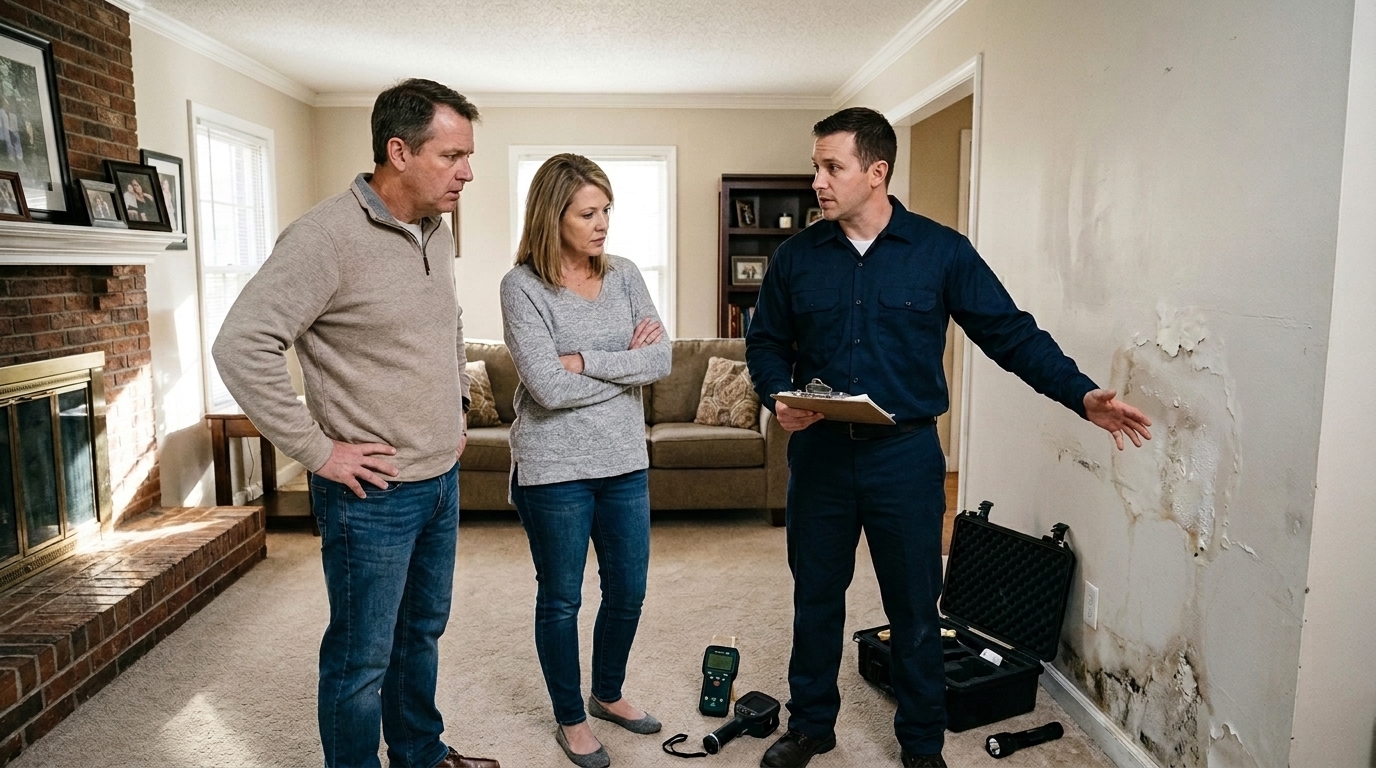
New drywall, flooring or cabinets should not become a way to conceal an unresolved condition. Ask what completion information will be available and what must happen before reconstruction begins. Where independent verification is part of the plan, coordinate it at the appropriate stage rather than after the area has been closed.

The handoff from remediation to repairs should identify what was completed, what remains and which provider owns the next action. Keep the plumbing repair record alongside the remediation documents so future questions can be answered without relying on memory.
Technician_measuring_moisture

Get help with the remaining problem

MoldStar Remediation provides mold remediation services in Marietta. Call 404-585-7319 to discuss bathroom mold or unresolved damage after a plumbing leak. Describe the known leak, any repair already completed and the areas that still concern you.

A clear sequence—source correction, assessment, agreed remediation and a documented repair handoff—helps you make the next decision without assuming that one invoice proves every part of the bathroom is finished.